

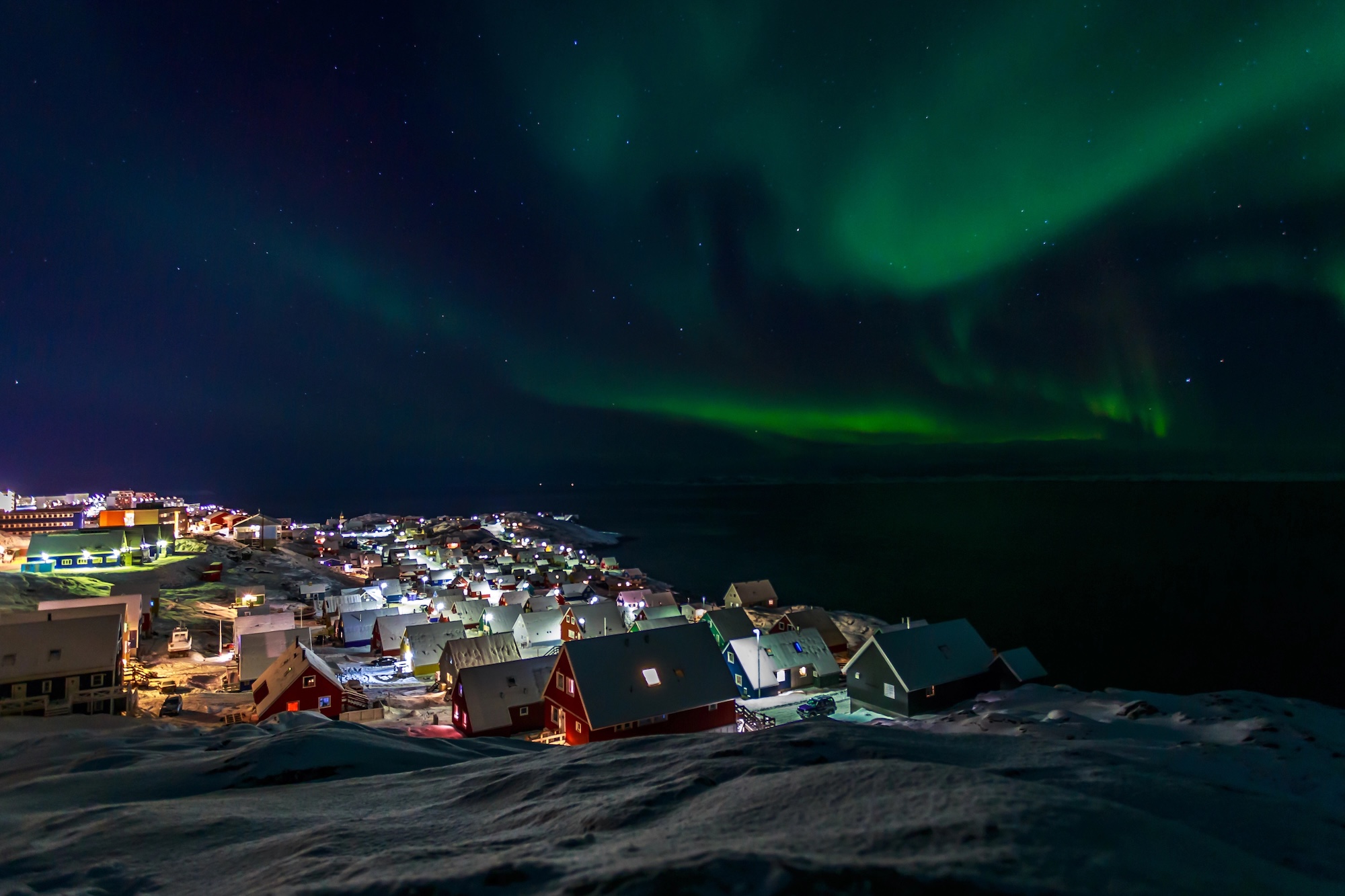
The aurora showed up on the second night, a green band over Disko Bay, and there are still five days left in Ilulissat. Each of them has a few hours of grey-blue light before the dark settles back in. Plenty of winter visitors hit this point and realise they planned around the night sky and almost nothing else.
The good news is that Ilulissat has more to fill a short winter day than its size suggests. The list below runs from the obvious to the practical, because in Greenland the logistics shape the trip as much as the sights do.
1. Walk out to the Ilulissat Icefjord
Ilulissat Icefjord was the first place in Greenland added to the UNESCO World Heritage List, and it sits close enough to town to reach on foot. In winter the path is packed snow and the fjord is a jumble of frozen ice stretching inland, broken by bergs taller than anything in town. Go slowly. Proper boots with grip matter more here than any camera, and the light changes fast enough that an hour on the same viewpoint never looks the same twice.
2. Why is the town called Ilulissat?
According to one Disko Bay fact sheet, the name comes from Greenlandic and means icebergs. It fits. Even from the harbour, bergs sit locked in place by sea ice, and in the low winter sun they turn pink, then pale blue, within the space of a coffee.
Greenland tours often base themselves in Ilulissat for exactly this reason, pairing time on the icefjord with a local guide who can explain where each berg came from and how the ice moves through the bay.
3. Follow the trail to Sermermiut
Sermermiut is a historic site of early Inuit cultures just outside Ilulissat, set in a valley that opens onto the icefjord. In winter most of what remains lies under snow, so the visit is more about place than artefacts: standing where people lived and hunted while the same ice drifted past for generations. A guide makes a big difference here. Without one it reads as a quiet, empty valley. With one, the layout of the old settlement starts to make sense.
4. Ride a dog sled
Dog sledding is described as an Inuit tradition stretching back about 2,000 years, and in Greenland it’s generally a winter activity, which makes this season the right time for it. The dogs are working animals, not pets, and the drivers are often from families who have sledded for generations.
Expect noise at the start. The dogs bark and pull hard until the sled is moving, and then everything goes quiet except the runners on the snow. Dress far warmer than seems sensible: sitting still on a sled at speed in deep cold is a different experience from walking around town, and the wind chill catches people out.
5. Chase the midwinter light with a camera
The short days push everything into a narrow window, so a photography walk needs planning. Head out before the light peaks and pick one or two spots near the icefjord or the harbour, then stay put rather than rushing between them. Batteries drain quickly in the cold; keeping spares in an inside pocket solves most of that.
6. January or March?
January brings roughly 20 hours of darkness and temperatures near -18°C. March averages about -14°C with roughly 10 dark hours.
That difference shapes the whole trip. January suits people who want deep winter and long aurora nights and can live with very little daylight for sledding or walks. March gives far more usable hours and slightly gentler cold, with still enough dark for the northern lights. For a first winter visit with a full list of daytime plans, March is the easier month.
7. Take the Sarfaq Ittuk up the coast
The coastal ferry Sarfaq Ittuk runs roughly once a week up the west coast to Ilulissat. Seeing the shoreline from the water, past small settlements and long stretches of empty coast, gives a sense of scale that flights don’t.
The weekly rhythm means the ferry has to anchor the plan rather than fit around it. Check the current season’s timetable early, since sailings can shift.
8. Build in buffer days
Ilulissat is reached by air, and changing from one Greenland flight to another may require buffer days. Weather holds aircraft on the ground more often than in most places. A spare day at each connection, especially before any international flight home, turns a delay from a crisis into an extra afternoon in town.
9. How expensive is Greenland?
Greenland is described as expensive by international standards, and Ilulissat is no exception. Almost everything arrives by sea or air, and prices reflect that. The main costs to plan around:
· Domestic flights, which usually make up a large share of the budget
· Guided activities such as sledding and icefjord trips
· Accommodation, with limited options in a small town
· Food and drink, from restaurants and from the supermarket
It helps to decide in advance which one or two activities matter most and spend there, rather than trying to book everything.
10. Get insurance that covers evacuation
Before you go, make sure your travel insurance includes emergency evacuation, which is widely recommended for Greenland and matters even more in winter. Medical facilities are small and distances are long, so getting someone out may mean a flight. Read the policy wording for “evacuation” and “repatriation” specifically, not just general medical cover.
Start by choosing between January and March, since that decision affects daylight and how much time to plan around the aurora. Then fix the travel spine: flights with buffer days at each change, plus the Sarfaq Ittuk if a sailing fits the dates. After that, book the activities that matter most, sledding and a guided icefjord trip first, and arrange insurance with evacuation cover before paying any large deposits.
Photo Credit: DepositPhotos.com