

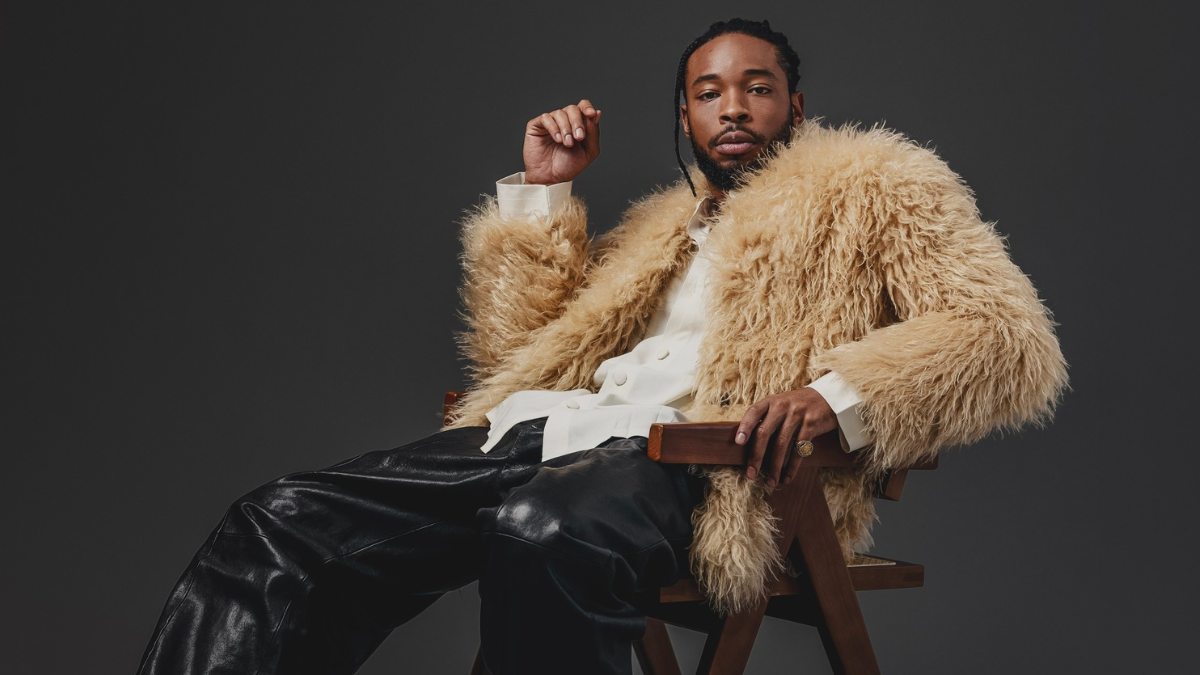
When Dimitri Abold first read the script for Blade Runner 2099, he didn’t need to get far to feel at home. Within the first five pages, he says, the series was asking the same questions he has carried his whole life: what it means to belong, where home really is, and what makes us human.
Abold was born in Jamaica to a Jamaican mother and a German father, and his family moved to Munich when he was about six months old.
Growing up as one of the few Black kids in his part of Germany, he felt cut soff from his Jamaican roots, except during family trips to Jamaica and Florida, where he connected with his aunties and uncles. He was dead set on becoming a professional soccer player.
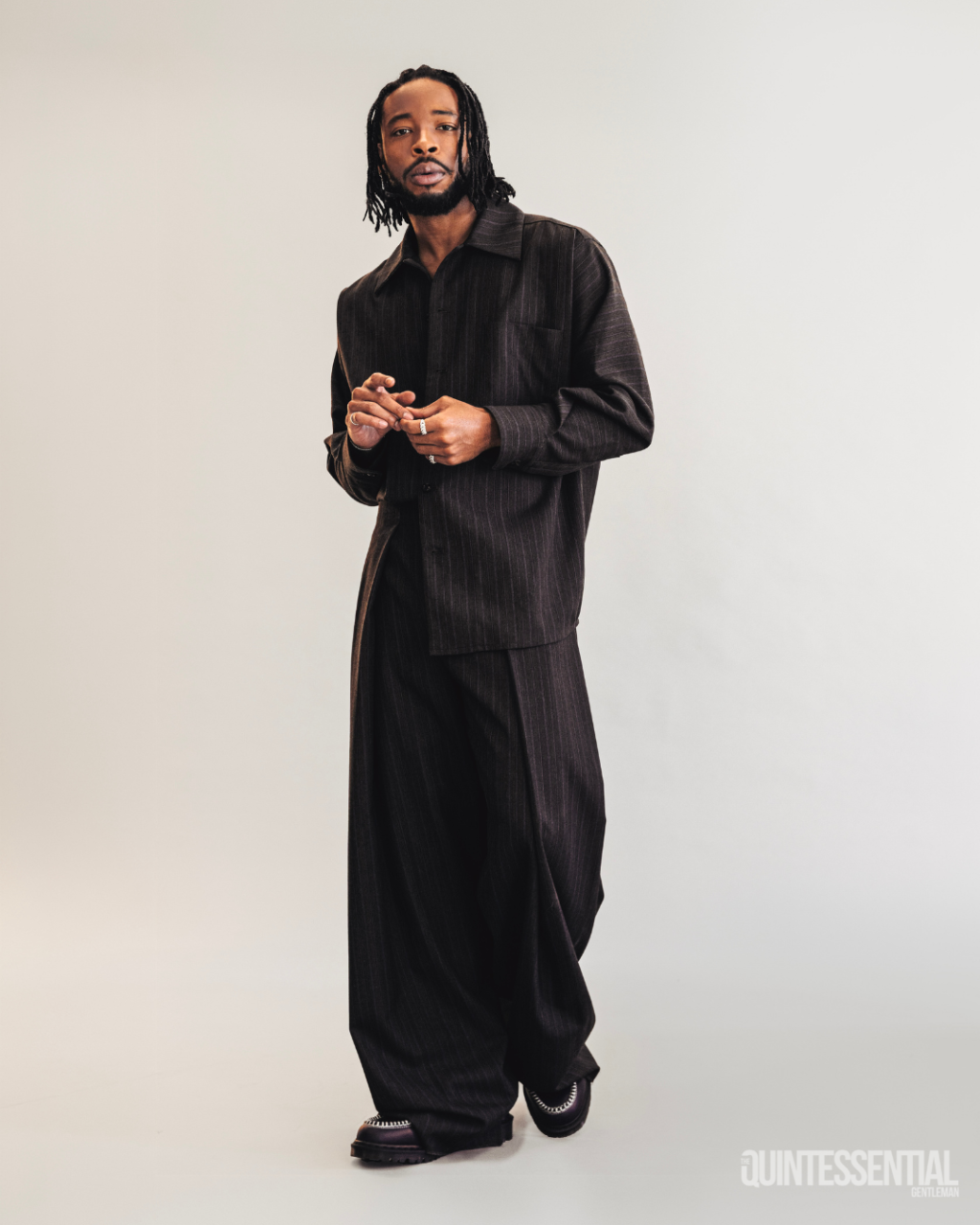
Then a drama teacher at his school saw something in him, and she kept pushing him toward the stage, toward advanced drama classes and eventually toward New York University. After his first week of classes at NYU’s Tisch School of the Arts, he went back to his dorm and knew acting was what he wanted to do with his life.
New York taught him plenty, including how to stretch his last dollars on dollar slices on St. Marks Place. After graduating, he took his talents back to Germany, determined to tell stories about people like him. He landed the lead in the German comedy Beckenrand Sheriff and built an international résumé that includes Jack Ryan, Warrior Nun and Secret Level.
In 2023, he joined the Hunger Games franchise as Reaper, the District 11 tribute whose defiant act against the Capitol became one of the standout moments of The Ballad of Songbirds & Snakes.
Now, Abold is stepping into one of science fiction’s most iconic worlds. Blade Runner 2099, an eight-episode limited series created and executive produced by Silka Luisa, premieres November 25 on Prime Video, with all episodes dropping at once.
Set 50 years after Blade Runner 2049, the series takes place in a world where the replicant uprising has already happened, and humanity lost. Michelle Yeoh stars as Olwen, a replicant nearing the end of her life, alongside Hunter Schafer as Cora. Abold plays Bebeto, a veteran of the war between humans and replicants who has become a civil servant and a black-market dealer, helping humans flee, hide and stay safe. Bebeto and Cora set out to find an artifact that could save their world.
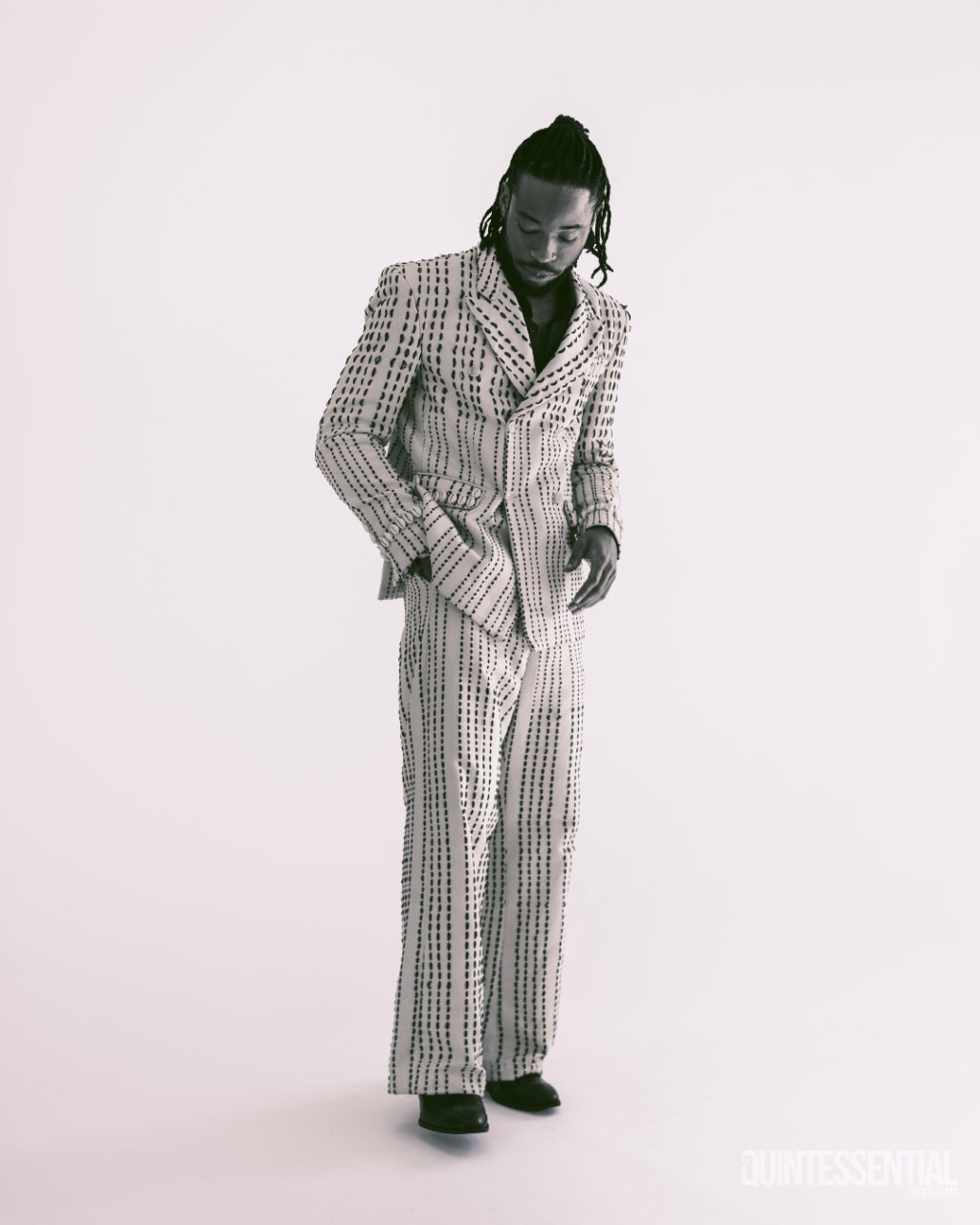
In his conversation with The Quintessential Gentleman, Abold talks about the drama teacher who changed his path and the lessons of living on dollar slices. He also discusses why Blade Runner 2099 spoke to his own search for belonging and what it was like filming across Prague, Barcelona and Berlin with Michelle Yeoh.
In a world full of cynicism, he also explains why he still believes in people.
[Interview has been edited for length and clarity]
What was it like growing up between Jamaica and Germany?
Dimitri Abold: I was born in Jamaica, but I moved to Germany when I was quite young, about six months old. My dad is German, my mom is Jamaican. Being one of the few Jamaican kids, but also Black kids, in my part of Germany, Munich, was pretty specific. It was a weird experience. I didn’t really feel like I had much connection to my Jamaican side, apart from whatever vacations we went on. We went to Florida, we went to Jamaica itself, and that’s when I had connections to my aunties and my uncles. But apart from that, I felt kind of landlocked, at least in hindsight, in Munich. But not in the worst way. In an interesting way.
When did you know you wanted to act?
Dimitri Abold: I realized acting was a thing I really wanted to do in college, when I’d already signed up to start doing it. You’d think you’d start when you’re 6 years old, watching all the people on screen. I was dead set on being a soccer player back in the day. But the first person to ever put the thought in my mind that I can actually be an actor was my drama teacher at school, who supported me endlessly. She continued to push me: “Why don’t you spend more time on stage? Why don’t you sign up for higher-level drama classes? Why don’t you go see this play? Why don’t you go study at NYU?”
It was when I got to NYU, after the first week of actual classes, that I got home to my dorm and thought, “You know what? I think I want to do this for my life.” Of course, as a German citizen, working in the States isn’t that easy. So I said, “After I finish my degree, let me learn whatever I can. Let me take my talents back to Germany and start building a career there.” And also, why not bring my whole self back to Germany and help tell stories about people like me, like us, there?
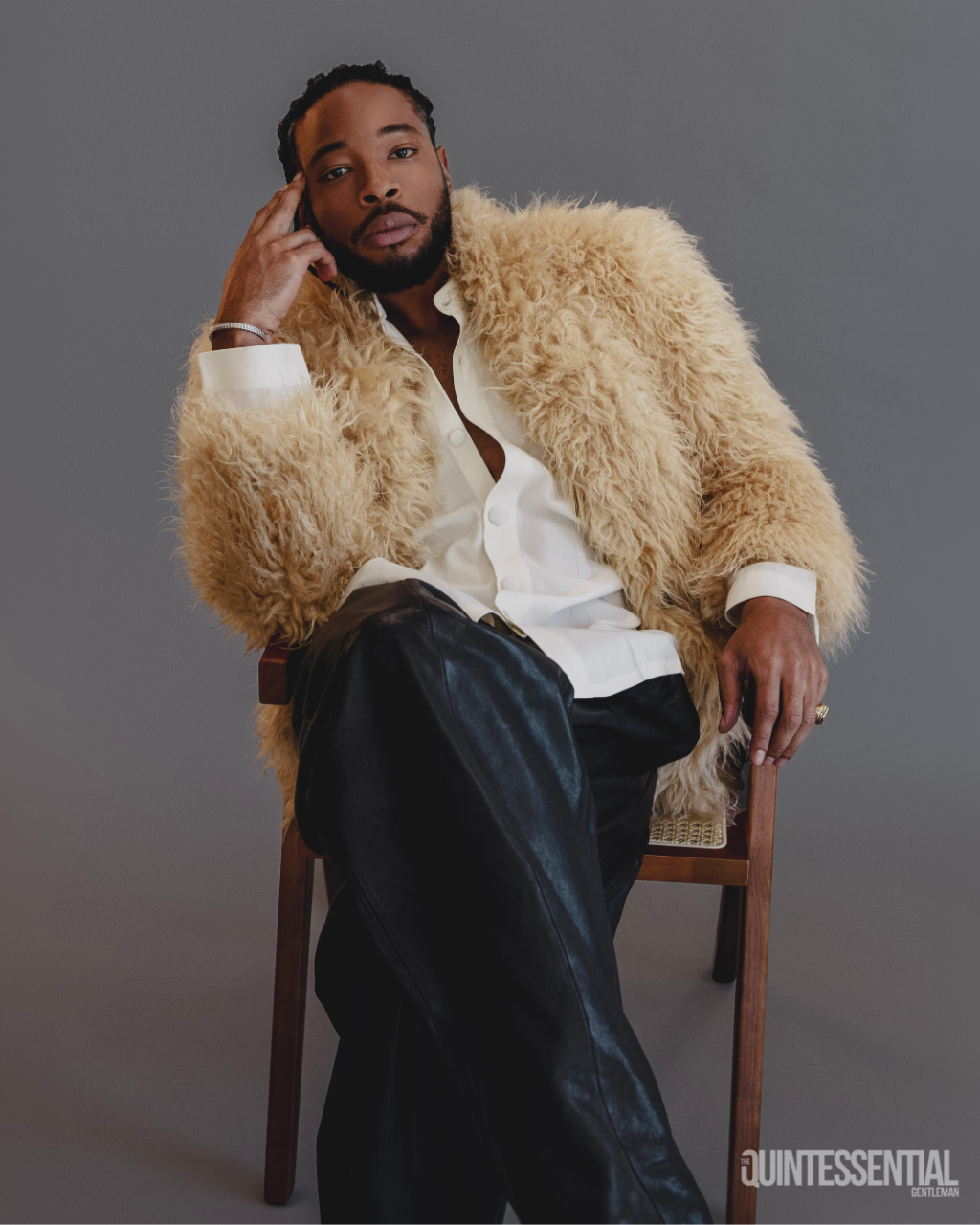
What did joining The Hunger Games franchise mean to you?
Dimitri Abold: Being part of The Hunger Games was one of the most exciting but also scary things for me. I wasn’t sure I was ready to be part of such an important franchise, a franchise I grew up with, led by so many fantastic actors. To see myself in a position to add my creative contribution to that world was very nerve-wracking. But I felt like it was invited into my life at the right time, and I knew that whatever I did with this part, I was going to give 120% so I didn’t disappoint the people who love this project, whether it’s the movies or the books. There was a lot of respect I had coming into this project, and I loved every moment of it. I came out even stronger than I felt before.
What was your relationship to Blade Runner before the series?
Dimitri Abold: Blade Runner as a franchise is iconic. I don’t know anybody who hasn’t heard of Blade Runner or accidentally even seen it. Ridley Scott’s iconic first movie, the second one by Denis Villeneuve, and now the series on Prime Video. To see this universe expand over and over again is so exciting, because it’s the future, but it still feels so close to how humans are right now.
I first got introduced to Blade Runner through television, but I really got into it through the animated spin-offs, like Blade Runner: Black Lotus. Then I watched the Ryan Gosling movie, and that’s when Blade Runner 2099 landed on my desk to audition for. And being a lover of cinematography, Blade Runner is a marvel to look at through and through.
What drew you to the script?
Dimitri Abold: There are a lot of strong scripts out there, but not many that you personally identify with on so many levels, whether it’s the characters, the world, or the themes. The script for Blade Runner 2099 covered most of those bases for me. Primarily, it was the themes at play: notions of humanity, finding identity, what it means to belong, and notions of home. Especially for someone of my background, who has always been displaced in different parts of the world, whether it’s New York, Germany, Jamaica, or Florida.
That’s the notion Blade Runner 2099 picks up on. There’s so much of a fight about “I belong here,” while at the same time somebody’s making me feel like I don’t belong here, or I myself question whether I belong here. I got a taste of that from the first five pages of the script.
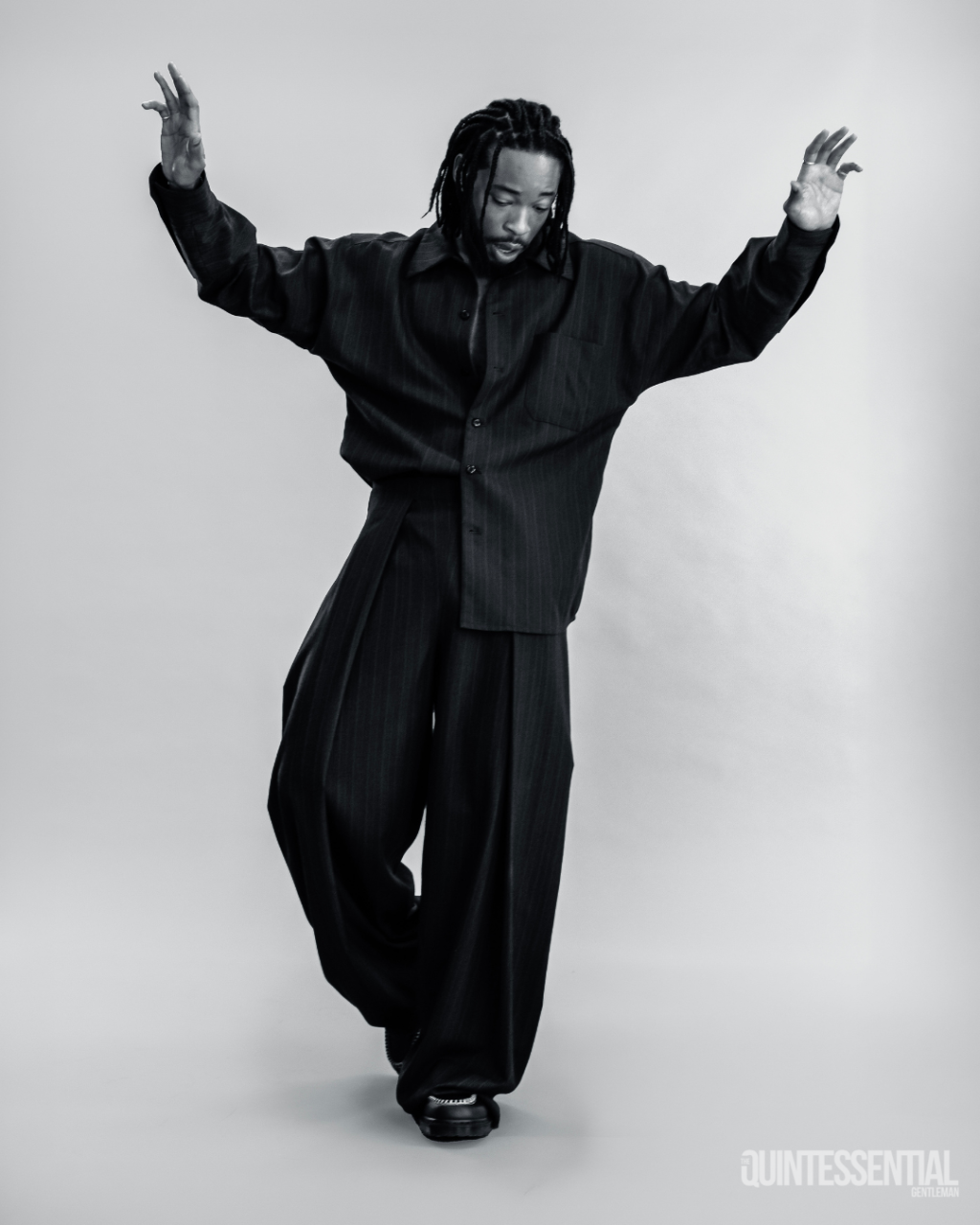
Tell us about Bebeto.
Dimitri Abold: Bebeto is a former war veteran from a war fought between the humans and the replicants. He has since transitioned into being a civil servant, but also a black-market dealer, where he helps humans in all ways, shapes, and sizes to flee, hide, and be safe from the threats of the world, in this case, replicants. Bebeto and Cora, who is played by Hunter Schafer, have a goal and a connection that leads them on a journey to protect themselves and their loved ones, and they realize they can do that by trying to find a specific artifact that could save the world they live in.
What was it like working with Michelle Yeoh, Hunter Schafer and the cast?
Dimitri Abold: It’s always awesome when you’re working with people who are so good at what they do, across the board: cast, crew, directors, the set design team, the lighting team. Everybody is so locked into their skill set, and you know they’re giving 120%, so you have no choice but to give 120% yourself. That’s a luxury of a space to be in.
I was lucky enough to have worked with Hunter before, so it was a nice return to old form. And working with Michelle Yeoh, who is an icon, icon, icon, is a gift. I was very nervous about working with her because I’d just watched a bunch of her movies, but mainly excited. Whether it’s Lewis Gribben or Francis Lovehall, the entire team was so focused on making this experience as fun, professional, smooth and deep as possible. I couldn’t have wished for a better cast. I still hang out with a bunch of them now.
Blade Runner imagines a dark future. How do you hold on to hope?
Dimitri Abold: There’s so much happening in the world at the moment that it’s easy for a lot of people to develop a certain cynicism or pessimistic outlook, but I’m definitely not one of those people. I definitely believe in humanity and everything it can be. I believe people overall have good intentions, wanting not just to do well for themselves, but for the people around them to do well too. I think it’s inherent in humanity to look out for yourself, but also for the people around you. I try to do it almost automatically.
It’s so important to me to believe in the humanity of other people. It’s one of the few things we have in life. We have our bodies, we have oxygen, ideally we have food, we have relationships and connections, and we have our humanity, which binds everything together. I don’t want to lose hope in us having that. And I get reminded every day, even today, here, how much humanity there is at any given point in time, in a room, in a city, in a country, in an individual, in a baby. I very much believe in it.
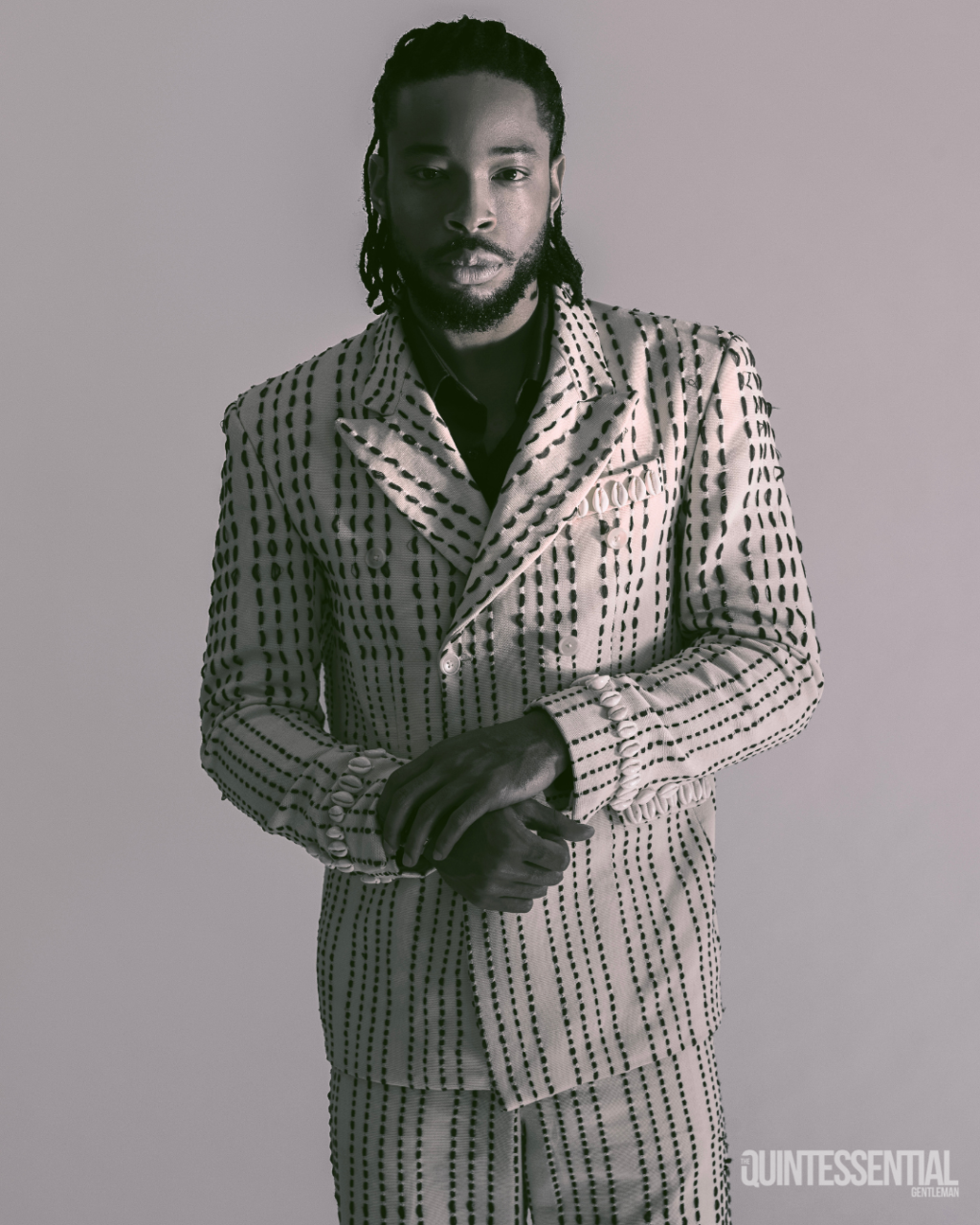
The series deals with technology outpacing humanity. Where do you stand on AI?
Dimitri Abold: AI is definitely a topic, and I like to see it as a tool, the same way a wrench or a hammer is a tool. You can use it for a bunch of different things. For some things, it’s maybe overkill; for others, it’s not. But that doesn’t mean it shouldn’t be used. Ultimately, it comes down to how we want to use it. Are we using it to help people? Does it make people’s lives easier or more difficult? Does it move us away from what I would call our humanity, toward disconnection? Finding a balance, and knowing why someone is using it, is the key.
What do you want to see more of in the industry?
Dimitri Abold: I would love to see even more Black and brown material, material by people of color. There’s already a lot of discourse around it in the States and in the U.K. But keep in mind, I’m from Germany, so our community is even smaller. The need to tell stories is just as big, maybe even bigger, at least in my experience. Every time I see amazing bodies of work from Black and brown communities make it over to Germany, it reinvigorates me and pushes me to keep writing my scripts and reaching out to director friends, so we can get more stories representative of our experience seen by the wider public.
And this isn’t just an experience present in Germany. Even though more is being made in the U.K. and the U.S., why not more? Why not go into the deep trenches of history, and not necessarily negative, dark history, but positive history? There are so many people who have walked this earth with incredible stories to tell.
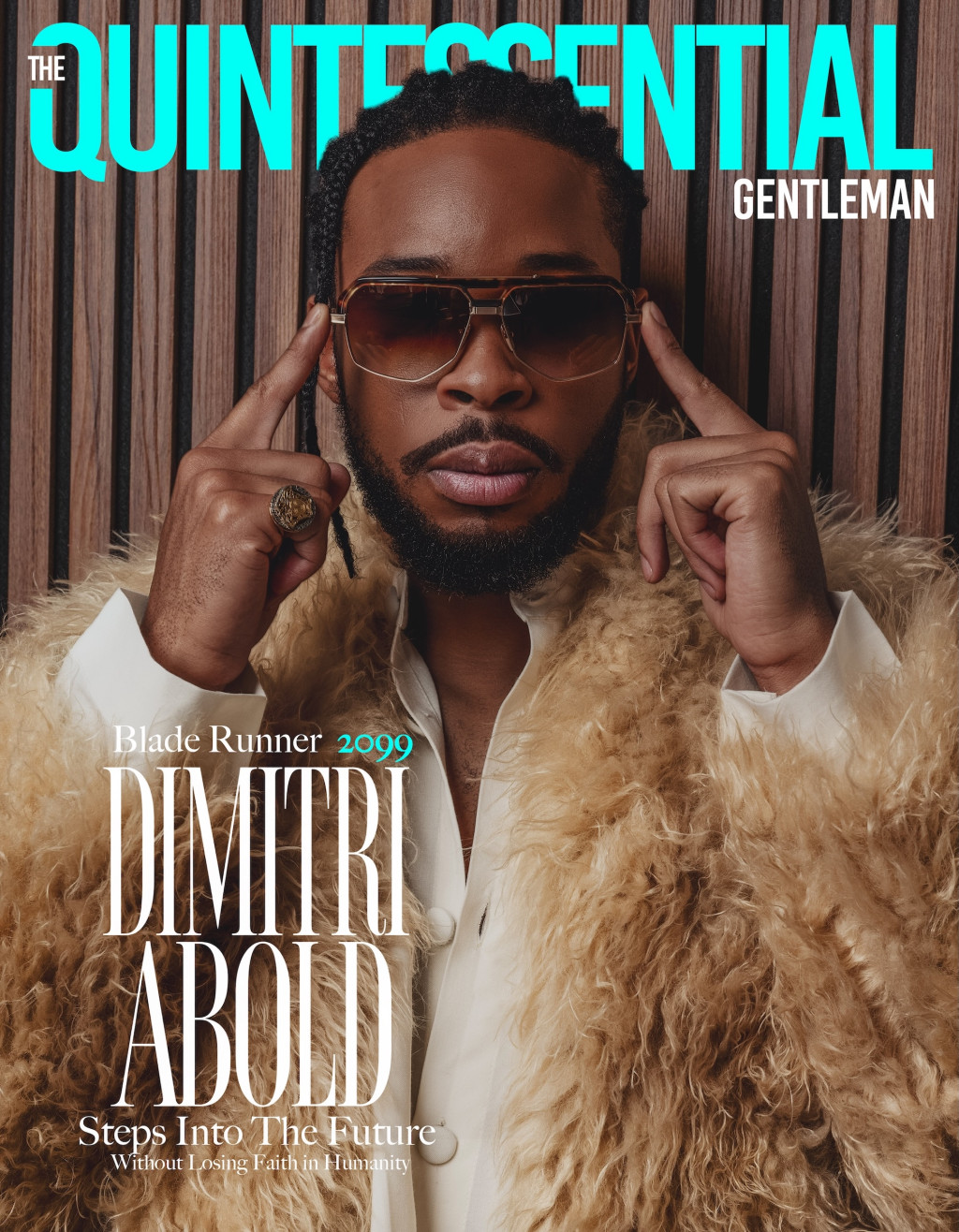
Blade Runner 2099 premieres November 25 on Prime Video.
Editor-in-Chief: Eric Keith
Photographer: J. Monroe of Monroe Media
Fashion Stylist: Mickey Freeman Represented by The Only Agency
Stylist Assistant: Kris Fraser
Groomer: Laila Hayani
Videographer: Lawrence Pitts
Graphic Designer: Tyline Burgess