


There is a version of strength that Black men are handed early, long before they have the language to question it or the permission to put it down. You carry it, you perform it, and eventually, if you’re lucky, you find your way to the conversation that reveals just how much it has cost you.
That conversation is exactly what A Man and His Mantle was built for.
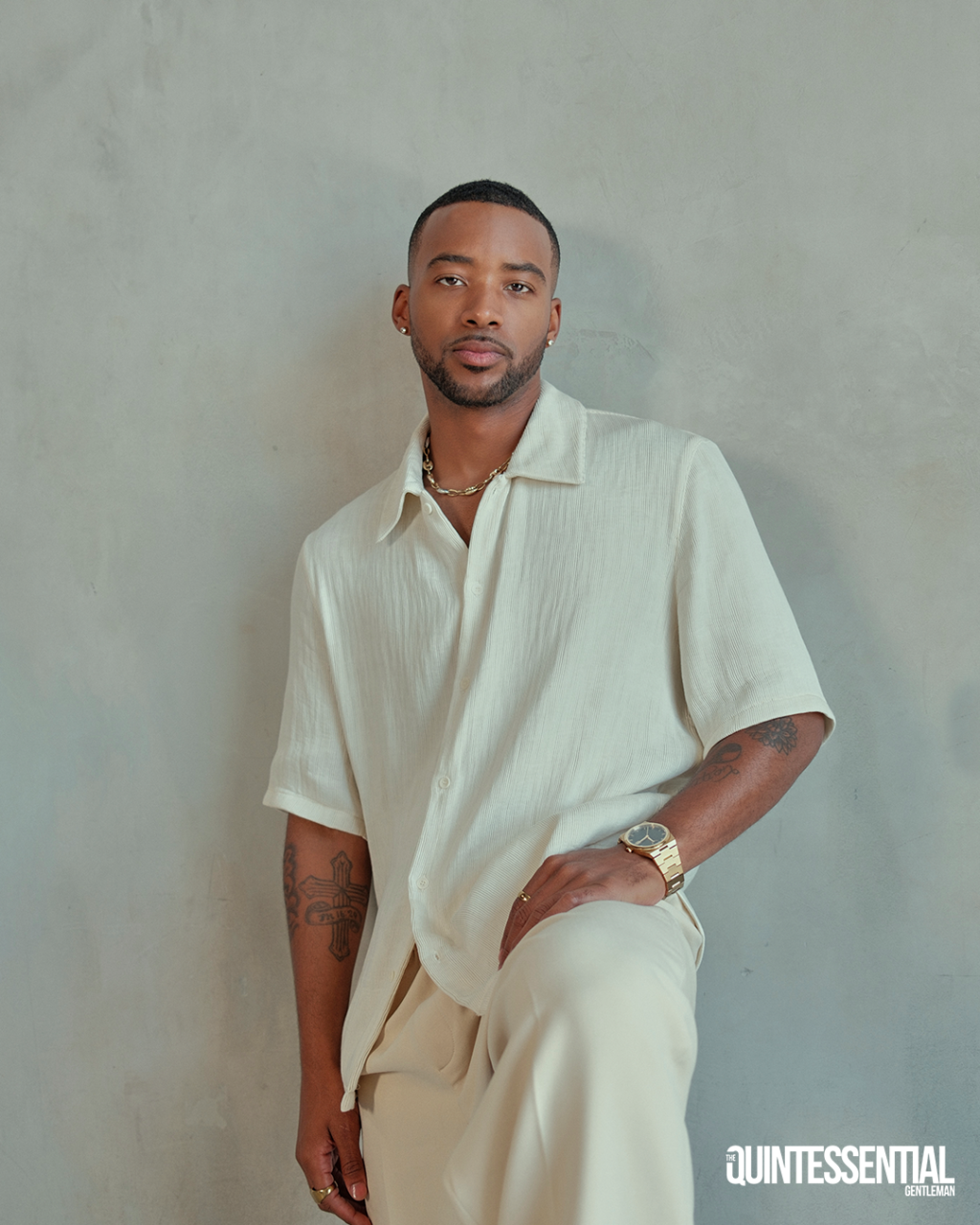
A Man and His Mantle is an original project created by Depth Psychologist Je’Rel Smith, and co-produced by The Quintessential Gentleman, that gathers some of the most compelling young Black men in entertainment, sports, and culture and creates the space for the kind of honest, interior dialogue that most platforms never invite and most men never get to have.
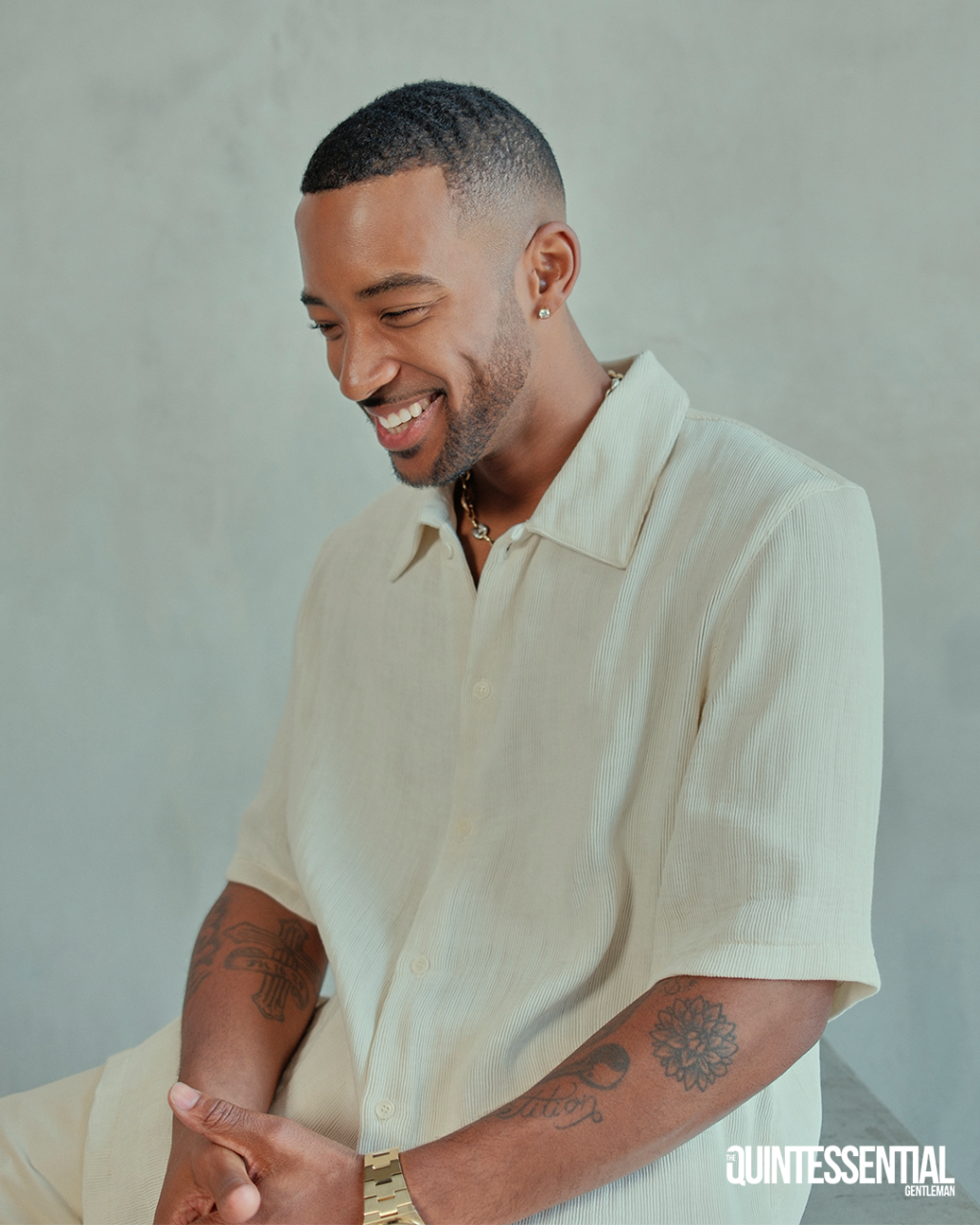
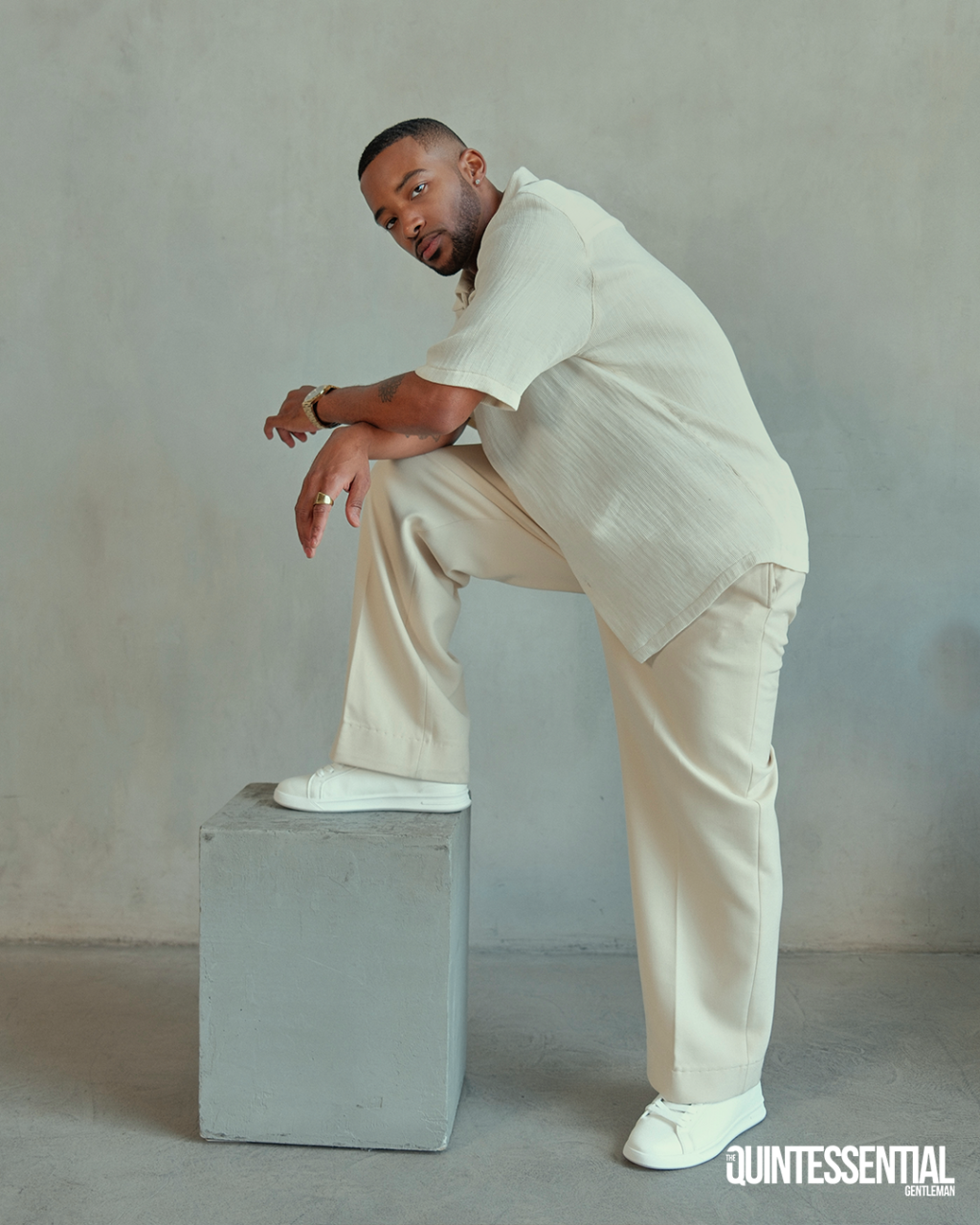
Anchored by an original photo shoot and a series of video interviews, the feature asks the questions behind the public persona: the mental health, the masculinity, the emotional blueprint laid in childhood, and what it actually costs to be the strong one.
This is not a wellness panel. This is not a press junket. It is a beautifully produced editorial experience that treats these men as full human beings and gives them room to say the things that have gone unsaid.
It is no accident that A Man and His Mantle arrives in June, Men’s Mental Health Month. At a moment when the cultural conversation around Black men and emotional well-being is louder than it has ever been, this feature is a reminder that the most powerful thing a man can do is be honest about what he is carrying. And few people are better equipped to illustrate that truth than Algee Smith.
Most fans know Smith from the screen, from his devastating turn as Ralph Tresvant in The New Edition Story, to his performance as Larry Reed in Kathryn Bigelow‘s Detroit, to his role as Chris McKay in HBO’s Euphoria.
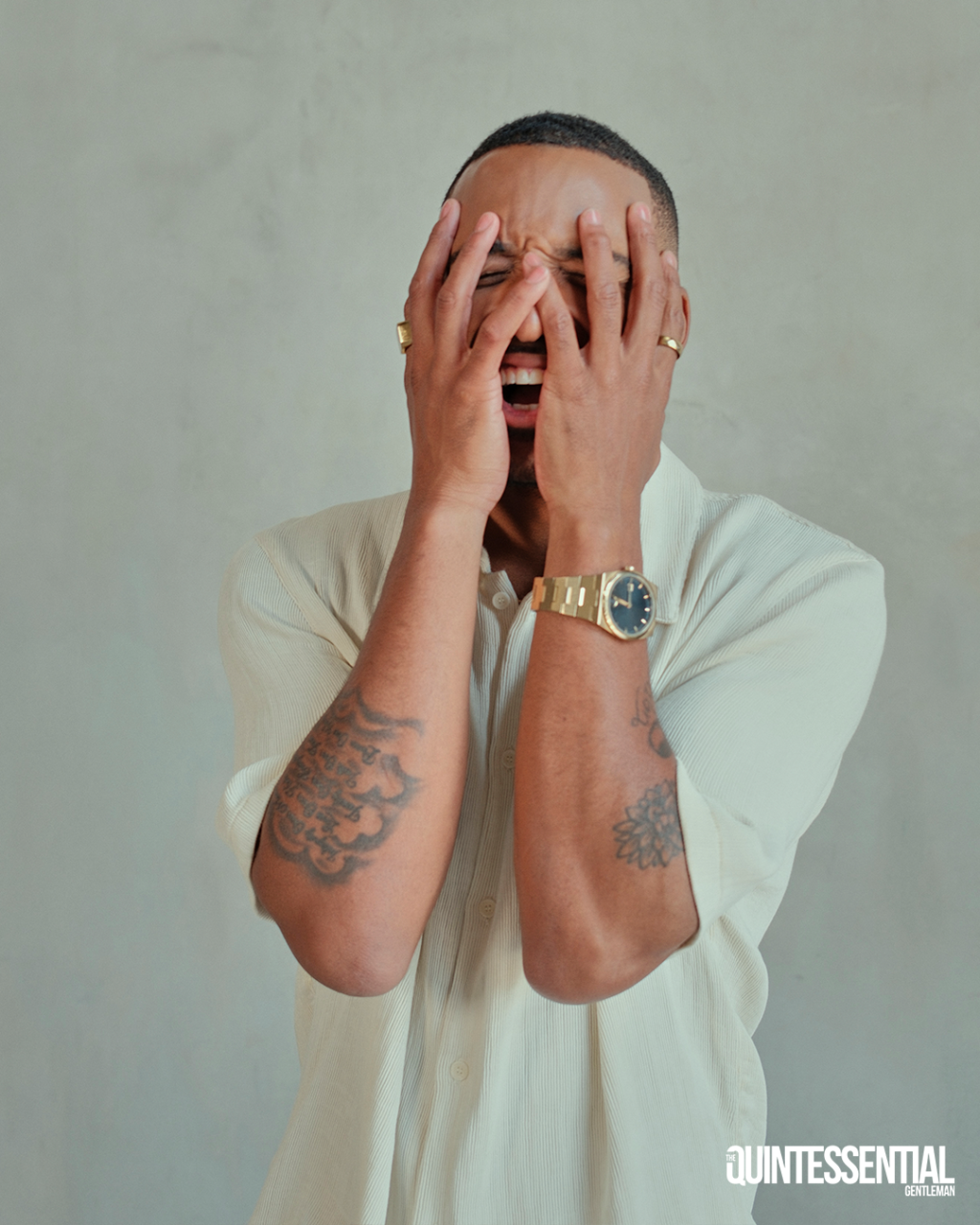
On screen, he portrays Black men with emotional depth and authenticity. What is less visible is everything that runs underneath, the years of grinding in Atlanta, the trips back home when Hollywood didn’t call, the internal reckoning with faith, identity, and what success actually means once you have it.
As part of A Man and His Mantle, Smith discusses what’s underneath. What followed was one of the most candid, searching conversations we have had on therapy, on shame, on the lies Black men are taught about emotion, and on the slow, daily work of becoming the man you were always meant to be.
[Interview has been edited for length and clarity]
You’ve played some incredibly emotionally demanding roles throughout your career. Is there one that taught you something new about yourself as a Black man?
The role that I feel taught me something different about just my experience as a Black man would probably be Larry Reed in Detroit. I’m from Saginaw, Michigan, and that took place, obviously, in Detroit, Michigan. So, just the connection there was super deep. But I just think learning about that piece of history that I didn’t know before, especially so close to where I’m from, and then being able to talk to my family about it, my grandmother, my aunts, and things that they remember about it, I think that role just kind of did something a little different than any other role that I’ve played, and it stuck with me a little more.
What did you expect accomplishment to give you emotionally that it never could?
I think I expected accomplishment to give me validation emotionally. And then when you realize, after you do all these projects, that you have validation, and then after that it’s like, okay, what’s after that though? So that can’t be the only goal. I think that’s what it was for me.
How do you know when you’re being guided by purpose versus driven by pressure?
I know in my heart when I’m being guided by my purpose, when I’m being guided by the Spirit, which I call the Spirit of God, my Creator. I can feel it instantly. It’s like I can feel it in my heart. What they call your knower and your stomach, whatever it is. I feel when I’m making the right decision. I feel when I’m out of alignment with the right decisions as well. So my faith has been a very, very crucial part of my whole life.
Growing up around music and performance, what messages did you receive about what a man should be emotionally?
I think growing up, one of the biggest lies that us as men kind of hold with us is that we can’t show emotion, that we’re not allowed to, that it’s weak to feel or cry or whatever it is, or even to talk to somebody about your problems. I just started therapy, bro. Like last week. It’s my first time doing it, and I was very nervous. It’s just because that part, I grew up just holding all my internal things in and never talking about it. Just going through that and breaking those cycles even within my life right now as a man is challenging, but it’s a great thing to do. So I think that was the biggest misconception growing up.
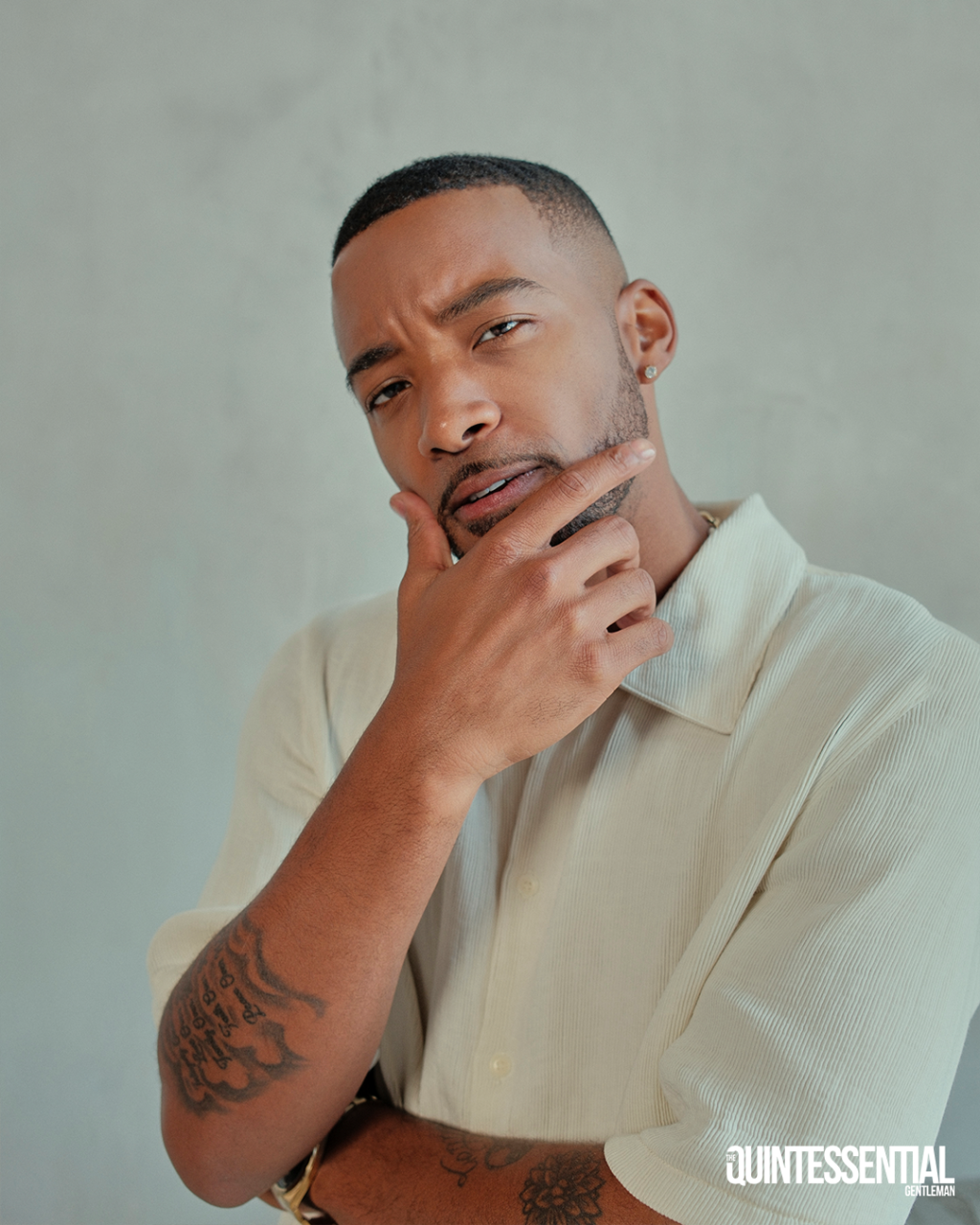
You described yourself as someone people come to. What happens when you need someone to go to?
I feel like I’ve just always kind of been the one to come to, and I kind of feel like I didn’t have anyone to go to about a lot of deep things that happened in my life. And I think it just got to a point to where I’ve had a real realization that if I don’t want to jeopardize my family and my future, the family that I’m going to build for myself, if I don’t want to jeopardize myself as a man, there are certain things that I have to take care of from my childhood now, before I get to the next part of my life. And so I think that was the biggest thing for me. Not even understanding it, reminding myself I’m not perfect. It’s okay to not be perfect. It’s okay to be flawed. And you really have to work through your childhood stuff, because if not, it just keeps coming up.
What emotion do you think Black men are most afraid to admit they’re carrying?
Black men have a hard time admitting that they’re carrying shame or guilt. It’s tough when you’re supposed to be the one that’s supposed to have it all together, but you know you don’t. And that can feel shameful, it’s really not shameful, but it can feel shameful, because nobody got it together. Like, we all don’t have it all the way together. So I think that’s one of the biggest things that we have a problem admitting.
Have you ever felt successful and unfulfilled at the same time?
I have definitely felt very successful and very empty at the same time. I think it taught me that my worth isn’t wrapped up in my work. Just the accomplishments and the jobs that you booked that everybody says “hooray, hooray” and keeps going, that’s not my value. It can get so tough because it’s just work, work, work, right? And so that’s what you kind of think you find your value in. But I had to realize that’s not where my value is. My value is in who I am every day, even outside of my work. I find my value in what I wake up and do for myself every day as a man, how I take care of myself, how I work out, how I stay on my responsibilities, how I’m disciplined. That’s where I find my real value, not in the work.
If you could go back and say one thing to young Algee in Atlanta chasing this dream, what would it be?
Keep your faith at the forefront of everything. I feel like for a while I kind of drifted a little bit from what I know is my foundation of faith, and I feel like that kind of set me back in a lot of different ways. And so I feel like now I’m at a place where I’m just much more grateful and happy in my faith, like I know I should be. And I think those years that I wasn’t, I would tell myself keep that at the forefront, man. Keep that at the very forefront of your life. Because everything else is just like this. The success comes and it goes, but you need something that’s solid. You need something that’s bigger than you, outside of what you say you do, that you can put your faith in, that gives you stability.
How do you find peace in your day-to-day life?
I find peace by doing things that I love to do. I find peace by going to play pool. I find peace by kicking it with my dog. I find peace by watching TV shows, playing Phase 10, playing Uno. Stock trading. Journaling. Walking in the morning. I stretch every morning. I find peace reading my Bible. Those are a couple of ways that I find peace, and I make sure that I do those things every morning because if I don’t, I’m kind of feeling off. If I don’t do the routine that I know I set up for myself to have peace, then my day is kind of off and I can feel it. So I make sure that the things I need to do to keep my peace intact, I do that and I don’t let anybody interrupt those things.
What do you hope the next generation of Black men doesn’t have to carry the way your generation has?
I hope the next generation of Black men don’t feel like they have to carry everyone on their shoulders with them. I feel like a lot of times, especially in the Black household, the Black community, it feels like once you get it, then you’ve got to give it to everybody else too. And it’s not always the case. You should do for people how you love to do for them, but also make sure you’re doing it for yourself so that when you’re sitting with yourself and you’ve already given out everything, you still have something for yourself. Because if you’re just trying to give yourself a half cup that you’ve already poured out to everybody else, it’s not going to work. Sometimes that calling is for you to walk. And whoever can keep up, or whoever is supposed to be there with you, will be there.
What does emotional freedom look like for Black men?
I think emotional freedom looks very different for Black men, depending on who you’re talking to. But for me, emotional freedom means being able to talk and feel like I can talk. Being able to express my emotions without feeling judged, being able to express them regardless of if I’m being judged or not, in the way that I want to express them, no matter who’s on the other side of it. I think being emotionally free for a Black man is going to the park, bro. Just walking around, taking a walk, enjoying yourself. Just being able to breathe and not feel like you’re always under pressure. Always gotta do, gotta do, gotta do. So that’s how I feel.
If a young Black man is reading this right now, what do you want him to know?
You’re blessed, man. You’re alive. You have time. You’re owning your time. You are designed to be here for a purpose. I don’t know if you’ve found that purpose already, or if you’re finding it, but you have a purpose; that’s why you’re here on this earth. If you’re having trouble finding that purpose, lean into things that you love to do. Most of the time, your purpose is things that you really love to do and that you can help other people with through your love of doing it. Understand that you’re important, man. You’re worth hearing and listening to. You are golden. You are the cream of the crop. You’re the best thing on earth, man. So walk like it. Keep your head high. Understand that your words have power. Speak over your day. Speak over your mind. Control your environment and protect your peace.
Who is the man you’re becoming?
Oh, I’m still becoming. I’m still becoming the most disciplined version of myself. I’m still becoming the most authentic version of myself. I’m still becoming the most emotionally free version of myself. I’m still becoming the best entrepreneurial version of myself. I’m still becoming the most sought-after God-heart of myself, if that makes any sense. I’m still becoming my best self.
Producers: Jerel Smith and Eric Keith
Photographer: Jerel Smith
Videographer: Jerel Smith
Groomer: Keyocsha Brown