

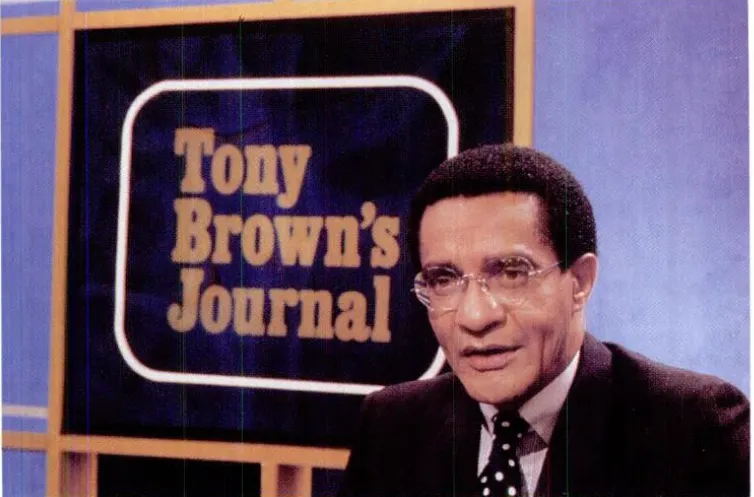
Tony Brown, the pioneering television host, journalist, educator, and activist, has passed away at the age of 93. Known globally as the long-serving host of PBS’s Tony Brown’s Journal, the longest-running national Black public affairs series in television history, Brown leaves behind a massive, highly disciplined legacy of cultural pride and intellectual independence.
For generations of Black Americans, turning on his show was a weekend ritual. At a time when mainstream media either ignored Black communities or filtered their struggles through a deficit lens, Brown stood as a highly articulate counterweight, demanding that the world see the full complexity of Black life.
Long before he was a household name, Brown was a young activist and journalist working on the ground during the height of the Civil Rights Movement. Born in Charleston, West Virginia, in 1933, he earned his master’s degree in social work from Wayne State University in Detroit before finding his true calling in the media.
In the late 1960s, public television launched Black Journal to address the media’s severe lack of diverse coverage following the civil rights uprisings across the country. Brown joined the program as an executive producer and host in 1970, instantly injecting the show with a raw, analytical, and uncompromising focus on Black self-determination.
In 1977, Brown took the show independent, renaming it Tony Brown’s Journal. Over its historic, multi-decade run, the show tackled subjects that mainstream networks simply wouldn’t touch, ranging from deep dives into systemic redlining and environmental racism to exclusive interviews with iconic figures like Malcolm X, Muhammad Ali, and Martin Luther King Jr.
While many civil rights leaders of his era focused strictly on political integration, Brown was a fierce, early advocate for economic self-reliance. He was the mastermind behind the “Buy Black” campaign of the 1980s, urging Black consumers to redirect their immense spending power back into Black-owned businesses, banks, and community infrastructures.
He famously argued that political freedom without economic independence was an illusion, a philosophy that made him a highly unique, occasionally controversial figure who transcended standard political boxes. Though he eventually aligned with the Republican Party in the 1990s, his underlying motive remained fiercely consistent: the empowerment and self-determination of Black people.
Brown’s impact on the future of media was equally profound in the academic world. In 1971, he became the founding dean of the School of Communications at Howard University. Under his leadership, the school built the physical and intellectual infrastructure that trained generations of premier Black journalists, producers, and filmmakers, permanently altering the DNA of American newsrooms.
Tony Brown believed that the ultimate power of media was its ability to educate and elevate. He famously said, “If we don’t tell our stories, someone else will tell them for us, and they won’t tell them right.”
By spending his entire life holding the microphone, running the camera, and building the classrooms, Brown ensured that the story of Black America was told with the dignity, nuance, and brilliance it deserved.