
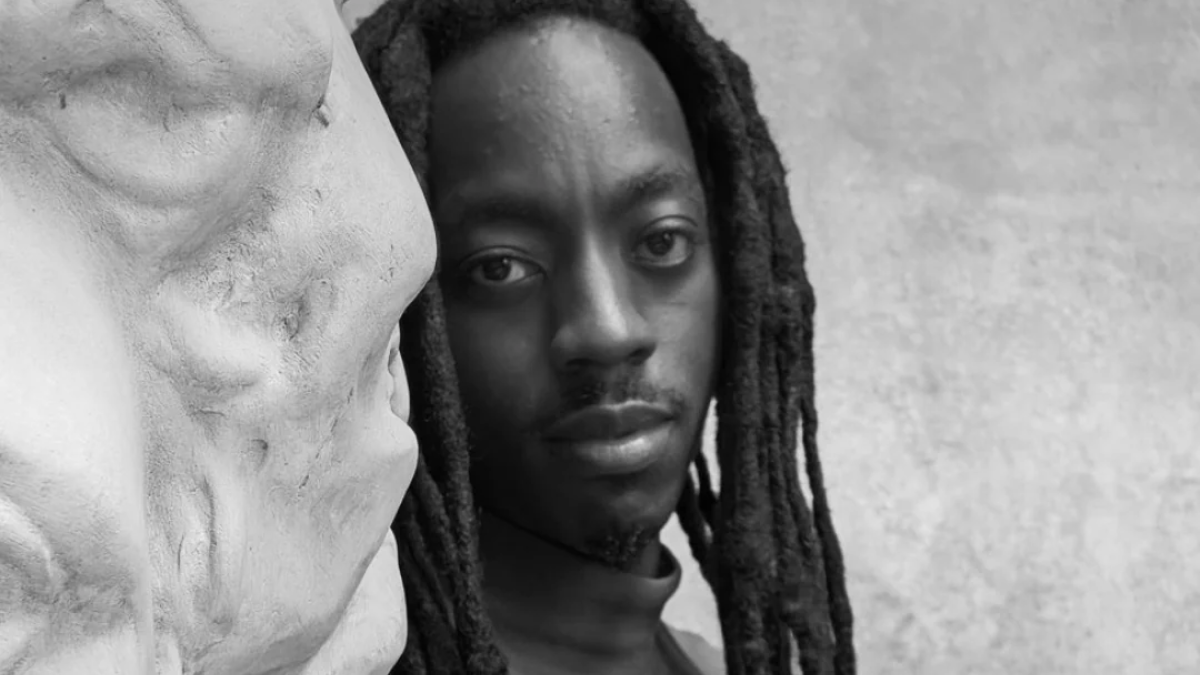
Justin French didn’t exactly plan to leave his corporate career. The photography just got too big to ignore. For years, French worked as a corporate data analyst, a job he genuinely enjoyed. But as demand for his creative work grew, it eventually eclipsed the analytical side, and he embraced the shift.
Today, he’s known for classical, mythic portraiture, a style built on control, light, composition and presence. His influences read like a lineage of great American image-makers: Roy DeCarava, George Platt Lynes, Richard Avedon and Gordon Parks.
The analyst never fully left, either. French says the research behind every shoot, studying brands, audiences and mediums, mirrors the work he used to do.
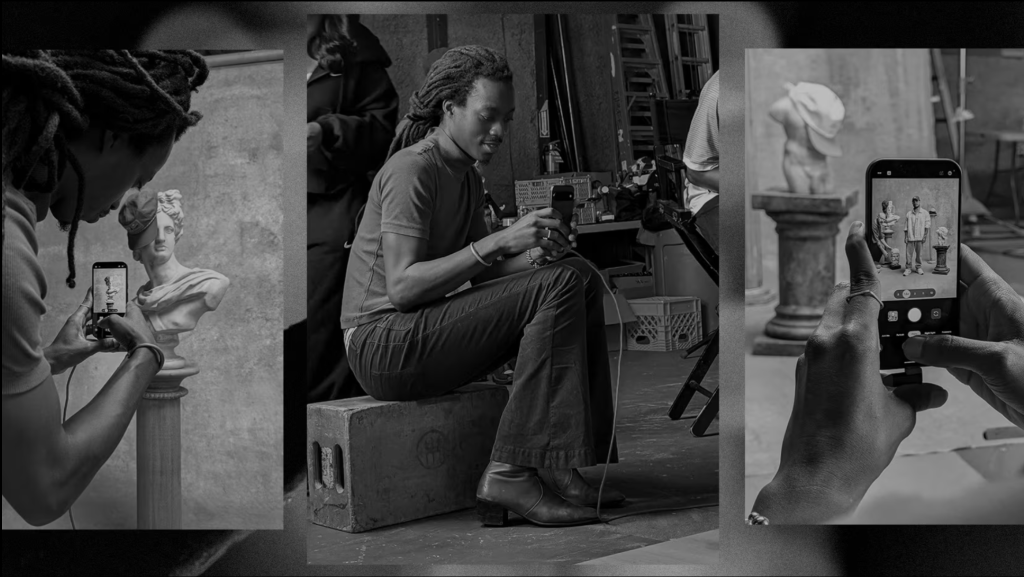
His latest assignment asked him to set aside the gear he spent years mastering and pick up a phone. French was one of three photographers tapped for Culture in Focus, a Google campaign in which each artist shot a chapter of an 11-year style retrospective, captured entirely on the Google Pixel 11.
The series culminated at ComplexCon’s 10-year anniversary, held Oct. 3 and 4 in Los Angeles. The work appeared on digital boards and an out-of-home billboard across the city.
In his conversation with The Quintessential Gentleman, French talks about the turning point that took him from spreadsheets to portraiture and what the Pixel 11 demanded of him that his usual setup doesn’t. He also explains why photographing style is really about the person, not the clothes.
You spent years as a corporate data analyst before picking up a camera. What was the turning point?
Justin French: I truly enjoyed my work as an analyst. It wasn’t so much a deliberate choice, but at some point the creative work demand grew and eclipsed the demand for my analytical work. It was a decision I didn’t fully make myself, but I did embrace it.
How much of your analytical mind shows up in how you approach a composition?
Justin French: So much of the preparatory work in my photography mirrors the research I conducted in my previous career. It’s so seamless, in the sense of studying brands, audiences and mediums, that outside of the physical act of a photoshoot, I feel as though I’m still operating as I was.
Who were the image-makers who showed you portraiture could carry that kind of mythic weight?
Justin French: Roy DeCarava, George Platt Lynes, Richard Avedon and Gordon Parks.
When Google came to you about shooting a chapter of an 11-year style retrospective on the Pixel 11, what was your first reaction?
Justin French: It’s always exciting to hear from Google. It is very warming that an organization of their stature is excited about working with artists to bring ideas to life.
You were one of three photographers chosen. What did it mean to be trusted with a chapter of a story this size?
Justin French: It is gratifying to be asked to bring any project to life. It’s an opportunity to infuse my eye and aesthetic into a public-facing medium that, at best, will inspire and drive others’ interest in creative output.
What did the Pixel 11 demand of you that your usual process doesn’t, and what surprised you about what it could do?
Justin French: My practice focuses on control: lighting, lenses, years of knowing exactly what my gear will give me. The Pixel 11 strips a lot of that away, and at first that feels different. You can’t hide behind equipment.
What surprised me is how much that actually sharpened the work. There’s an intimacy you get shooting on a device this small that a full studio setup doesn’t always give you. It pushed me to prove that the classical, mythic feel I chase isn’t about the camera at all. It’s about the eye behind it.
How do you maintain that level of intentionality when the tool in your hand changes the equation?
Justin French: Thankfully, the lighting, composition and presence aren’t bound by the device used to capture. Maintaining the right conditions outside of the photographic device is the first step. The device in this case also allowed for a great deal of meticulous control and calibration.
How do you photograph style in a way that goes beyond clothing and captures the moment it came from?
Justin French: For me, style was never just about the fabric or who had the loudest fit in the room. I blend documentary truth with classical portraiture, so when I look back at a specific fashion era through the lens of photography, it’s more about the person than the clothes.
What did it mean to have this work on billboards in Los Angeles for ComplexCon’s 10-year anniversary?
Justin French: The entire campaign was really special. ComplexCon is where street culture, art and high fashion collide, and the fact they went back to LA for its 10th anniversary was such a great decision. Having my work up at that massive scale, where our community can see it up close, felt very validating.
What do you want people to feel when they stop and look at your chapter of this campaign?
Justin French: I want people to slow down for a second. I’m not interested in making work that’s forgettable. If someone looks at my images and takes a breath instead of scrolling or walking past, that’s the win.
Photo Credit: Complex