

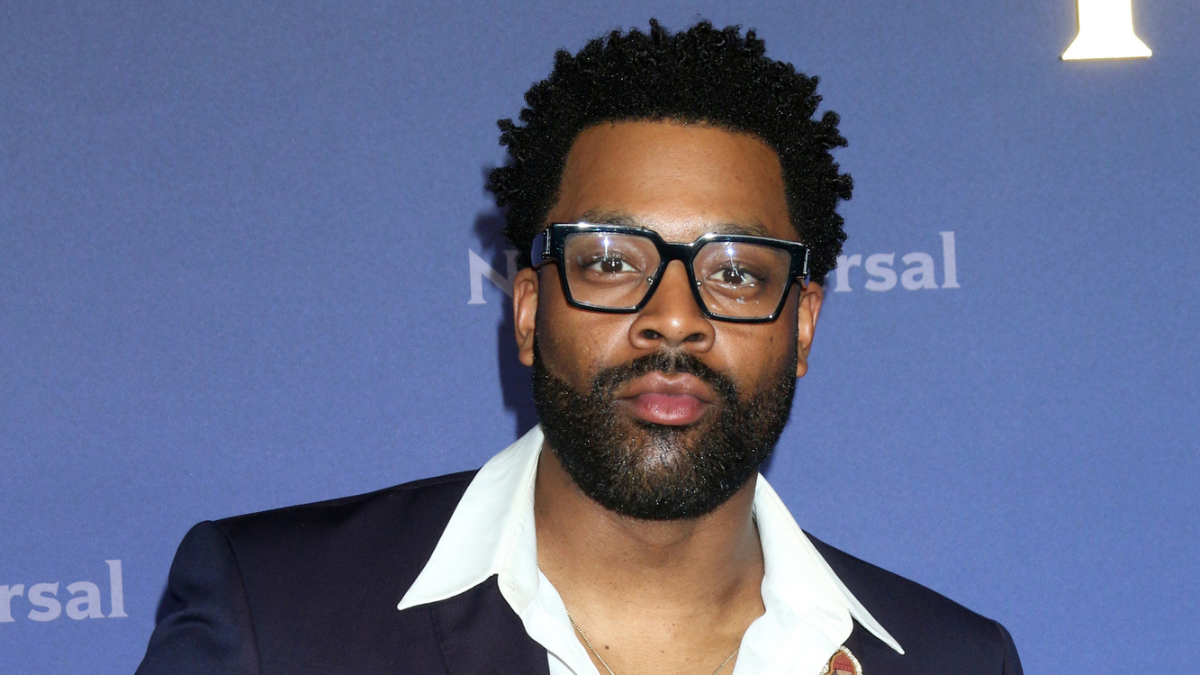
For more than a decade, LaRoyce Hawkins has been a familiar face to television audiences as Officer Kevin Atwater on NBC’s Chicago P.D. But outside the precinct, Hawkins has been building something just as meaningful: a creative life rooted in poetry, independent film and pouring into the next generation of storytellers.
That mission brought him to Howard University for the 4th Annual HBCU First Look Film Festival. The three-day festival celebrates Black storytelling and the next wave of filmmakers, content creators and entertainment professionals.
Under this year’s theme, “How to Be the Next,” the festival featured screenings, master classes, industry conversations and hands-on experiences designed to connect emerging creatives with established leaders in entertainment.
The festival also recognized the 2026 I Aspire 25, celebrating HBCU alumni making an impact as Visionaries, Changemakers, Storytellers, Filmmakers and Entrepreneurs. At the Salute THEM Awards luncheon, winners of the HBCU First Look Film Challenge, selected from more than 450 submissions, each received $5,000 and an internship opportunity.
For Hawkins, being there was about planting seeds. The actor recently stepped into new territory with the independent film 93 ‘Til, a project that began with a request for his poetry and grew into a role behind the camera as a producer. He sees that kind of filmmaking as a space where artists can break free of television’s formulas and create on their own terms.
We caught up with Hawkins at HBCU First Look to talk about why HBCUs matter for Black storytelling, what independent film gives him that network TV can’t and the advice he has for young talent ready to be next.
[Interview has been edited for length and clarity]
Why is it so important for you to be part of HBCU First Look this year?
Hawkins: I think it’s something special when young minds request, and when young minds ask for, and when young minds are interested in, however, I can add value, I’m down. I consider my mind young, but I’m not as young-minded as I once was. And so I think it’s important at this stage to offer value, if I can. So that’s why I’m here. I love planting seeds. I’m in the plant seeds business, and it seems like they’re growing pretty well.
Why do HBCUs matter in building the next generation of Black storytellers?
Hawkins: HBCUs matter because where is a better place to cultivate Black imagination? Where else can you nurture and nourish the qualities and the nuances that it takes for Black storytelling outside of an HBCU in real life? I think at any other type of university or in any other setting outside of an HBCU, you’re at risk of the whole texture being diluted and not as nuanced, not as concentrated. You want to lock in on a concentrated vibe, and that’s what you get at an HBCU that you can’t really get anywhere else.
You have big projects like Chicago P.D., but you’ve also worked on independent films like 93 ‘Til. Why is it still important to you to work with independent artists?
Hawkins: Because I’m not sure where else you’re gonna really be able to cook a certain way. I’ve developed a lot of what I know through an experience within the television institution that is very well-oiled. The machine doesn’t really leave you much room to over-imagine. There are rules that you got to go by. There’s a formula, and there are equations, and you got to smack them formulas and smack them equations every day. That’s what you come to work to do. And so what I liked about the opportunity to do a film like 93 ‘Til was the opportunity to just kind of color outside the lines a little bit, paint a picture and find out what it looks like.
Also, the opportunity offered a window into poetry. What’s very important for me right now as a storyteller is how do we find value through poetry? How can poetry pour into film? How can poetry pour into fashion? How can poetry pour into these other genres of music? And so this was the first opportunity I got. 93 ‘Til was that. They literally called me asking for poems, and I was like, perfect. And so I grew into a producer and found myself behind the camera eventually. But that wasn’t the point. The point was the poems. And if that’s where it started, then anything can happen, which is what happened with 93 ‘Til. It worked out.
This year’s theme is “How to Be the Next.” What advice would you give to young Black talent looking to follow in your footsteps?
Hawkins: I think it’s important to study the qualities of our ancestors that actually broke down the doors. I’ve been studying Harry Belafonte. And what I love about Harry Belafonte’s approach to the game was how he maintained the intention to impact the culture. Like a simple vision: How do I impact the culture?
I think those are the things that, as up-and-coming, sometimes we forget. We see the results that rise from the surfaces, and it’s like, “Oh, OK, well, I have to look like this, or I have to say lines like this, or I have to be in these rooms.” But I think we forget that it starts with our thoughts and with being intentional and specific at the same time. And so, I think if you wanna be next, you have to understand the qualities that it took to get there in the first place. And oftentimes that’s so internal that it is hard to see.
Photo Credit: DepositPhotos.com