
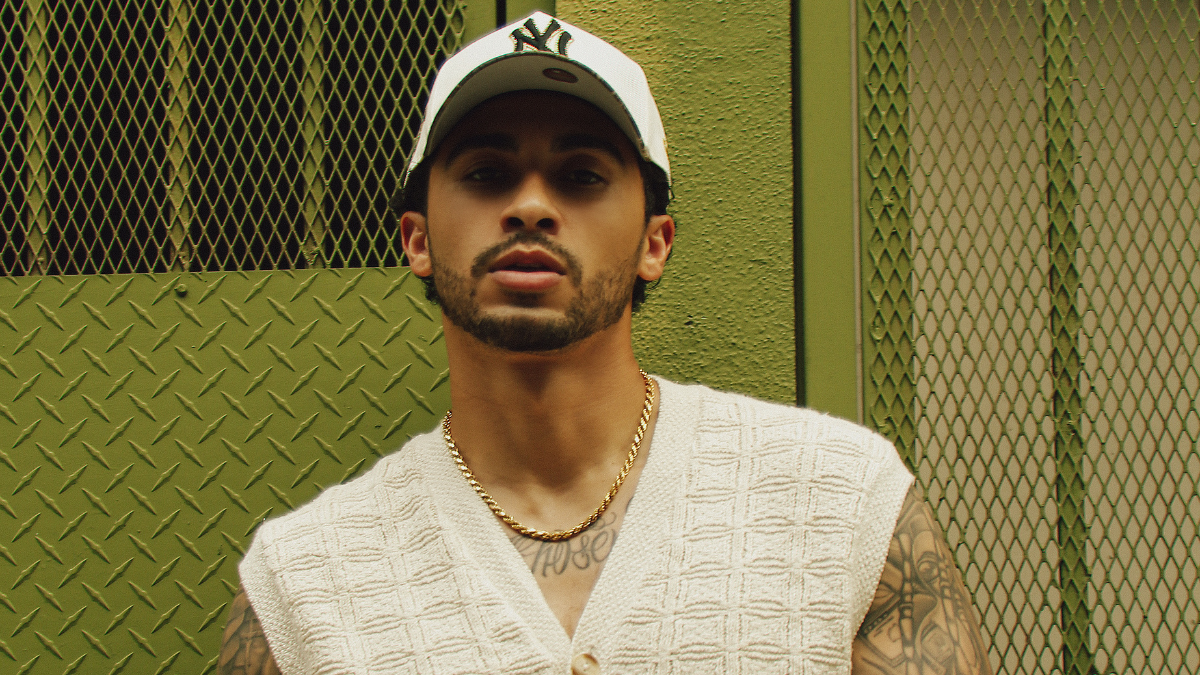
Before playing Angel in Beauty in Black, Xavier Smalls had plans to become an orthodontist. The Sacramento native entered Sacramento State as a biology major before switching to business. It was a theater class that put him on a different path.
When a group of student directors offered extra credit for performing in a 10-minute play, Smalls signed up. He was petrified in front of an audience of about 15 people, but the rush he felt onstage reminded him of playing football. He knew it was something he wanted to keep doing.
Smalls went on to earn a bachelor’s degree in theater and moved to New York City. He booked his first professional acting job with Tyler Perry in a Madea production, joining a franchise he grew up watching. While filming one of his final scenes, Perry told him to stay in touch. A few months later, Perry reached out about playing Angel in his first Netflix series, Beauty in Black.
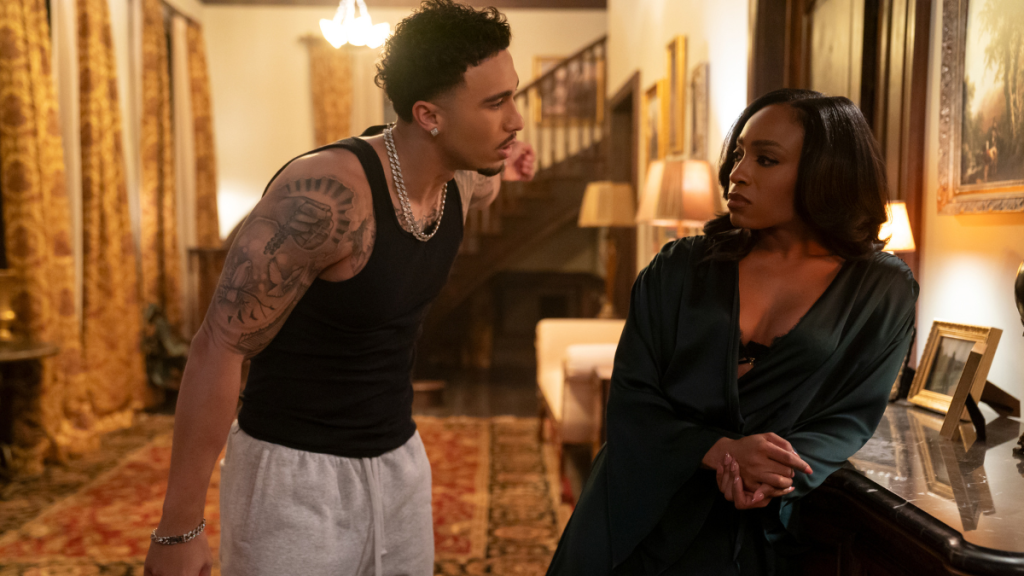
In Beauty in Black, Smalls plays Angel, a longtime friend of Kimmie (Taylor Polidore Williams) and Rain (Amber Reign Smith) who works alongside them at a Chicago strip club. When Angel asks Kimmie for help with a client, Horace (Ricco Ross), he gets pulled into the world of the wealthy Bellarie family. The role became a breakout for Smalls, introducing him to a wider audience early in his career.
Today, the 28-year-old is a married father of two and a self-described follower of Jesus first. In his conversation with The Quintessential Gentleman, Smalls talks about what working with Perry taught him about betting on himself, why fatherhood has made him more selective about the projects he takes on and how his faith inspired Symmetry, his first feature film as a director.
[Interview has been edited for length and clarity]
What first drew you to acting?
Smalls: I remember taking a theater class, and these directing students came in and said they were doing 10-minute plays. If you signed up, you’d get extra credit. And not only did I need the extra credit, but I was also very interested in doing it.
I did the play in front of about 15 people, and I was petrified. But it also gave me an adrenaline rush that reminded me of football. I knew I wanted to continue doing that.
The other things sounded good, and I knew I could make money doing them, but they didn’t tug at my heartstrings. This acting thing, it tugs at my heartstrings. I feel like this is me.
How has your relationship with faith changed throughout your career?
Smalls: In the beginning of my career, when I was in college studying theater, I was very lukewarm. I knew about Jesus, and I claimed to love and know Jesus as my Savior, but that was the extent of it. I maybe went to church once or twice a year.
After I graduated with my bachelor’s degree in theater, I moved to New York City. I knew nobody out there. In the back of my Bible, there was a plan that broke down what to read each day, so I made a commitment to read it in a year. It took me a lot longer than a year because there were some days I missed.
But it wasn’t until I read the Bible for myself that I was like, “I actually had this wrong the whole time. I really don’t know God. I really don’t understand what it means to be a Christian and follow Jesus.”
I finished reading it for the first time in April 2023. I read it again, and then I read it again. Each time, I’ve developed a deeper understanding of who I’m called to be, the gifts He’s blessed me with and how to steward those. I continue to read it every day, and it just deepens my walk with God.
How does your sense of purpose connect to acting?
Smalls: Initially, I thought my purpose was acting. I thought that was what I was put on this earth to do. But as I began to grow in that realm and in my walk with God, I realized it’s much deeper than that. I feel like I’m called to be a storyteller and to tell some biblical stories in a modernized way.
I want to be the light in this dark industry and be an example of what it means to be a follower of Jesus while also being in the entertainment industry. It’s difficult because you’re called to say and do a lot of controversial things. But for me, it’s always God. He’s the provider.
What drew you to playing Angel in Beauty in Black?
Smalls: Tyler started telling me about Beauty in Black, and I was like, “This sounds wild. It sounds crazy. Let’s do it. I’m down.”
Then he sent me the first four episodes, and I was like, “Wow, this is even crazier than you described it.” It was the same thing reading the script as it is watching it on screen. You’re like, “What? He said what? She said what?” You don’t come across a lot of scripts like that.
I wanted to work with Tyler again and have the opportunity to do what I love, which is act. It was an easy decision for me.
What was it like stepping onto the Beauty in Black set for the first time?
Smalls: The experience was crazy. I remember walking into the strip club, Delinda’s Dolls and Dudes, and there were over 100 extras. Tyler Perry was moving at the lightning speed he always does. It was just like, “I’m really here. I’m really doing it.”
The first few scenes I did, Tyler pulled me aside and was like, “Hey, you need to step it up.” He didn’t feel like I was really carrying the weight of Angel. Tyler told me what he wanted the audience to feel and said, “I need to see it.”
I stepped it up, and he told me good job throughout the rest of the shoot. It was definitely shocking, but I would say I was prepared.
What did working with Tyler Perry teach you about betting on yourself?
Smalls: I’ve always kind of bet on myself, and I just so happened to book my first professional job with Tyler Perry, who’s Mr. Bet on Himself. He’s the walking example of that.
If you believe in yourself and you bet on yourself consistently and you give it your all, you’ll reap the rewards. And those rewards could be extraordinary, as we see with Mr. Perry himself.
How has fatherhood changed what matters to you?
Smalls: Before fatherhood, I would kind of just work hard for myself. I saw this version of myself in the future, and I wanted to come into alignment with the highest version of myself. But now other people are depending on me, so it’s way bigger than me. It always has been, but now it’s a reality. I would say it’s a different level of work ethic.
I’m also more selective with the projects I’m willing to work on. Twenty years down the line, I want our children to look at me and be like, “Dad, you’re dope.” Not only are you a man of God, but you’re also telling good stories at a high level.
How do you balance being a present father with pursuing your career?
Smalls: I’m still learning, but I would say right now it’s developing a routine with my wife. It’s communication and collaboration. I’ll have the baby during this time, and in this other block, I’m going to be taking meetings, working on the script or going over my lines.
Developing a routine has been the best way to balance everything. If you don’t have a routine, you’re kind of like a feather in the wind, and you can’t really accomplish much.
When you talk about your legacy, how much of that is connected to fatherhood?
Smalls: It’s a huge part of it. I want to leave my legacy for something more than myself, whether that’s other people out there who I may inspire or my children. I want to be a great example for them as to how to pursue what you love doing, doing it at a high level while also seeking God, putting Jesus Christ first and loving your wife or your significant other.
Leaving that legacy is everything. Because if you don’t leave that, then you kind of just set your children up for failure, which is the last thing I want to do.
What are you working on next creatively?
Smalls: Right now, I’m developing my first feature film. It’s called Symmetry, and it’s a modern retelling of the Cain and Abel story in the Bible. It’s about an aspiring male model whose younger brother, a college football player, gets signed by chance and becomes one of the biggest models in the nation.
The older brother starts to develop resentment and jealousy. He goes overboard with plastic surgery to conform to the beauty standards of the modeling industry and to try to look like his brother. Things take a turn for the worse. If you know the Cain and Abel story, then I don’t have to get into too much detail.
The script is finished. I’m going to play the younger brother, and I’m going to direct it as well. We have producers attached. Don Benjamin is not only doing a cameo role in it, but he’s also producing it.
I also just put out my second short film, Double Stuff. It’s a fictional story with autobiographical elements. It’s about a man who’s half Black and half white, like me. In a predominantly Black crowd, he’s too whitewashed. In a predominantly white crowd, he’s too hood or too Black. He gets to a point where he’s like, “Why am I never enough?” He goes to a diner, and the waitress is also half Black and half white. They have a heart-to-heart over an Oreo milkshake.
How do you approach the writing process?
Smalls: I always have like a million drafts of the same project. I’m always tweaking things. With Symmetry, I just recently started acting out each character. When I’m going through the script, I’ll literally get up on my feet. I learned this from Aaron Sorkin. He actually gets up on his feet and acts like each character, and that’s been very helpful.
Sometimes I’ll be emotionally charged up saying a certain line, and it doesn’t sound right. It sounded like it when I was writing it. But now that I’m on my feet and in the circumstance, and I can put myself in the character’s perspective with my acting background, it’s like, “Oh, that doesn’t sound right. Let me tweak it.”
Photo Credit: Jorden Keith/Netflix