

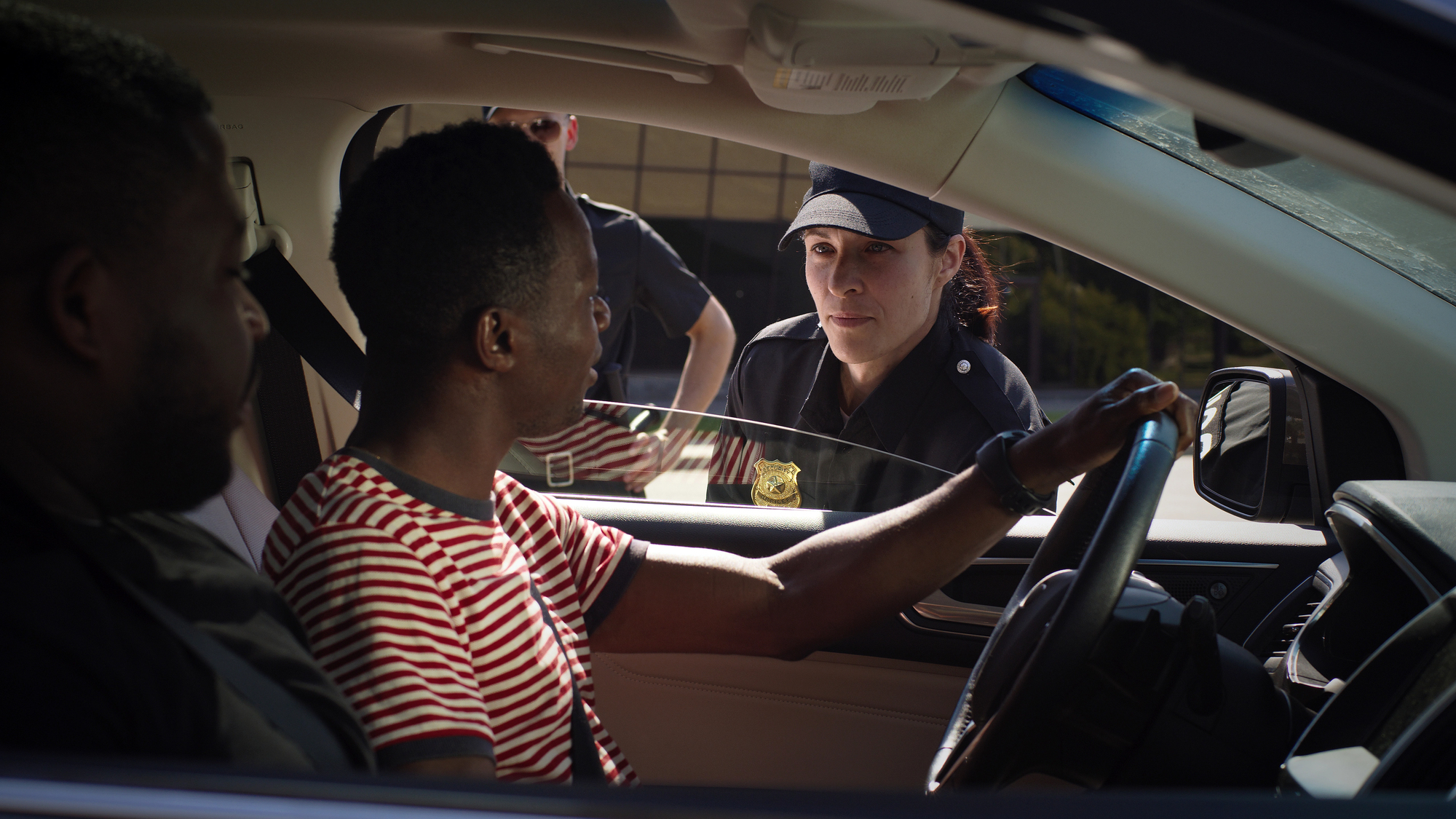
Young Black men in Philadelphia are about five times as likely as young white men to be pulled over while riding with another young man of the same race, according to a new study by Lance Hannon of Villanova University and Molly Biddle of the University of Edinburgh.
The paper, Suspicion in Numbers: Pretextual Traffic Stops of Young Black Men Traveling Together, was published online October 19, in the journal Race and Social Problems. Hannon summarized the findings in an essay for The Conversation on November 9.
What the Researchers Found
The researchers analyzed 41,633 Philadelphia Police Department traffic stops from 2021 through 2024. All involved men ages 18 to 29 who were stopped for motor vehicle code violations and not arrested.
About 1 in 4 young Black men who were stopped were investigated alongside another young Black man. For young white men stopped with another young white man, the figure was less than 1 in 20.
“This fivefold disparity is striking, but it does not necessarily establish discriminatory policing,” Hannon wrote, sharing that groups may simply drive or travel together at different rates.
To test that, the team used the “veil-of-darkness” method, which compares stops made in daylight with stops made after dark, when officers have a harder time seeing who is in a car. The gap between young Black men riding in groups and those driving alone narrowed when visibility dropped. Hannon writes that this effect was larger than the Black-white disparity itself.
Both patterns held after accounting for time of day, neighborhood, police assignment, season, and other factors.
The ticket data adds to the case. Only 7% of young Black male drivers stopped with young Black male passengers received a ticket for the violation that justified the stop.
“Only 7% were ticketed, which suggests that many stops were pretextual,” Hannon wrote.
Why It Matters Beyond Philadelphia
The study points to something many Black men describe from experience: the number of young Black men in a car, and not only their race, appears to raise the odds of a stop. “Two young Black men together may therefore be perceived as much more suspicious than either would be individually,” Hannon wrote.
The findings come from one city’s records, and the visibility test points to bias rather than proving any officer’s intent. Hannon’s essay did not include a response from the Philadelphia Police Department.