

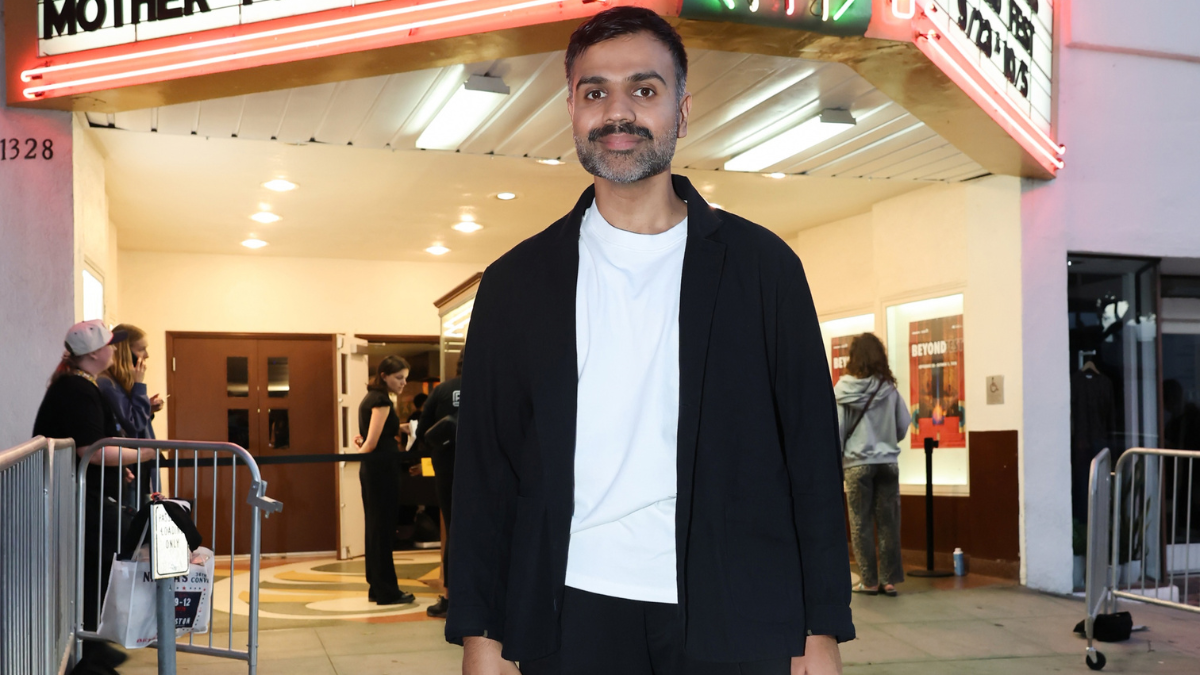
Bassam Tariq almost didn’t make his latest film. The director behind Mogul Mowgli and the short-lived Blade reboot had written something else entirely, a revenge thriller he thought was the next move.
It wasn’t until his friend, actor Riz Ahmed, read both scripts and told him to go back to the other one that Tariq returned to Your Mother Your Mother Your Mother. Sitting alone at a coffee shop during the 2023 writers strike, he read it again. And he cried. “I finally saw an opening of what this is,” he said. From that moment, he said no to every other project and poured everything into making it.
The result is one of the more quietly urgent films of the year. Your Mother Your Mother Your Mother stars Mahershala Ali as Latif, a Muslim man in Houston navigating grief, faith, and a desperate search that puts his family in danger.
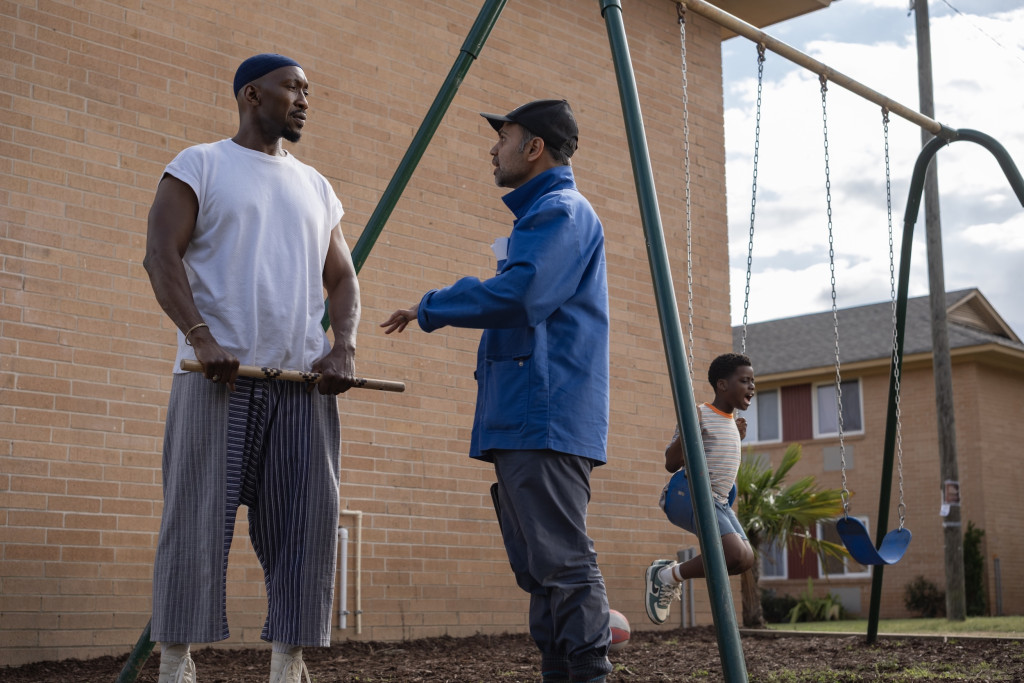
The film also stars Giancarlo Esposito and John Cho, with a cast and crew built intentionally from the communities the story represents. Tariq, who spent part of his childhood in Houston, screened the film there recently, and the response confirmed what he had hoped: that the city and its people felt seen.
At its core, the film is about a man, dignified, grieving, striving, centered in an action framework in a way American cinema rarely attempts for a Black Muslim character. Tariq gave Ali room to run with it, and what came back was something that surprised even the director. The vulnerability he saw on screen, quiet, earned, and real, is the conversation the film is designed to start.
We sat down with Tariq to talk about the script’s journey, his collaboration with Mahershala Ali, and what it means to put a grieving Black Muslim man at the center of a film like this.
[Interview has been edited for length and clarity]
This story takes place in Houston and you spent some of your childhood there. What was it like being able to tell that story with that lens?
Tariq: It was amazing to see the way people felt like they were being celebrated because I didn’t realize how little we see of this city. It’s just brimming with a lot of grit and working class energy, and then you’ve got a lot of people that are just trying to be creative in fun ways. There’s something kind of Wild West about it, it’s like the cops are never around except at the wrong times. That Wild West energy is something I wanted to bring to the screen.
What was the moment you realized this was the story you needed to tell?
Tariq: I wanted to do a real straightforward action movie. I had written something like a revenge thriller and it was really bad. It was almost like I needed to write it to then have Riz Ahmed tell me to go back to the other script. I was devastated when he didn’t like the thriller. But when he said, “That script is the one — you need to call that one your mother, your mother, your mother” — I went back and I was sitting at this coffee shop in 2023 during the strike and I cried. I finally saw an opening of what this is. I said no to every other project that was coming to me and was like, I’m going to make this thing as much as I can.
Talk to us about the collaboration with Mahershala Ali and the depiction of Latif as a Black man of faith.
Tariq: We didn’t speak much about what he would look like or feel like. Because he’s Muslim, I wanted him to just run with it. I would give him little guardrails, do you buy the arc? And he’d say yes. So we just went. What I loved that he brought was a man with dignity that is grieving and trying to figure out how to provide for his family. I probably expected something a bit more manic, but there’s something so magnetic about the way Mahershala draws people in. If there is too much manic energy, you can actually lose the audience. And Mahershala — who is on this spiritual quest — is also putting his family in danger throughout. Only an actor like him can play that. There was vulnerability there, a breath of fresh air that we normally don’t see.
Faith and Muslim identity run through a lot of your projects. How did you want to portray Latif’s relationship to faith differently this time?
Tariq: All my characters are kind of these masculine men that are masking something and having trouble with God in some way, running away from it. And that’s maybe me in some ways, where I’m in a tug of war trying to understand what my place is. What I’ve been learning throughout my life is that you have to break these idols of identity. The surrendering I find to be such a beautiful thing that is so hard. But surrendering is not retreating. It’s an active sense of reliance on something bigger than yourself. And it’s being present. To surrender to God or something bigger; it’s actually a really interesting way to look at all of this.
What did you learn about faith while filming?
Tariq: So much. Through the Mormon community, I learned a lot of hymns because we wanted to find the right hymn for what John Henry (Ward), who plays Elder Wade, would sing. With the Korean Christian experience, we were doing a lot of research, understanding different kinds of vigilante justice within faith communities and what that looks like. And then there was wardrobe. I didn’t know what Black Muslim women who wear the headscarf looked like underneath. I had no idea. When the question came up about locs, I assumed they don’t have locs, and all my friends were like, no, you idiot, many of us do. I was like, oh my God. Those details are so important to get right. Many young Muslim women have locks. These are things I probably wouldn’t have known, and I’m glad I learned.
Talk to us about working with Giancarlo Esposito.
Tariq: I would give him all the credit for stepping into this role and adding so much life. He proposed the scene in the car, he was like, I’m sitting in this car where I picked them up and I want to comfort the family somehow because I know what’s going on. And I just wrote something for him. I didn’t realize how pivotal that scene would be, where he explains the name Khadija. That was the actors responding to the story the way Latif couldn’t escape and had to sit with the grief. It was really powerful. Hats off to Giancarlo Esposito for bringing such an incredible way of telling the story that we can all lean into and listen.
What do you want Muslim audiences to take away from seeing Latif centered in this way?
Tariq: Sometimes we get pigeonholed in our own identities. We go, this is just what our experience is. But we’re so much more than what society or the media would tell us we are. I think it’s a cool step in the right direction where we can start expanding the messiness of the human experience to bring in Muslims — that we’re not perfect, but we’re also striving just like everybody else.
Your Mother Your Mother Your Mother is in theaters now. Check out the full interview.
Photo Credit: Orion Pictures