

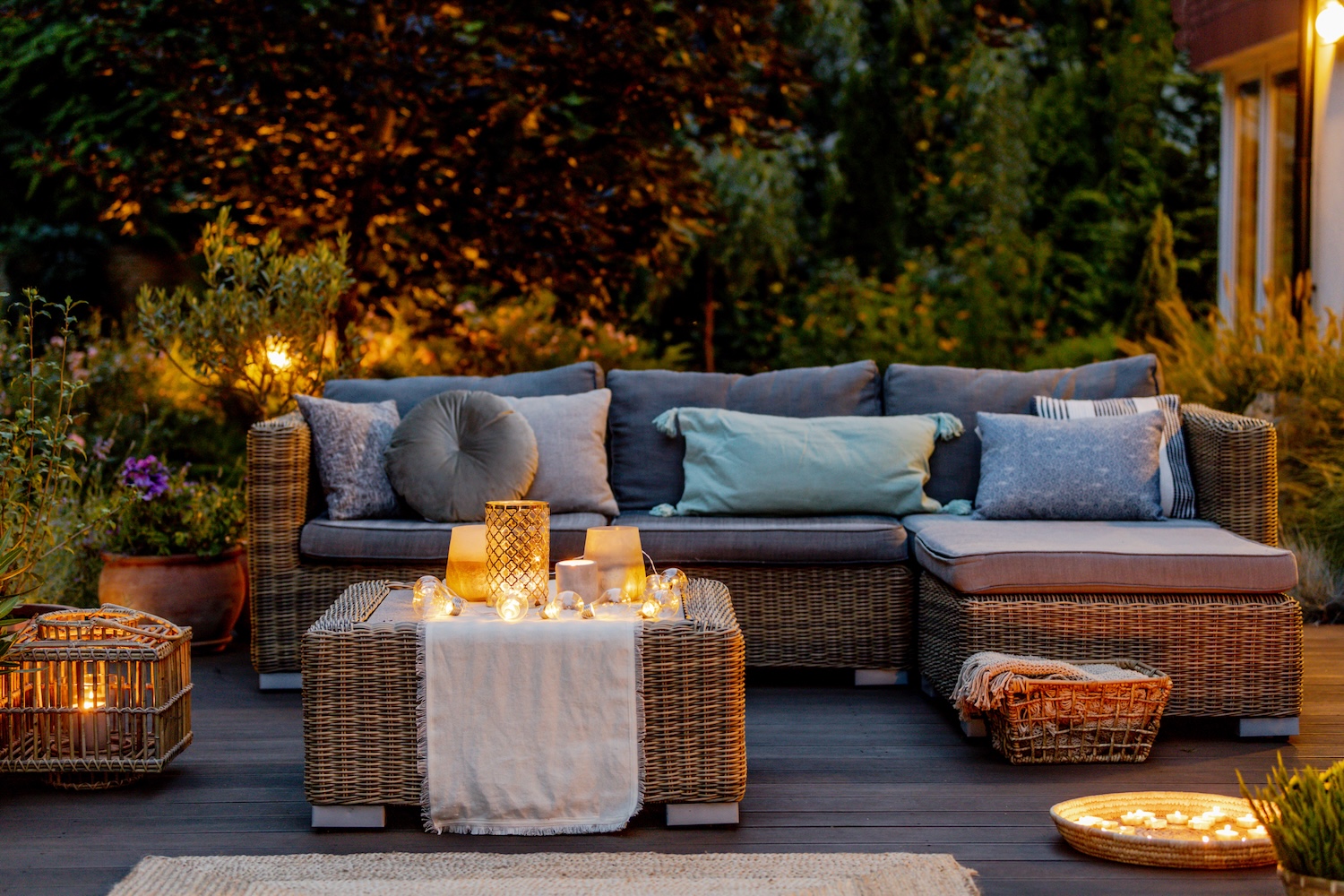
A backyard can look perfectly put together at five in the afternoon and become awkward two hours later. The grill is hot, the drinks are cold and everyone has found a seat. Then a guest steps off the patio into a flower bed because the path has disappeared. Someone turns on the security floodlight, and suddenly the evening feels less like a relaxed gathering and more like a loading dock.
Outdoor entertaining rarely needs more brightness. It needs light in the places where people walk, sit, pour a drink and find their way back inside. When those areas are easy to read, guests settle in without thinking about the lighting at all. That quiet sense of ease is what makes an outdoor space feel finished.
Begin With the Walk to the Door
The experience starts before anyone reaches the patio. Walk from the driveway or gate to the entrance after sunset and notice where your pace changes. A curved path, a single step or a change from pavement to gravel may be obvious during the day and almost invisible at night.
Path lights should reveal those transitions without turning the yard into a runway. Space them according to the light they cast rather than placing one at every identical interval. Alternating fixtures along a walkway often looks more natural than creating two rigid rows. Aim the light toward the walking surface and keep the source below eye level whenever possible.
The fixture itself matters less than the job it performs. When comparing landscape lighting, separate products by purpose: path lights for movement, spotlights for trees and architectural details, step lights for changes in elevation, and softer ambient fixtures for seating areas. Buying several attractive lights without deciding where each belongs usually produces a yard that is bright in the wrong places.
 Good path lighting shows where to walk without competing with the garden.
Do Not Light the Entire Yard
Darkness is not a design problem. It creates depth, hides less attractive boundaries and keeps attention on the areas being used. A yard lit evenly from fence to fence often feels smaller because every edge is visible at once.
Choose a few things worth seeing. It might be the canopy of a mature tree, the texture of a brick wall or tall ornamental grass moving in the evening breeze. A narrow spotlight placed away from the main seating area can pull the eye across the garden and make the space feel deeper. The fixture should remain discreet; guests should notice the tree before they notice what is illuminating it.
Test the angle after dark. A spotlight that appears correctly aimed in daylight may shine directly into a chair, a bedroom window or the neighbor’s property once it is switched on. Move around the patio and look toward the fixture from seated and standing positions. If you can see an intense point of light, adjust the beam or relocate the fixture.
Lighting selected trees and shrubs gives the yard depth while allowing other areas to remain dark.
Light the Places Where People Make Decisions
People need the clearest light where they pause and decide what to do next. That includes doors, stairs, corners in a path, cooking areas and the point where a deck meets the lawn. These locations are more important than the middle of an open grassy area.
Steps deserve particular attention. Light should make the front edge of each tread visible without shining upward into someone’s eyes. Fixtures installed beneath a stair tread or along a nearby wall can produce a low, controlled glow. If one step is separated from the others, do not assume guests will remember it later in the evening. Give it its own light.
The grill and outdoor kitchen need enough illumination to see food clearly, but this is not the place for a decorative candle or a dim accent lamp. Use a dependable task light that reaches the cooking surface without casting the cook’s shadow over it. Keep electrical fixtures and cords away from heat, water and walking routes.
At the table, lower the intensity. A warm overhead or nearby ambient light is usually more flattering than a bright beam pointed directly at diners. Portable lanterns can help on a large table, provided they are stable and do not block conversation. Real candles add atmosphere, but they should supplement safe electric lighting rather than serve as the only way to find the steps.
Subtle step lighting improves visibility without flooding the surrounding patio.
Plan for a Real Saturday Night
Outdoor lighting should be judged when the yard is actually being used. Switch everything on, sit in each chair and stay there for a few minutes. A fixture that looked subtle while you were standing may create annoying glare at seated eye level. Bright light near the table can also attract insects and flatten the mood.
Warm white light tends to feel comfortable around patios, plants and wood surfaces. Cooler light can be useful for specific tasks, but using it everywhere may make the garden feel harsh. More important than choosing one exact color temperature is keeping neighboring fixtures reasonably consistent. A warm path beside a blue-white patio can look accidental.
Power choices affect how reliable the result will be. Solar fixtures are convenient where running cable is difficult, but their performance depends on receiving adequate direct sunlight. A light tucked beneath a dense tree may struggle even if the location is perfect after dark. Hardwired and low-voltage systems are more consistent, although they require proper cable planning, transformers and weather-resistant connections.
A standard indoor extension cord is not a permanent outdoor wiring solution. Electrical work should comply with local requirements, and new hardwired systems are best planned or installed by a qualified professional. Check each fixture’s outdoor rating and confirm whether it is intended for wet or merely damp locations. A covered porch and an exposed planting bed do not present the same conditions.
Timers and dusk-to-dawn controls keep the system from becoming another household task. They can also prevent decorative lights from running until sunrise after everyone has gone home. Motion sensors are useful near side gates and service areas, but sudden bright light beside the dining table will interrupt the atmosphere every time someone shifts in a chair.
Make One Adjustment Before Buying More
After the first evening, resist the urge to order additional fixtures immediately. Move a spotlight, lower a path light or reduce the brightness near the table. Outdoor lighting often improves through small adjustments rather than more equipment. Plants grow, seating moves and the way people use the yard changes across the season.
The best sign that the lighting works is not that guests compliment every fixture. It is that nobody reaches for a phone flashlight, misses the step or asks where the patio ends. The evening simply carries on outside.
Photo Credit: DepositPhotos.com