

REVOLT’s Bet on Black is back, and this season, the next generation of Black entrepreneurs is coming straight from HBCU campuses.
The sixth season of the business competition series premiered on October 19 on REVOLT. The new season reunites host Marsai Martin with executive producer Kenya Barris for the first time since black-ish. It’s also Barris’ first project with REVOLT since he was named vice chair of REVOLT Labs.
Season 6 comes with a refreshed format. Instead of competing for a single prize, every founder shares in a $500,000 growth fund, receives hands-on mentorship and keeps 100% of their equity. The founders are all students at HBCUs, including Howard University, Morehouse College, Spelman College, Clark Atlanta University, Grambling State University and Fayetteville State University.
Target has backed all six seasons, and the partnership has directed nearly $3 million to Black founders and Black-owned businesses. Filmed in Atlanta, including at the Russell Innovation Center for Entrepreneurs, the show also has a production staff that is about 90% Black.
“Black entrepreneurs don’t have a shortage of talent, ideas or ambition. They have a shortage of capital,” said Detavio Samuels, CEO of REVOLT. “Bet on Black was built to help turn Black entrepreneurship into Black wealth by putting real checks behind Black-owned businesses.”
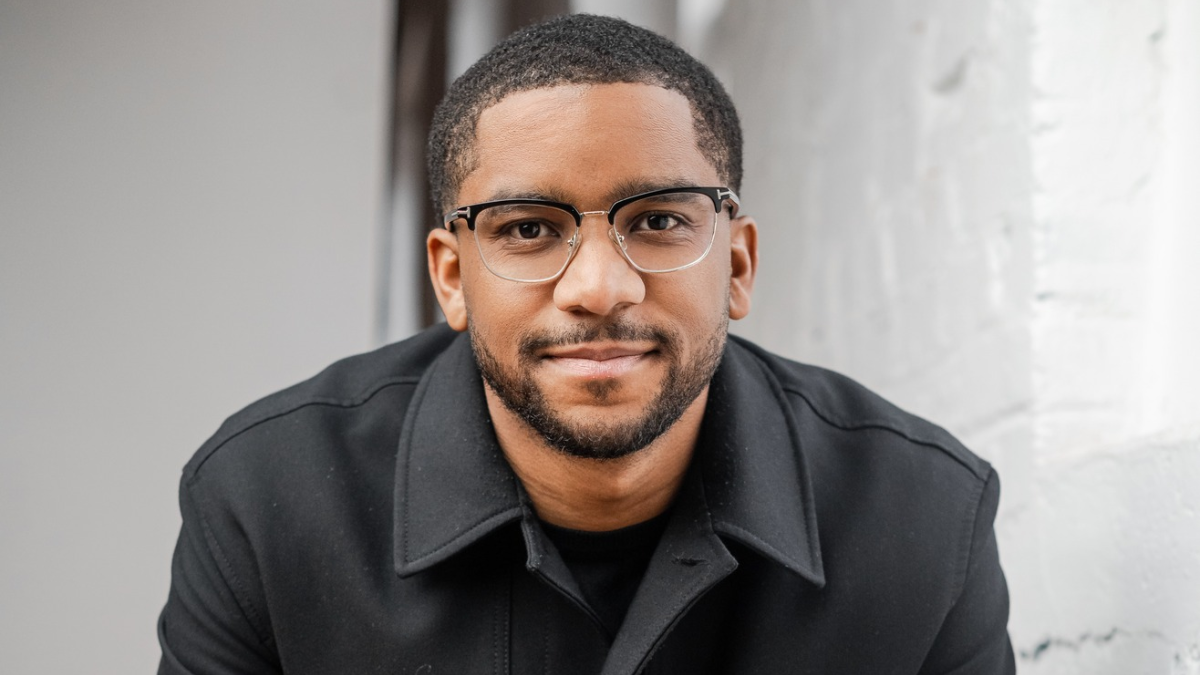
Guiding the founders is a lineup of mentors that includes podcast host Reginae Carter, financial expert Ashley M. Fox, venture capitalist Jewel Burks Solomon, designer Brandon Blackwood and Ryan Wilson, co-founder of The Gathering Spot.
Wilson started The Gathering Spot at 24, after college and law school in Washington, D.C., and built it into one of the country’s most influential private membership communities for Black professionals and creatives. He first joined Bet on Black as a mentor in Season 5 and still keeps in touch with many of those founders today.
In his conversation with The Quintessential Gentleman, Wilson talks about what he’s learned from student entrepreneurs and why HBCUs deserve a place in the innovation conversation. He also explains why AI will never replace human connection and shares the surprising source of his best real estate advice when he was starting The Gathering Spot.
[This interview has been edited for length and clarity]
What is Bet on Black?
Ryan Wilson: You can think of it as a pitch competition meets a reality show. In Season 6, HBCU students are put through a number of challenges, all focused on the businesses they’re starting. There’s a ton of mentorship and other surprises along the way. REVOLT has done a really good job of making sure every student who participates leaves not only with knowledge from the experience, but also with capital, which is hard to come by a lot of times.
What have you learned about student entrepreneurs since your first season?
Ryan Wilson: It sounds simple to say, but it’s important to highlight: These are students who have real companies. These aren’t just ideas being thought about in dorm rooms. These students are actually in business, and they’re accomplishing some amazing things. I started my business when I was 24 years old, so young, but I was post-college and law school at that point. Watching students who are still in undergrad do it has been phenomenal. You’ll see these companies continue to scale, and all credit goes to them, but also to REVOLT for finding the best and brightest year after year.
Why is the role of mentors so important for these founders?
Ryan Wilson: What I’ve seen over the last two seasons is that real relationships are being formed. This isn’t the type of pitch competition where you don’t know who you’re talking to and it ends when the conversation ends. We take pride in staying in contact with one another, which is part of the reason I was grateful to come back and meet another group of students. That’s not an opportunity I get to have on a regular basis.
It’s also really hard to become something you haven’t seen before. That’s why mentorship matters. We get to talk about the practical, what’s happening inside our businesses, but also walk through our history as mentors and judges. You add up the relationship piece plus the real advisory, and that’s what Bet on Black is. And true to the name, we have Black students. It’s important for viewers to see that the type of innovation we often wish was happening in our community is absolutely happening, at HBCUs across the country. Putting that on display is something I’m really proud of.
Why is it important that this season’s founders all come from HBCUs?
Ryan Wilson: A lot of times, in the conversation around startups and small business, HBCUs aren’t pegged as innovation centers. You have that old paradigm of the tech founder who dropped out of an Ivy League school and started their company. This shows that, pick whatever HBCU you want, there’s also amazing innovation and real business coming out of our schools. It feels like a simple point, but it’s a really important one. We’re building things too, and our students are as capable as any other student at any other university across the country.
What’s a piece of advice you wish someone had given you in college?
Ryan Wilson: What you see in this show is that it’s never too early to get started if you have something you’re passionate about. The litmus test for me is whether you can’t shake the idea. Everybody has ideas. We all wake up with a thought about something. But if you get to a place where you just can’t shake it, you’ve got to ask yourself why. I can see that in these students. They really believe in what they’re building.
You can trick yourself into believing you should defer it until some later time. But there’s never going to be a good time to start a company. Ever. Sometimes people talk about it like you’re going to wake up, the birds will be chirping, the sun will be shining, and you’ll hear a whisper in your ear that says, “Today is the day.” That day is not coming. I was at a convening a couple of months ago, and part of what was shared was that calling this time period an era of change is the wrong way to think about it. This is a change of era. We’re fundamentally in a different paradigm, and really cool things get built in these shifts. So if you’re young, you see the shift and you have something that would be helpful to other people by way of starting a business, go do that.
What are your thoughts on AI?
Ryan Wilson: I’m not scared of it. In business, there’s always going to be new technology and new tools. But I’m in the relationship business. I’m in the community business. Sometimes people talk about AI like it can do something I don’t believe it ever will, which to me is uniquely reserved for human beings: connection. We can use a tool to facilitate connection. We’ve been using digital tools, and now AI tools, to do that. But that isn’t the same thing as the relationship. The relationship still requires you to go to dinner, check in on folks in real life and look people in the eye.
To the extent anyone is successful, it’s still going to happen at the speed of the relationships they have, not because they had better access to new technology. Deals get done because of people, not anything else. Maybe somebody’s trying to figure something out right now to make me eat those words, but so far, I think I’m pretty safe.
What’s still the biggest barrier for young Black entrepreneurs?
Ryan Wilson: The thing that comes up, no matter when you’re starting a business, is access to capital. Even if you have great mentors and advice, you still have to figure out how to capitalize your business, which is another reason this show is great: there’s real capital the students can access. There are a number of other things that could be discussed, but I tend to start and stop at the thing that’s most consequential early on. Can you build the right team and bring the right resources together? A lot of times, that takes cash.
We have a lot of folks who are well mentored, a lot of programs and a lot of things you can watch about business. That’s all well and good. But the question I ask is: Once you receive a top-tier entrepreneurial education, are the resources available at that point to help you be successful? If we’re honest, a lot of times the answer is no. That’s where I want to keep shining a spotlight. We’ve got to make sure our people have the money to have a chance.
As a seasoned entrepreneur, what does mentorship look like for you now?
Ryan Wilson: I consider myself a true lifelong learner. The best entrepreneurs I know are constantly talking to people. I’ve embraced what would probably be called a nontraditional view of mentorship, where my mentors are sometimes not names people know, but people with really amazing insights that help me grow. I tell this story all the time because it’s true: When we were starting The Gathering Spot, I was in law school in D.C., and the best real estate advice I could get came from taxi drivers. If you asked a taxi driver where people hang out, what area of town was hot or what was just happening in the city, they gave me better mentorship than the real estate folks who were giving me demographic data. They could give me the spirit, the soul behind what was actually happening in town.
If you’re truly a sponge, a student of the game, you can be mentored by anybody at any time, and you never know what insights people have. Sometimes it’s not even directly related to what you’re building. I remember growing up hearing that some of the best football players took ballet. Why? If you want balance, strength and full control of your body, ballet is one of the best activities to do that. I have that same approach as an entrepreneur. Be mentored by anyone and everyone who can be helpful, and don’t be afraid to take a nontraditional approach to how you gather information. A lot of times, it comes from places you never imagined.
New episodes of Bet on Black air Mondays at 9 p.m. ET on REVOLT and stream Tuesdays on REVOLT.tv and YouTube.
Photo Credit: Instagram/Spotonrw