

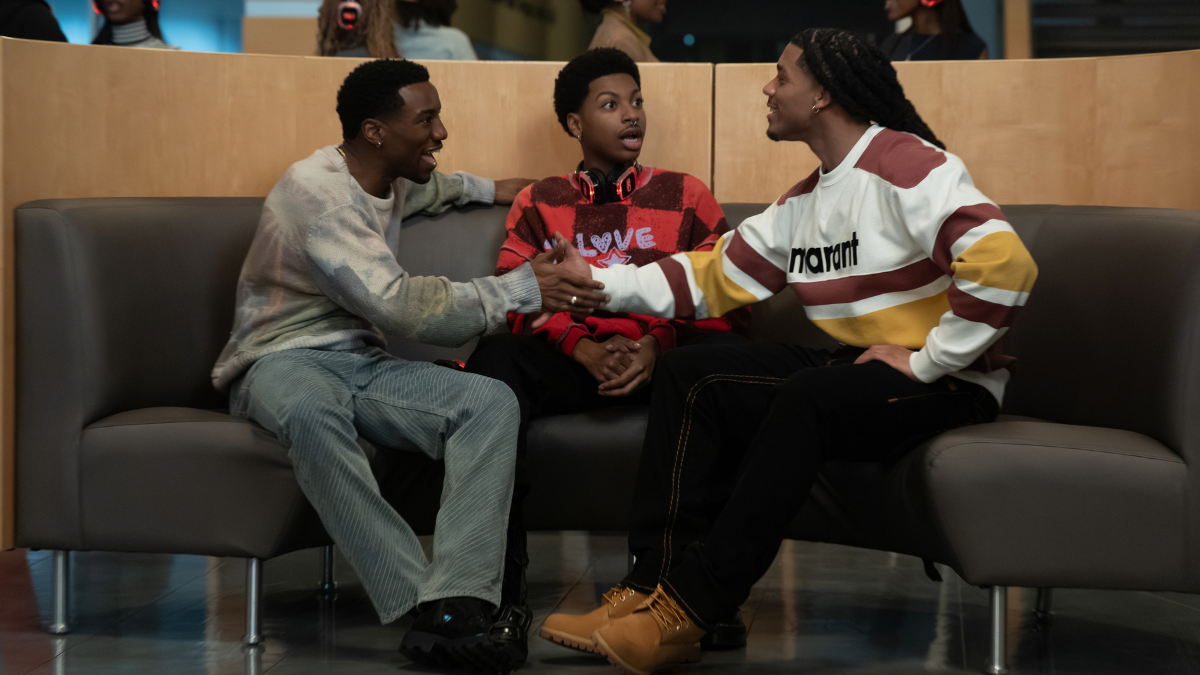
For decades, media depictions of Black brotherhood have operated under strict, unwritten rules, and few are as rigid as the boundary line drawn between straight and gay men. In popular culture and, too often, real life, the myth persists that straight Black men and gay Black men cannot coexist in true, organic friendship.
The reasons behind this divide are deeply rooted: the fear that guilt-by-association will compromise a straight man’s hyper-masculine image, the concern that women might question a man’s sexuality based on his circle, or the uncomfortable trope of the gay friend harboring a secret intention to “convert” his straight homies. These anxieties have long policed Black male camaraderie, reducing interactions to performative distance, hyper-vigilance, and an endless stream of defensive “no homo” or “pause” qualifiers whenever topics stray into vulnerability or intimacy (and many times when they don’t).
That is precisely why the dynamic between Shaquille Johnson, Amir Rodale, and Kojo Achebe in Netflix’s A Different World reboot feels not just refreshing, but culturally essential.
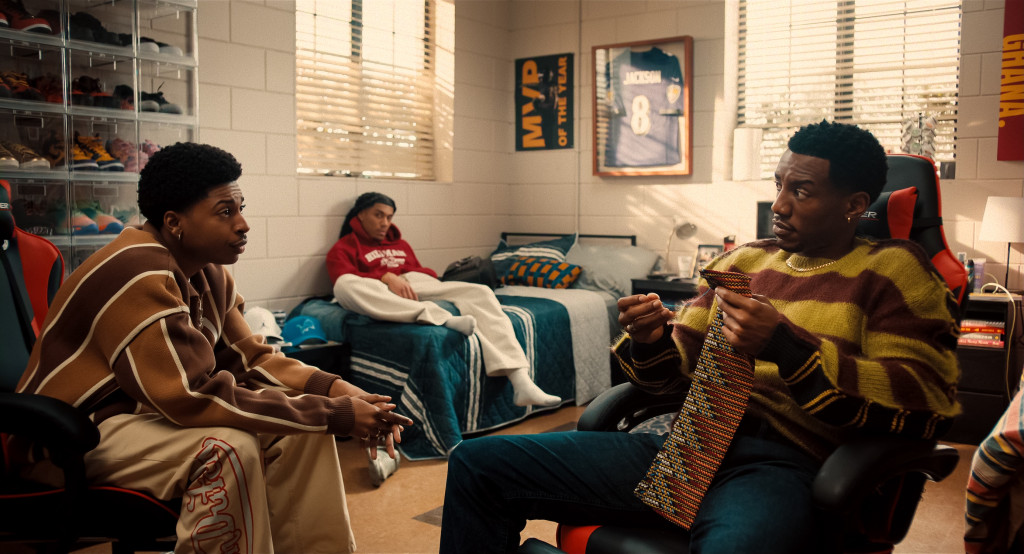
The trio brings a dynamic, realistic multi-dimensionality to the halls of Hillman College. Amir Rodale, played by Jordan Aaron Hall, is an ambitious, stylish, and self-assured student navigating life, love, and academics. Amir happens to be gay, but his sexuality is never treated as a gimmick or his sole defining trait; he is simply one of the core guys in the crew. Alongside him are Shaquille Johnson, played by Cornell Young IV, the superstar quarterback confident as hell and determiend to make history, and Kojo Achebe, played by Chibuikem Uche, the Ghanaian-Nigerian entrepreneur who is only in school to appease his parents.
Together, the show completely bypasses the tired clichés usually reserved for queer characters in Black ensemble casts. Amir is not reduced to a token sidekick or a punchline. He goes through relationship issues, ambition, and everyday campus drama right alongside Shaquille and Kojo.
What makes their trio so compelling is the absolute absence of fragility. When the group talks about dating, relationships, or sex, Amir’s experiences aren’t met with squeamish side-eyes, sudden silence, or performative discomfort. His friends don’t flinch when he shares his life, nor do they treat his attraction to men as something contagious or predatory. There is no panic, no ego, and no need for a defensive “chill out, bro.”
Speaking on portraying Amir and the depth written into the character, Hall expressed his gratitude to Out.com for how the writers approached Black queer identity on screen:
“Amir has an incredible three-dimensionality to him in a way that is not very stereotypical,” Hall says. “I think he’s nuanced, I think he’s three-dimensional, and I feel grateful that the writers saw that and took liberty to create somebody that was real and that was three-dimensional and breathing. Not to see us as accessories to a story, but to see us in our full humanity, and so I feel grateful to be able to play him.”
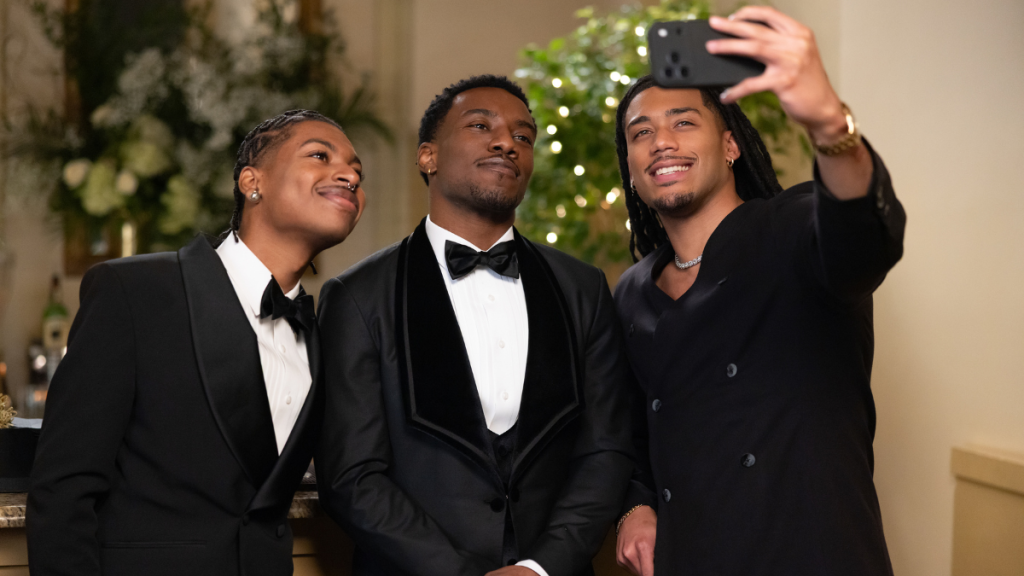
The reboot mirrors a reality that already exists in the real world, even if mainstream television has been slow to catch up. Across dorm rooms, barbershops, and city blocks, straight Black men and gay Black men do build deep, lasting friendships grounded in shared values, humor, and respect. They laugh together, hold each other accountable, and show up when life gets heavy, proving that healthy masculinity isn’t threatened by a friend’s sexuality.
By showing Shaquille, Amir, and Kojo as a cohesive unit, A Different World gives audiences a long-overdue template for what Black brotherhood looks like today when it’s freed from homophobic paranoia. Amir isn’t an outsider seeking permission to sit at the table; he is an integral part of the brotherhood.
With Season 2 officially greenlit at Netflix, we look forward to seeing even more of this authentic brotherhood unfold on screen. It turns out that when you strip away the social anxiety, the performative posturing, and the fear of judgment, what’s left is simple: real friends who have each other’s backs, no “pause” required.
Photo Credit: Netflix