

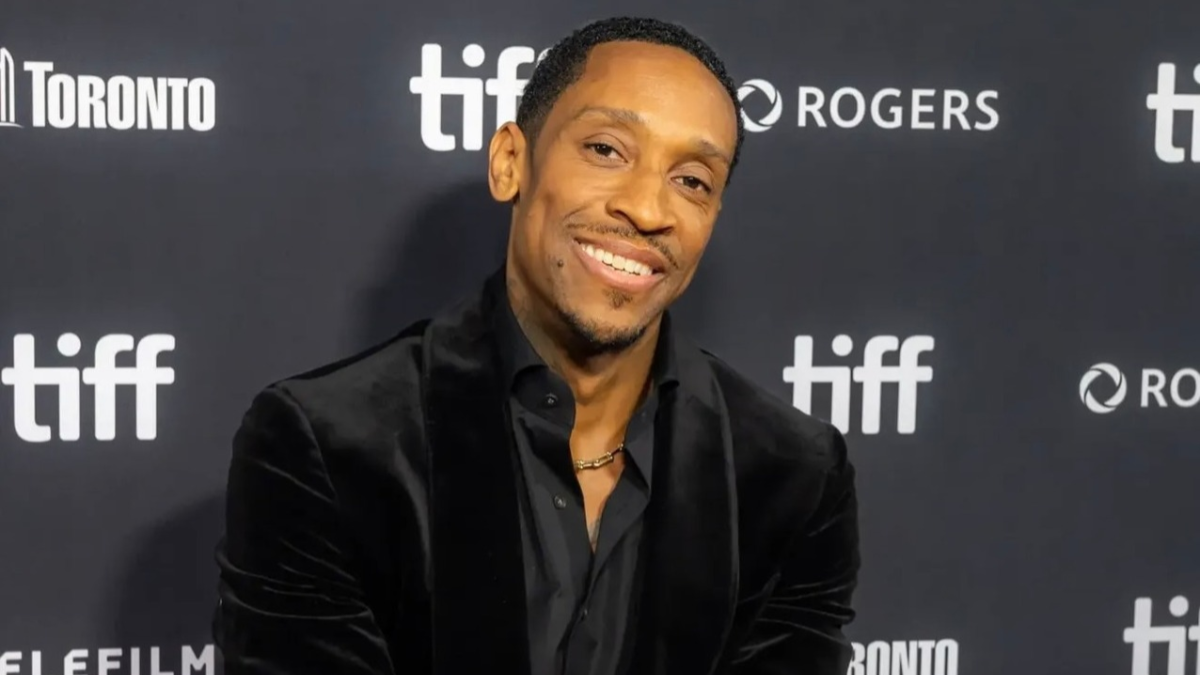
Growing up, Antwan Tolliver got a history lesson with every haircut. From about age 10 to 13, his uncle cut his hair while videos of Malcolm X and Louis Farrakhan played on the VCR. In high school, he went looking for more and found the Black Panther Party.
So when his manager told him about a film featuring a Black Panther who was disabled, his first reaction was disbelief. “Why don’t I know about this?” he remembers thinking. That Panther was Brad Lomax, and Tolliver now plays him in Being Heumann, streaming on Apple TV. Lomax was a Philadelphia native and a Howard graduate living with multiple sclerosis.
In 1977, he helped sustain one of the most important protests in disability rights history. As Judy Heumann and other disabled activists occupied a San Francisco federal building to demand enforcement of Section 504 of the Rehabilitation Act, Lomax called on the Panthers, who brought meals and supplies to the building every day.
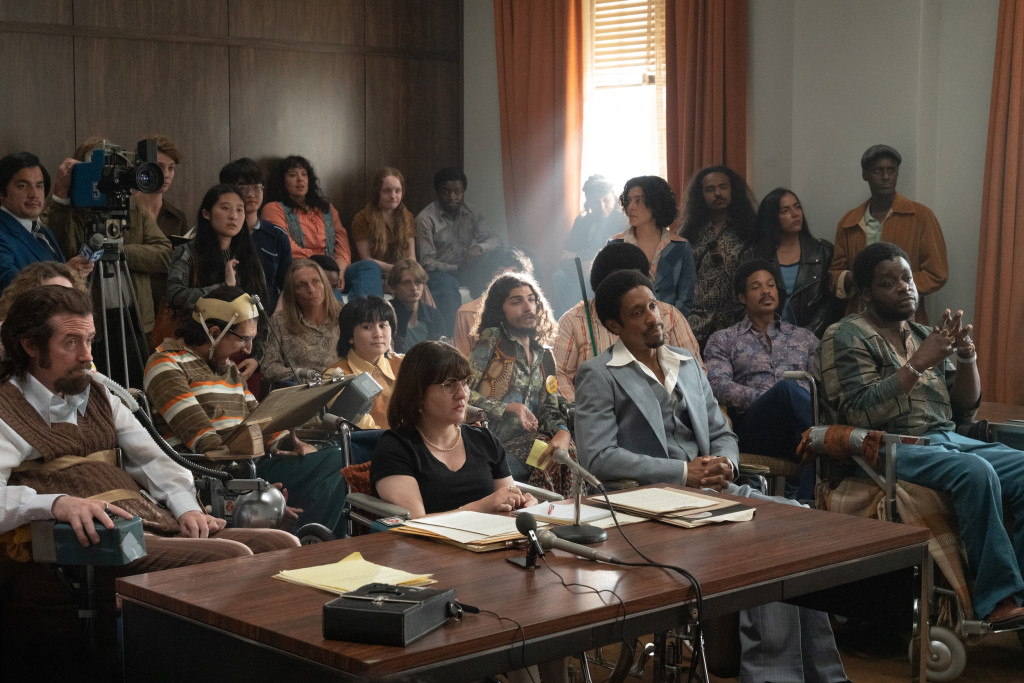
Directed by Siân Heder and adapted from Heumann’s memoir, the film stars Ruth Madeley as Heumann and Ray Fisher as Chuck Jackson, the Panther who cared for Lomax.
For Tolliver, the role connects to his own life. He has used a wheelchair since a spinal cord injury at 24, nearly half his life ago. His career started later than most: at 40, he did a shirtless photo shoot to mark the milestone, and a modeling agency reached out two weeks later.
Before that, he’d been flying to Atlanta for acting workshops, where Tasha Smith was so impressed that she paid for his lessons. Now he’s part of a film that kept a promise Heumann made before her death in 2023: disabled roles would go to disabled actors.
In his conversation with The Quintessential Gentleman, Tolliver talks about the audition where his nerve pain flared up and the moment the director told him to throw out the script. He shares what he learned in hours on the phone with Lomax’s brother and why mothers stopping him in Target remind him what this work is for.
[Interview has been edited for length and clarity]
What was it about this story that made you want to be a part of it?
Antwan Tolliver: I wasn’t born with my disability, so we’re talking 24 years into my disability, and now I’m hearing about a Black Panther that was disabled. How come I don’t know about this? My manager reached out and said, “Are you familiar with Judy Heumann?” I’m like, “Yeah, everybody knows Judy in the community. She’s a rock star.” She said, “They’re coming out with a film about her life, and it’s a role of a Black Panther, and I think this is right up your alley.” I’m like, “Really? For real?”
Walk us through the audition.
Antwan Tolliver: They gave me the option to do it on Zoom or in person. I know my personality. I’m going in. I need them to feel me on this. It was at a movie theater in Midtown. I suffer from nerve damage from my spinal cord being severed, and a couple times I had my little spasms. They’re these pains that come at the most random times. It might have been my nerves from being nervous too, but they gave me my little breaks, and I got through it.
Then they wanted a second read with the director on Zoom. Siân let me be free. At first she had me do everything word for word, and after that she said, “Forget the script. What would Brad say?” I was just winging it, and they were either laughing. The next week, they said, “Antwan, you got the role. Don’t cut your hair anymore.” They wanted the natural. I’m usually a short-head type of guy, so that was my first time ever seeing my hair like that, a natural fro.
Judy Heumann insisted on casting disabled actors. What did that mean on set?
Antwan Tolliver: When Judy and Siân started to collaborate, Judy said, “I don’t want any actors that aren’t disabled. I want it to be true and authentic.” In the process of making the film, Judy passed away. But Siân honored that and stuck to her guns. It just goes to show you, Eric, that the talent is out there. You just have to look for it.
It makes the film more authentic, because we lived that. There are days when I’m going through it, when I’m not feeling my best. Don’t get me wrong. In the beginning, everyone was trying to figure it out, because we had 12 leads and sometimes 40 background actors with disabilities. But once we got it together, it meshed so beautifully. The Apple accessibility team was flawless. They learned, they absorbed it, and it made for a beautiful marriage. Hopefully Hollywood sees this and says, “It’s not hard for us to have people with disabilities in a film.”
Who was Brad Lomax to you by the end of filming?
Antwan Tolliver: Brad Lomax was some big shoes to fill. My brother was a legend. He was born and raised in Philly and graduated from Howard. He had multiple sclerosis, which they found out in his teens, and it started to progress. He was so influential that they wanted him to start the Black Panthers out east. As his MS progressed, he moved out west. So he was part of two different communities.
When you Google his name, you don’t see much of him. You see the other Panthers speak, but I feel like he was the kind of person who just got it done. He made the call. We were in that building for 28 days. How else would we survive without food? The Panthers came every day, cooked meals, brought supplies and helped carry people up and down. He had one marginalized community help another marginalized community. He bridged the gap. I stand on his shoulders.
You spent time talking with his brother, Glenn. What did he share with you?
Antwan Tolliver: After the first week of rehearsal, Siân gave me his number and said, “He’s one of his last family members.” Glenn adored his brother. He said, “Man, I love my big brother. I wanted to help him, but I was too young.” So the Panthers found Chuck. Glenn said, “Once I met him, Chuck was such a good guy, I couldn’t even be mad.” Chuck was a teacher in the Panther schools. We had our own school systems back then. We did everything for self, because the government didn’t really rock with us.
He showed me photos of Brad at different ages, and it made it more personal. We were on the phone for hours, and it gave me better insight into who he was.
What has the response been like since people started seeing you in the film’s campaign?
Antwan Tolliver: It hits different when parents reach out. I’ve had mothers who cry and say, “I’m in Target and we see posters of you. I’ve seen billboards of y’all in Times Square. You give me so much hope for my kid who’s disabled.” It’s about representation. We need to see it to even believe it.
I’ve been in the chair 24 years in January. That’s half my life. It happened when I was 24, and I’m 48. That representation wasn’t there when it first happened to me. That’s why people like Brad Lomax are so needed.
What does this role mean for your career?
Antwan Tolliver: Forever, I get to play a Black Panther who I didn’t even know existed until this. That’s why this is so important. There were roles I auditioned for and didn’t get, and now I see why. If there’s any way I would love to start out, it would be like this. What’s for you is for you.
Being Heumann is streaming now on Apple TV.
Photo Credit: Instagram/Apple TV