

Homecoming isn’t about a game. Some schools build the weekend around football, others around basketball or no game at all, and anyone who has been knows the game was never the point.
It’s the yard on Saturday morning, the tailgates, the band, and the step shows. It’s the line brothers you haven’t seen in a decade, and the kids seeing it for the first time and deciding, maybe, that this is where they’re going to go.
That’s what made Saturday night in Tallahassee so painful.
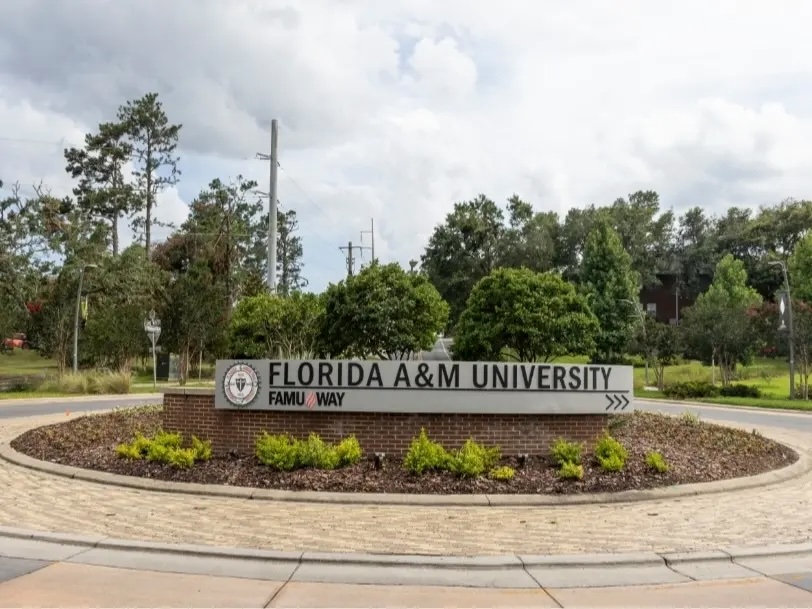
Shortly before 8 p.m. on October 24, gunfire broke out near the intersection of Perry and Manatee streets, within walking distance of Florida A&M University’s Bragg Memorial Stadium. Twelve people were hurt, 11 with gunshot wounds, and six of them were children, the youngest 11 years old, according to Tallahassee police. As of Sunday, six remained hospitalized, one in critical condition.
“It is especially heartbreaking to know that children are among those injured,” Tallahassee Police Chief Lawrence Revell said.
Investigators believe the shooting followed a physical altercation involving two or three people. On Sunday, police arrested a 15-year-old, who faces 11 counts of attempted second-degree murder. Police have not connected the shooting to the game or the university.
Still, it happened during homecoming, near the stadium, and that is how it will be remembered.
FAMU isn’t the first. In October 2023, a shooting outside a residence hall during Morgan State University’s homecoming wounded five people, four of them students, and homecoming festivities were canceled.
Morgan’s response is the clearest preview of where this conversation is heading. The next year, the university deployed 225 police officers and security personnel, weapon-detection systems, drones, license plate readers, and more than 1,400 cameras, and it closed campus at 7 p.m. on Saturday. By 2025, on-campus homecoming activities ended at 5 p.m., following more than $20 million in security upgrades.
It worked, in the way that matters most. But alumni noticed the cost. “It’s going to be a little detrimental to alumni turnout,” J.B. Edwards, Class of 1989, told the student paper.
That turnout isn’t just nostalgia. It’s an economy. A study commissioned by Morgan State and conducted by Econsult Solutions found its homecoming generated nearly $19 million in economic impact for Baltimore, including more than $15 million in direct visitor spending.
Multiply that across dozens of HBCUs, and you’re talking about Black-owned caterers, vendors, hotels, barbers, and brands that circle these weekends on the calendar.
Homecoming is also how HBCUs recruit, raise money, and remind the world they exist. A weekend that ends at 5 p.m. behind barricades protects people. It also makes homecoming smaller, and a smaller homecoming does less of that work.
Here is the counterpoint, and it deserves to be taken seriously: six children were among the injured. If a school can prevent that by ending events early, flooding the area with police, and checking every bag, it should. Alumni inconvenience doesn’t weigh much against a child in intensive care.
Safety comes first. The real question is whether safety and the culture have to be traded against each other, or whether they can be designed together.
The FAMU shooting happened off campus, on city streets. That matters. It means the answer can’t only be a university locking its gates. It has to include the city, the county, and the neighborhoods around campus: better lighting, visible patrols on the routes people actually walk after the game, and planning that starts months before kickoff, not after the next tragedy.
It means investing in the yard, not shrinking it. And it means alumni, the people who love homecoming most, accepting that they have a role, too: setting the tone, looking out for each other’s kids, and refusing to make excuses for whoever brings a gun to a celebration.
Homecoming has survived a lot. The challenge now is keeping it safe without turning it into something nobody wants to come home to. So what will HBCUs, and the cities around them, choose to build?