

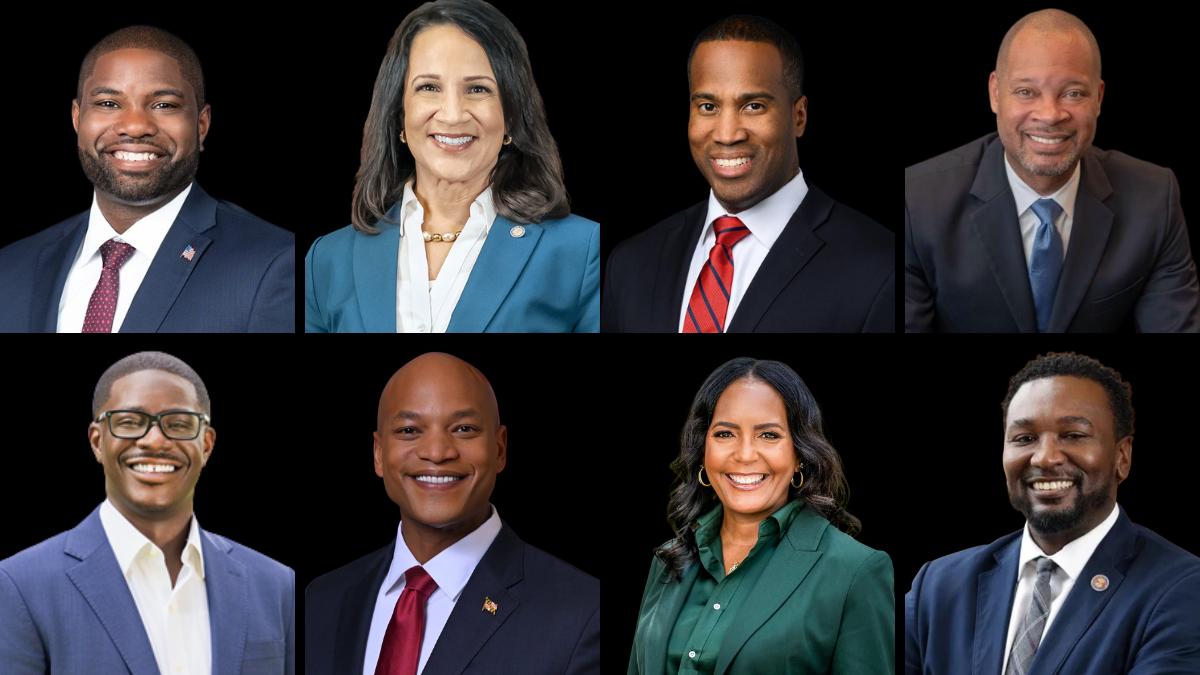
A record eight Black candidates from major parties are running for governor in the 2026 election cycle, marking the largest slate of Black gubernatorial candidates in American history. Across 250 years and thousands of governors elected nationwide, only three Black Americans have ever won a governorship: Douglas Wilder of Virginia in 1989, Deval Patrick of Massachusetts in 2006, and current Maryland Governor Wes Moore in 2022. All three were Democrats, and Moore remains the only Black governor currently in office.
That could soon change. With Florida Republicans nominating U.S. Representative Byron Donalds in August, the number of Black major-party gubernatorial nominees on November ballots climbed to eight, cutting across party lines and gender.
The field includes Democrat Keisha Lance Bottoms, the former Atlanta mayor now running in Georgia, along with fellow Democrats Aaron Ford in Nevada, Jermaine Johnson in South Carolina, and David Crowley in Wisconsin. On the Republican side, Donalds is joined by Lisa Demuth in Minnesota and John James in Michigan, while Moore seeks reelection in Maryland.
Moore, who recently became chair of the National Governors Association, has been direct about the significance of the moment while also framing it as evidence of how much work remains.
“We do have a unique moment here,” Moore said. In an interview with USA Today, Moore reflected on what it means that, after 250 years, so few Black Americans have held the office. “I became the first in my state’s history and now only the third elected in the history of America, and that is a bit indicting when you consider the fact that we have a country that’s now 250 years old,” Moore said.
Notably, most of the candidates on this year’s ballots have not centered their race in their campaigns, instead leaning into their records and policy platforms. Donalds, for example, made no mention of his race in his primary victory speech, telling reporters afterward, “Florida is a great meritocracy in America.” Moore has echoed a similar sentiment about his own candidacy, describing his status as historic but insisting it functions less as “an applause line” and more as a marker of a challenge the country has yet to fully overcome.
Should any of the seven challengers win in November, they would join Moore in more than doubling the total number of Black governors ever elected in the United States, a shift that would also mark the first time a Black woman has held a governorship, depending on the outcome in Georgia.
Governors wield significant control over state budgets, economic development, healthcare, and education policy, meaning the results of this cycle carry real weight.