


Dr. Dante Simpson doesn’t call his career a pivot story. He calls it a pattern story. And once you trace the line from the Gucci Group to Sony BMG to the floor of the New York Stock Exchange to one of the country’s largest gaming production studios, the pattern becomes impossible to miss: find the gap nobody else has identified, build there first, and make sure every stop along the way feeds the next one.
Today, Simpson is the Founder and CEO of ESPAT TV, ESPAT Studios, and ESPAT Labs, an integrated creative and technology operation he describes as “the convergence of culture, content, and technology, not in separate lanes, but as one integrated engine.”
His resume reads like a masterclass in building at the intersection of things: luxury aspiration at the Gucci Group under Tom Ford, cultural scale at Sony BMG during the CD-to-digital transition, brand monetization through his own ad agency, and now the future of gaming entertainment at ESPAT.
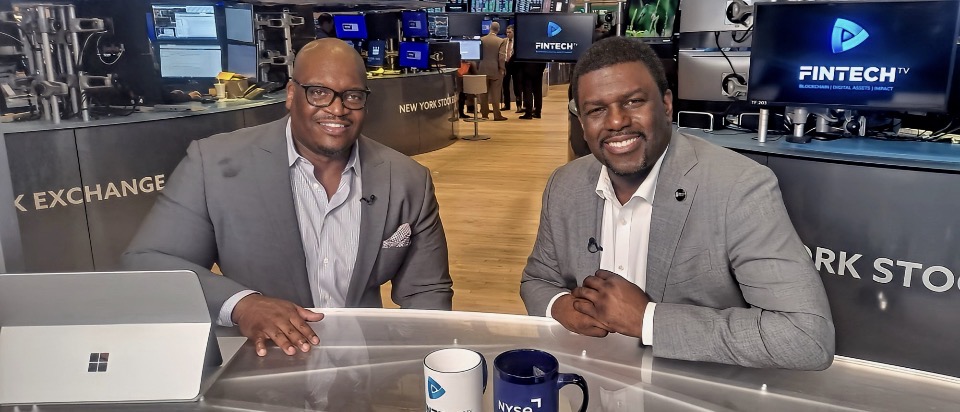
The through line, he says in our interview, has always been the same. “Everything I’ve done has been identifying a space where people are not tapped in, which is a future problem, and being the lead to actually fix that future problem.”
ESPAT’s footprint in gaming is larger than most people realize. The studio is the number one producer of video game trailers in the country, and through a pair of monumental deals, it now holds the exclusive rights to 95% of movie screens in the United States for video game advertising, a market that, remarkably, didn’t exist before Simpson created it.
The origin story is instructive. He was sitting in a movie theater watching a Marvel film when it occurred to him that he had never once seen a video game trailer play before a film. He reached out to ScreenVision, the company that owns that pre-film inventory, directly on LinkedIn, with no prior relationship, and asked a simple question: why hadn’t they done it? They answered that they couldn’t get the trailers.
Simpson told them he could get three in two months. He already had seven. Two and a half weeks later, he came back with five. The result was a 20-year exclusive deal, followed by a second deal that now gives ESPAT ownership across the vast majority of U.S. movie screens in that space. “I’m big on collaboration,” he said, “and understanding where to place the product.”
The studio’s credits go well beyond trailers. ESPAT helped produce the Halo series, which became the number one show on Paramount+, surpassing Yellowstone, one of streaming’s most popular properties. The studio works with Activision on Call of Duty, Fortnite, Rockstar Games on Grand Theft Auto, and is the exclusive premium studio for Enthusiast Gaming, which ranks number one in North America for gamers according to Comscore data, ahead of Roblox and Twitch.
For the NFL, ESPAT’s gaming-informed production approach powers the animated simulcasts seen on ESPN featuring The Simpsons and Monsters, Inc. And in the Black ownership space, ESPAT became the first Black studio to ever produce a Super Bowl broadcast, the Nickelodeon version, featuring SpongeBob, Patrick, Dora the Explorer, and the Teenage Mutant Ninja Turtles. “You may not know me,” Simpson said, “but if your child is a gamer, they know our work.”
ESPAT Labs, the studio’s technology division, operates as a joint venture with Backboard.io, described as the world’s number one memory AI, and is focused on solving one of enterprise AI’s most persistent and underreported problems: context gaps.
Simpson cited an MIT review finding that 95% of enterprise AI is failing at the corporate level, not because the technology doesn’t work, but because it lacks the memory infrastructure to perform consistently. “We are the answer to those context gaps,” he said.
The Labs product is built across 17,000 large language models simultaneously, meaning that if one platform goes down, the system automatically pivots to another, seamlessly, without prompting, without losing context about the customer or the company. He says it’s similar to Jarvis from Iron Man: a system that knows your history, your preferences, and your company’s operating context at all times.
The Labs is already working with NFL teams to use AI for real-time decision-making analysis, and has developed a fire-routing tool that maps California evacuation routes using satellite and heat-spot data rather than waiting for user reports.
Simpson is also developing something that he calls his legacy project, a gamified education platform that is currently being rolled out in Washington, D.C. The concept answers the question: what happens when you attach real, tangible rewards to academic achievement? A week of free food at Subway. A new pair of LeBrons. A discount on a family’s Netflix subscription.
“All I’m doing,” he said, “is gamifying the educational process.” And what happens when you replace a disengaged classroom lesson with a CGI Steph Curry teaching percentages by explaining his free-throw percentage? “You’re teaching him in the competency for which he receives it,” Simpson said. “That makes the educational process more fun.”
Check out the full interview with Dr. Dante Simpson below.
Photo Credit: Joy Iglesias/ESPAT TV Studios / New York Stock Exchange