

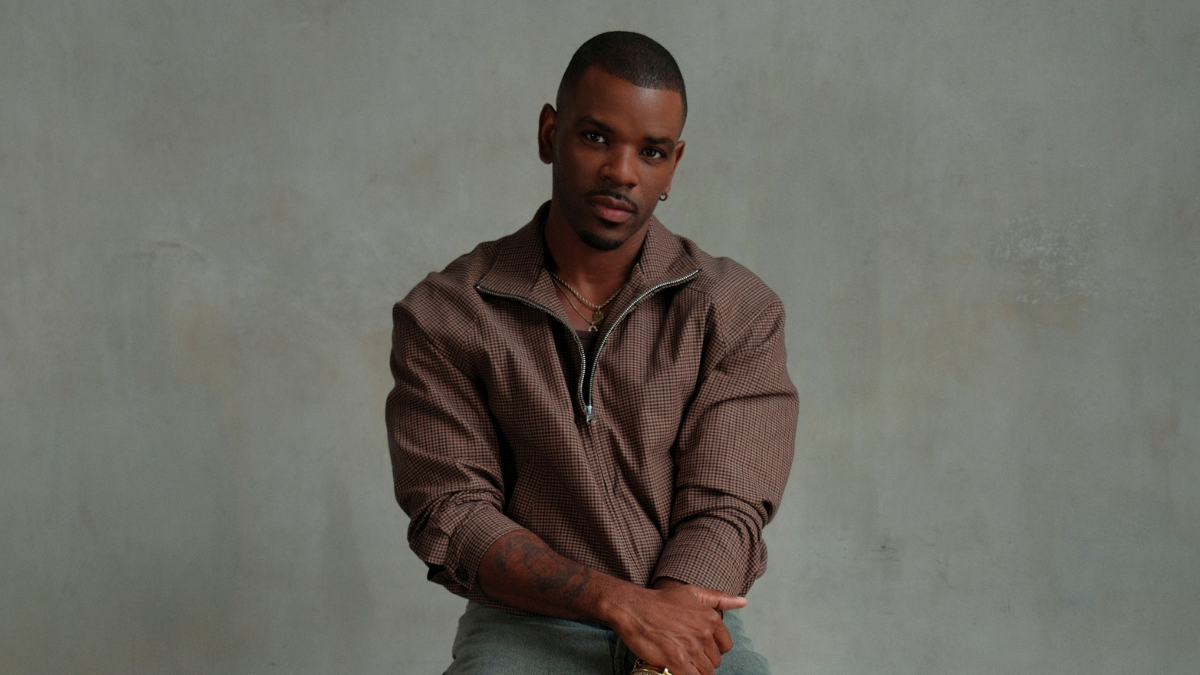
There is a version of a man that the world decides for you before you ever get a say. A role you are handed, a script you are expected to follow, and a self you spend years performing until the weight of it becomes too much to carry.
For Jermelle Simon-Jones, that reckoning didn’t happen in private. It happened in public, in front of the audience that knew him, and it cost him more than most men are ever asked to risk.
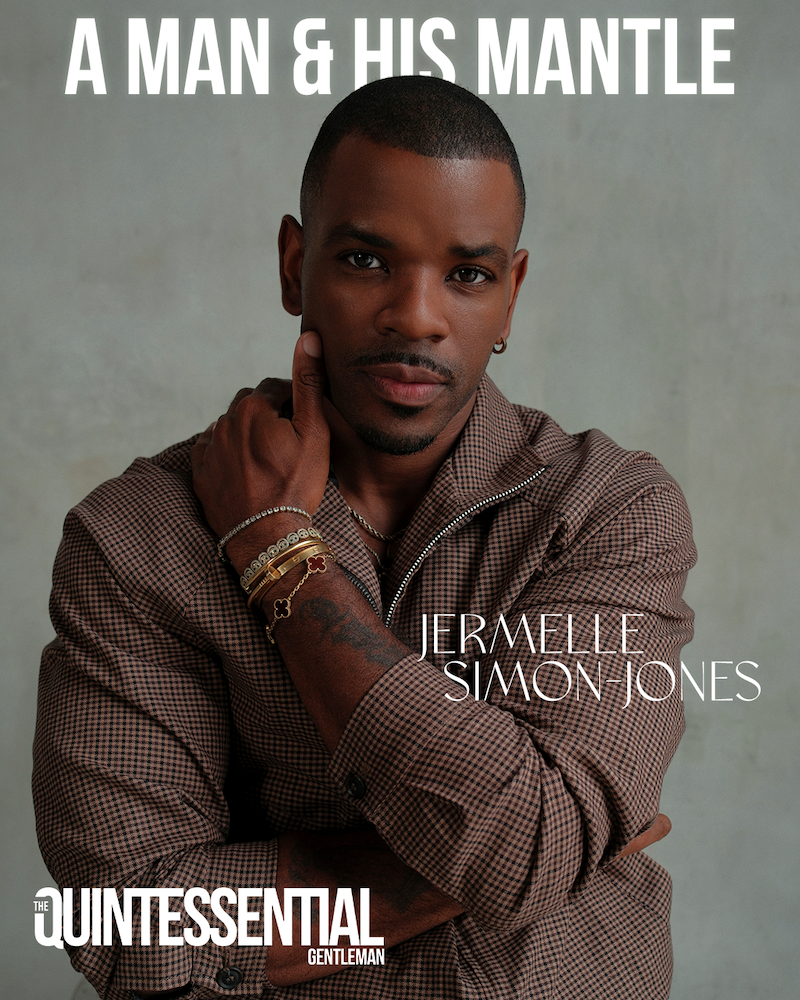
That kind of honesty is exactly what A Man and His Mantle was built to hold.
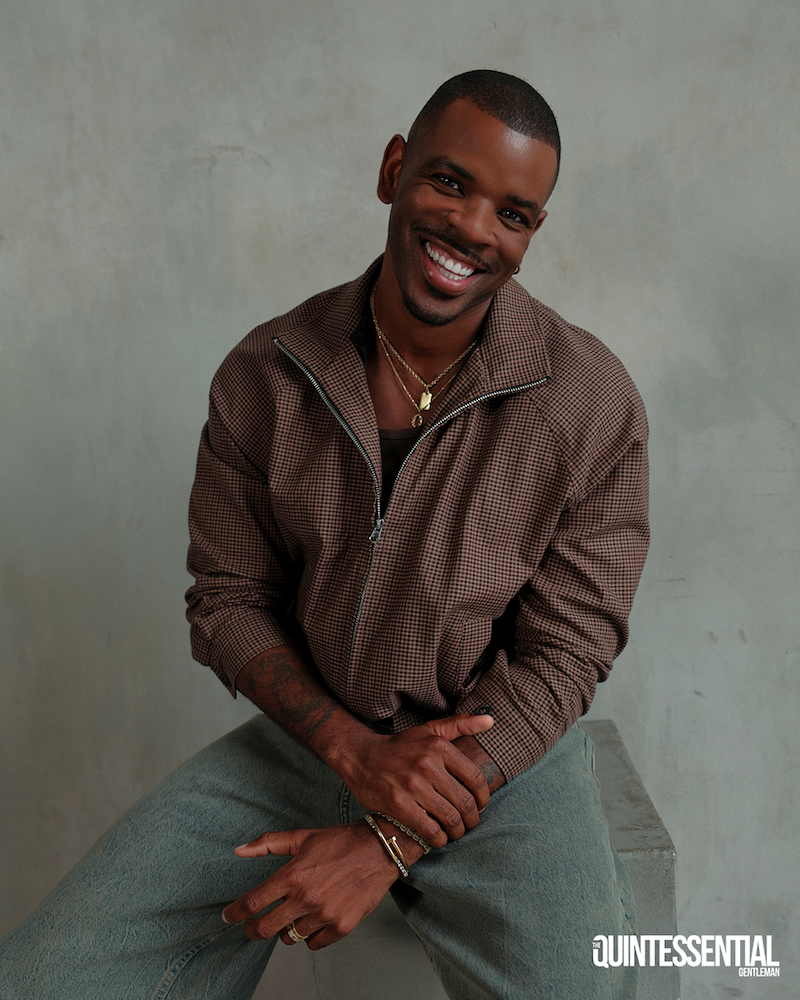
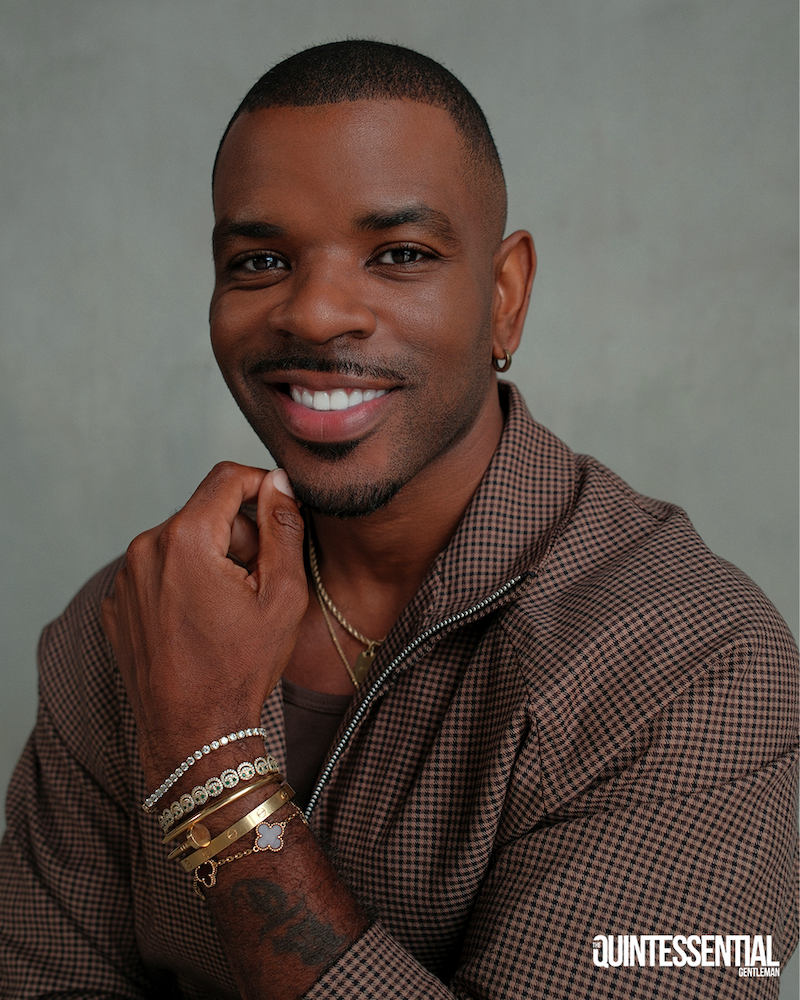
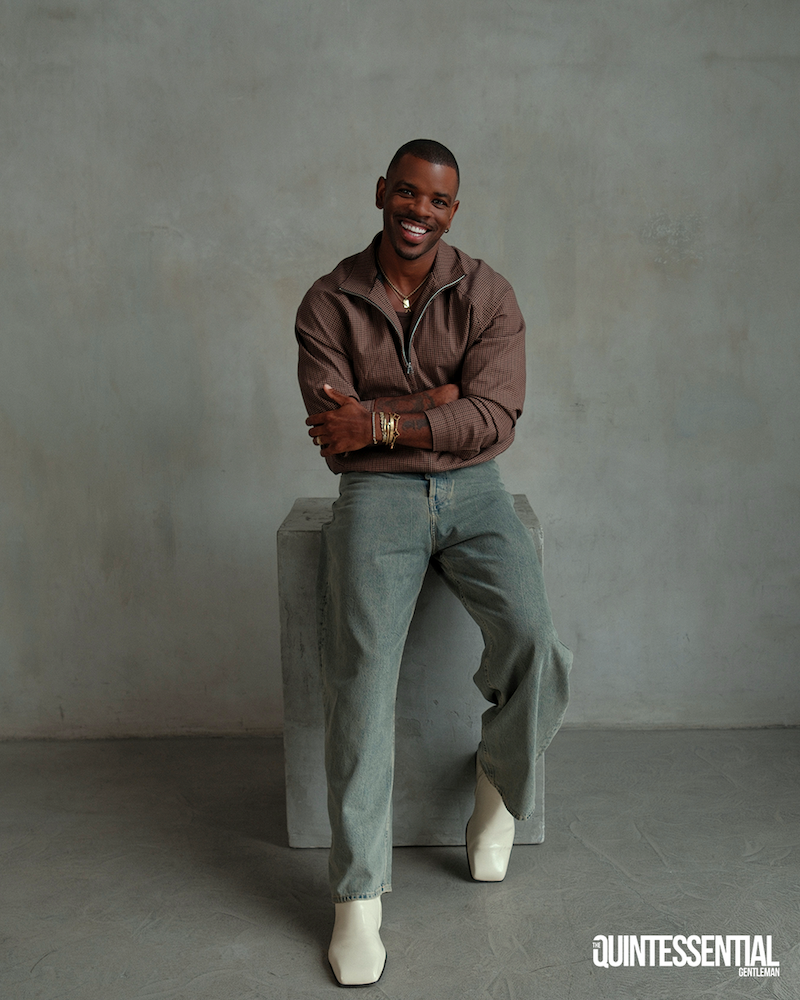
A Man and His Mantle is an original project created by Depth Psychologist Je’Rel Smith and co-produced by The Quintessential Gentleman that gathers some of the most compelling young Black men in entertainment, sports, and culture and creates the space for the kind of honest, interior dialogue that most platforms never invite and most men never get to have.
Anchored by an original photo shoot and a series of video interviews, the feature asks the questions behind the public persona: the mental health, the masculinity, the emotional blueprint laid in childhood, and what it actually costs to be the strong one.
It’s a beautifully produced editorial experience that treats these men as full human beings and gives them room to say the things that have gone unsaid.
It is no accident that A Man and His Mantle arrives in June, Men’s Mental Health Month. At a moment when the cultural conversation around Black men and emotional well-being is louder than it has ever been, this feature is a reminder that the most powerful thing a man can do is be honest about what he is carrying. And few people understand that truth more personally than Jermelle Simon-Jones.
Most fans know Simon-Jones from The Upshaws, the hit Netflix series where he plays Bernard Upshaw Jr. What the screen doesn’t show is everything he was navigating behind it, coming out as a gay Black man from the South in an industry that gave him no blueprint for how to do it, being diagnosed with ADHD as an adult, raising three children before the age of 24, and quietly dismantling every idea of manhood he was given and starting over from scratch.
As part of A Man and His Mantle, Simon-Jones gave us a full picture of identity, of fatherhood, of the isolation that hides inside a life full of love, and of what it means to become the man you actually want to be rather than the one the world decided you should be.
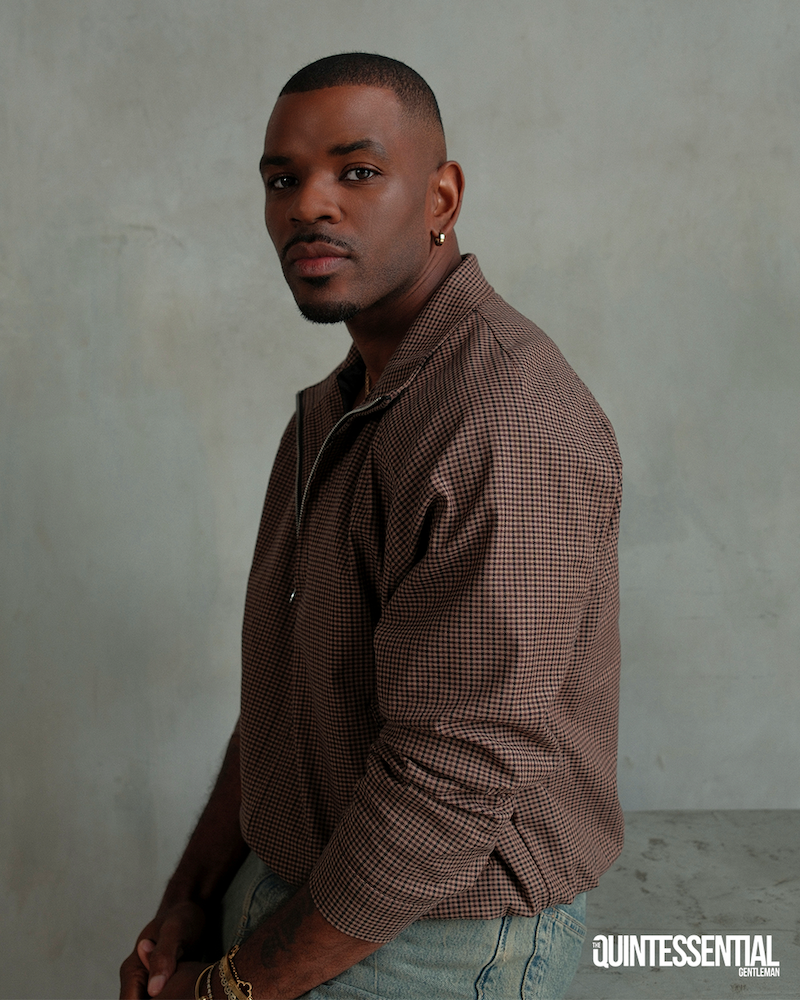
[Interview has been edited for length and clarity]
You’ve talked publicly about coming out as a gay Black man from the South. How did that reshape your understanding of authenticity and what it costs?
I thought being my authentic self would cost me my career. I didn’t feel like I could have the success that I have now if I were to just be Jermelle Simon. And I still kind of struggle with that. I still kind of struggle with how authentic should I be? Because to me, authenticity is also inviting people in. And so I don’t know how much of my true self will get in the way of my success and my career. I feel like you can only be but so real. So I’m still trying to figure out exactly how authentic I can be and how much of the game I still have to play.
Growing up as a Black man from the South, what messages did you receive about who you were supposed to be emotionally?
The things that were placed on me were the typical Black man from the South tropes. I gotta be strong; I have to suppress my emotions; cry in private. All the things that I was not. And being a Black man from the South, I feel like you work. You’re a workhorse in a way. My grandfather retired, then went back to work. My dad didn’t finish high school, but he worked. Every man around me worked. They didn’t leave room for the arts, for creative thinking. And I wanted to use my brain a lot more than I wanted to use my hands. I remember thinking, if this is what it takes to be a man, I’m a little off from this. But I gotta play this role because that’s what was given to me.
How were Black men around you taught to process emotion?
I don’t think that Black men are taught how to process emotions at all. I do think it’s about survival: how to survive what you’re feeling. Outside of anger, I don’t know another emotion that is welcomed. And what needs to be taught is how to turn and face, how to lean into the emotion. Because what I’ve been realizing is I have this natural reaction to emotion, which is to suppress it, to lean away from it, because I was never taught how to process it. When I turn and face the feeling, it passes through me, opposed to running away from it and it continuing to chase me.
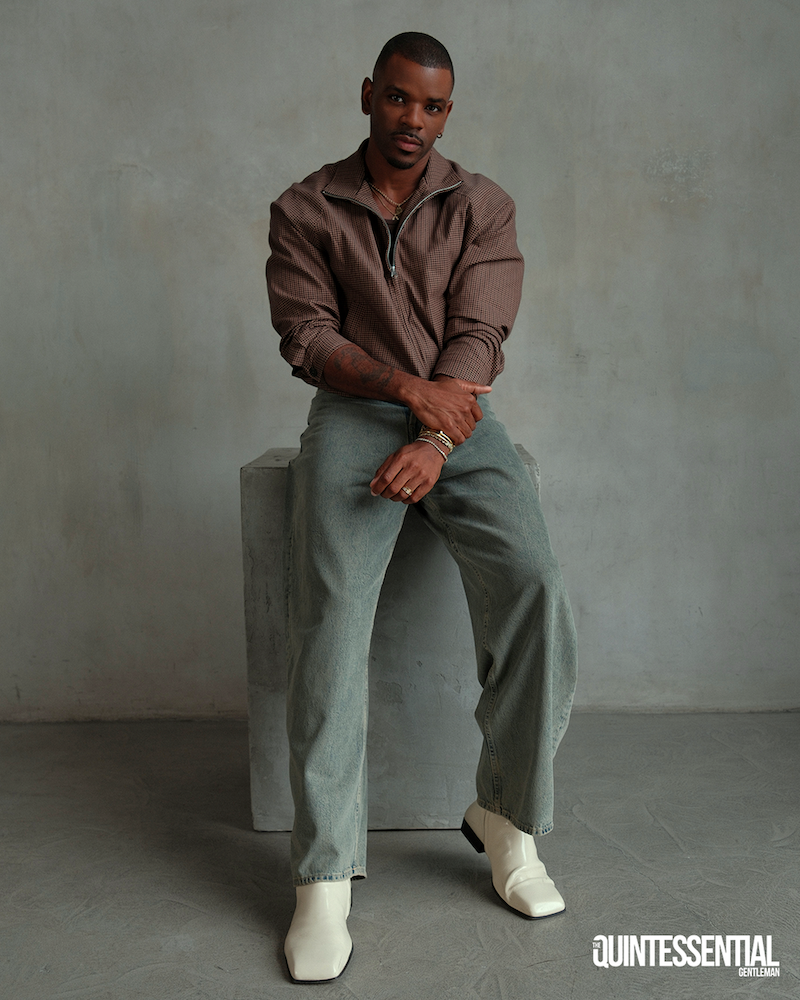
You were diagnosed with ADHD as an adult. How has that changed the way you understand yourself?
I feel lonely now while being surrounded by so much love and opportunities and all the things. I just got diagnosed with ADHD last year, and it’s very difficult even for the doctors to explain to you what is happening. I have inattentive ADHD. Low mood. I’m always searching for dopamine. And I’m happily married. I have three children who I know love me. But they could never understand just what it takes to be in a good mood. And so I think I have felt very isolated because of my ADHD, trying to learn myself more and understand myself more so that I can give that to the people who love me, so that I can show them how to support me. I first need to learn how to support myself.
You became a father very young. What did that teach you about what you wanted to pass down, and what you didn’t?
What I’m trying not to pass down is false guilt. I want them to be able to know you can care about a person, but that’s for them to carry. I don’t want them to carry my stuff. I know what it feels like to worry about your mom and carry her pain because I couldn’t separate care from what was hers. A lot of things had nothing to do with me. And I see my children kind of do the same thing, so I’m very mindful of how I go about things because they’re watching me at every turn. My actions, they don’t have to suffer the consequences for my actions. That guilt is not for them.
What does loneliness look like for a man who has everything from the outside?
I think I feel lonely now while being surrounded by so much love and opportunity and all the things. Having ADHD is isolating. I also think I had a different experience. I had three children before I was 24, and a lot of my peers, they support me, but you would have to experience that in the ways that I did to understand what being a teen father does to you. I don’t think it is this horrible thing as much as I think I was taught to teach myself how to survive while keeping a baby alive, pretty much.
How do you find peace in your day-to-day life?
When life gets loud and all these expectations are put on me, I think I’d like to meditate more. I can always tell when I’m not in that space because everything is fast and chaotic. I’m really good at being consistent with my reading. I’m a self-help enthusiast; that’s all I read. Reading and meditation help me a lot. I work out every day, and I don’t necessarily work out to have a superhero body more than it is to have a superhero mind. I’m always searching for dopamine, and working out makes me feel good about myself, which in turn makes me feel grounded and centered. The slower you are, the faster it comes to you.
You talked about cosplaying the man you were raised to be. When did you stop?
I spent a lot of years cosplaying the man I was raised to be. The man I was raised to be was to provide for my family, to find a wife, to have kids, and make sure my family was good. That changed a little bit because I don’t have a wife; I have a husband. So automatically, my upbringing couldn’t help me. I didn’t get the manual for the man that I need to be. So I had to break it all down because none of it worked for me. I just started thinking about what it is that I want, maybe three or four years ago, so fairly recent. And I’ve gotten to a place where I’ve completely started over. A lot of my answers to a lot of things these days is: I don’t know. And I feel very comfortable in I don’t know. Because growing up as a man, you couldn’t say that. I just want to normalize sometimes just figuring it out.
What does honesty cost a Black man?
I have many moments where being honest feels riskier than being silent. However, if it’s on my chest, I’m going to get it off. I suppressed so much as a child; I suppressed my entire identity. And I’ve gotten into a space where I just have to get it off. I never regret being honest, because I know what suppression looks like. I know what not getting it off my chest looks like in the end. Honesty always feels riskier than being silent, even in the safest spaces. Because we were never taught to be honest, especially not with ourselves.
What do you hope the next generation of Black men doesn’t have to carry?
I hope the next generation of Black men never have to carry the idea that vulnerability is a weakness. A lot of what makes me strong is my ability to be honest with myself, with my feelings. To let go of the idea that men don’t cry, that I can’t showcase any emotion outside of anger. You not being able to be a full human is a lie. It’s your birthright to feel. And however that comes out is how that comes out. A lot of things we label as this is for girls, this is sassy, that’s human behavior. You are having human behavior and you should be able to showcase that.
What does emotional freedom look like for Black men?
Emotional freedom for Black men would look like learning how to relax. We were taught to work; I don’t even know another way to put it. We’re not taught to enjoy life. I do feel like we are not sent here just to make the most amount of money and provide the most for our family. When you learn how to relax, you relax your nervous system. When you relax your nervous system, you allow your full self to show up because you’re not constantly in survival mode. You’re not constantly trying to figure out how you’re going to pay the next bill. You can actually breathe. It would look like being able to honor when you’re tired.
What would you have needed to hear as a young Black man from the South that no one told you?
I wish a Black man would have told me that I was safe and that I was enough. I still struggle with that. Is this a safe space? Can I be myself? And when I am myself, is that enough? I’ve heard those words from people I could always challenge: you don’t come from where I come from, you don’t get it. A Black man telling me that would have been just the reassurance I needed to keep going.
Who is the man you’re becoming?
The version of myself that I’m still becoming is the confident version. The more you know, the more you don’t know. I’m constantly curious and asking questions. It goes back to understanding that I’m enough. When I stopped playing the role of the straight Black man from the South and tapped into the type of man that I want to be, I didn’t know if that was enough. Full confidence is releasing all of that. This is how I want to show up, and this is what I want to say, and I’m not checking to see if you like it or not. He’s in there somewhere. I’m still working on that version of myself.
Producers: Jerel Smith and Eric Keith
Photographer: Jerel Smith
Videographer: Jerel Smith
Groomer: Keyocsha Brown