

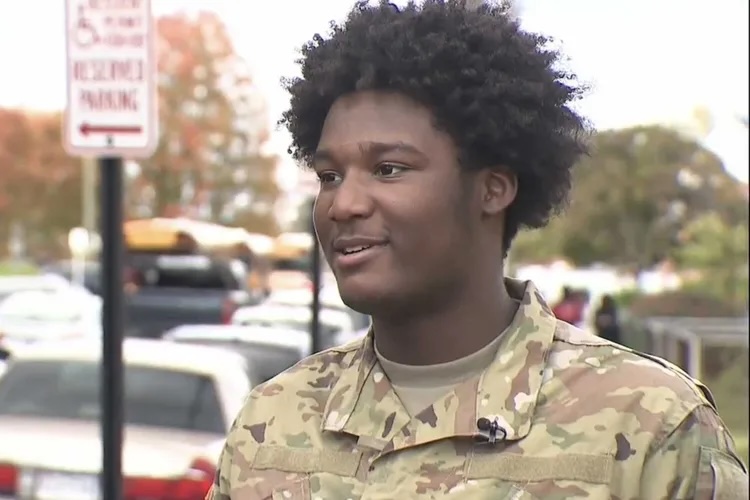
On a Monday evening in October 2025, four football players stood outside Kenwood High School in Baltimore County, eating the Doritos their coach had handed out after practice. Minutes later, according to a lawsuit filed on November 17, 2026, they were on their knees on the concrete, in handcuffs, with officers’ guns drawn.
The reason, the suit says, was an AI system called Omnilert Gun Detect, which flagged 16-year-old Taki Allen’s chip bag as a firearm with 90% confidence.
It is easy to make this a story about faulty software. That is the wrong lesson. The most damning detail in the complaint is not what the machine did. It is what the people did after the machine was already corrected.
Within two minutes of the alert, the lawsuit says, school safety staff and a police sergeant looked at the image, saw a teenager holding a bag of chips, and canceled it. The system sent everyone a second message saying so. More than ten minutes later, the principal opened the original alert, missed the cancellation, screenshotted the image and sent it to the school resource officer. The officer called it in. At least six cruisers arrived.
In other words, the human check happened. It just did not travel.
That is the failure every school district buying this technology needs to sit with. An AI flag is a question, not an answer. Once it is treated as an answer, anyone in the chain can turn it into a police response, and the last person to see it may be the least informed.
Baltimore County Public Schools runs this system across 165 schools and more than 7,000 cameras. Maryland’s Office of the Inspector General for Education found that more than 99% of its alerts in the district were false positives that needed no police response, according to the complaint. If you send armed officers toward a crowd of kids on a system that is wrong that often, you are not managing risk. You are manufacturing it.
And we know who tends to absorb that risk. When police arrive with guns drawn expecting an armed suspect, a Black teenager’s split-second movement can be read as a threat. One officer reportedly told the boys afterward that it was a good thing they did not run, because that “would have been a real problem.” That sentence should end any debate about whether false alerts are harmless.
The fix is not complicated. Every AI-generated alert should require confirmation by a trained person before it can trigger an armed response. A cancellation should go straight to dispatch and every officer on the call, automatically. And no one outside that verification chain, however well-meaning, should be able to route a raw alert to police.
School shootings are real, and seconds matter. Omnilert itself says these systems are deliberately built not to miss a real gun, accepting false positives as the price. In January 2025, the same system reportedly failed to detect a shooter’s gun at Antioch High School in Nashville, where two students died. Some parents will reasonably ask whether a human check could slow a response that saves lives.
But a mandatory human check is exactly what Baltimore County’s own process claimed to have, and it worked in two minutes. Speed and verification are not opposites. The danger is a system that verifies and then lets the unverified version keep moving anyway.
To its credit, the district’s superintendent called for human verification before any police response after the incident. That is the right instinct. It should be written into every contract, every district policy and every police procedure that touches these tools, not left to the next principal who checks her phone late.
AI will keep coming into our schools. The question for parents, school boards and police chiefs is simple: who checks the machine, and does that check reach the people with the guns? Until the answer is yes every time, no alert should send armed officers toward a child.