

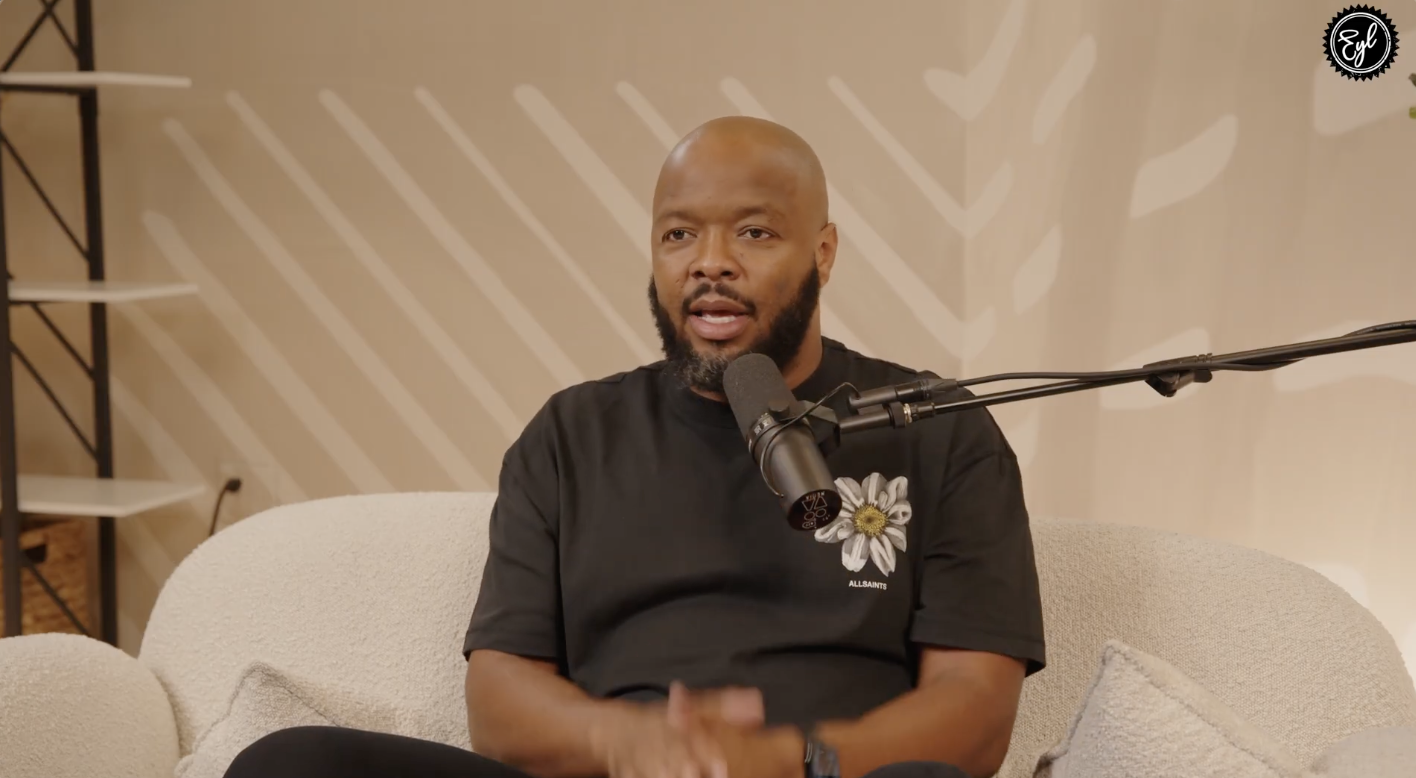
Kevin “KevOnStage” Fredericks recently sat down with Earn Your Leisure, and one answer in particular has stuck with me since. Asked to explain why he considers monogamy one of the keys to his success, Fredericks didn’t focus on morals or being a traditionalist. It’s about efficiency.
He explained that managing multiple women would make him less efficient, joking that his wife alone, dealing with perimenopause, already gives him enough to navigate without adding more people into the mix. He talked about the exhaustion of imagining a life where finishing one conversation just meant starting another, lying to some and telling the truth to only one, and how that kind of split attention would leave him confused rather than focused.
His logic: energy is finite, and however you spend it is how you spend it. He said the lack of that particular kind of chaos is exactly what lets him turn around three or four videos a day, because he isn’t burning hours managing multiple relationships and the lies required to keep them running.
That interview is worth sitting with, because I think Fredericks is onto something bigger than his own schedule. Think about how many genuinely successful people you know are single, and I don’t mean people who got lucky off a lottery ticket or an inheritance. I mean people who put in blood, sweat, and tears to build something from nothing.
Even the ones who eventually got divorced were, more often than not, partnered up while they were actually building. There’s a difference between the relationship status a person ends up with and the relationship status they had while doing the work, and that distinction matters more than we usually give it credit for.
I believe having a true partner is one of the most underrated advantages in building anything real. When you find someone who’s actually with you, and I mean actually with you, you stop cycling through the exhausting rhythm of dating.
You’re not managing three different conversations, three different sets of expectations, three different versions of yourself. You get to focus on one person who understands what you’re trying to build, who’s building alongside you instead of competing for your attention against it.
That kind of partner isn’t just useful because of what they might contribute financially, though that can help. It’s the mental support that matters most. Someone who keeps you upright when you want to quit, who tells you the truth when everyone else is telling you what you want to hear, and who gives you somewhere safe to be honest about how hard it actually is.
Look at the people who’ve built real wealth in this country, and the pattern holds up more than people want to admit. Jeff Bezos was already married to MacKenzie Scott when he founded Amazon out of a garage, and she was there through the years it took to become what it is now. Warren Buffett built and scaled Berkshire Hathaway while married, with a partner present for the grind, not just the payoff. Robert L. Johnson co-founded BET in 1980 with his then-wife, Sheila Johnson, and built it into the first Black-owned company to trade on the New York Stock Exchange, with Sheila working alongside him as a co-founder rather than simply supporting from the sidelines.
Robert F. Smith was married to Suzanne McFayden in 2000 when he founded Vista Equity Partners, and stayed married to her through the years it grew into one of the largest private equity firms in the country. Denzel Washington married Pauletta Pearson in 1983, years before Glory, Malcolm X, and Training Day turned him into one of the most decorated actors of his generation, and the two are still married today.
Even Fredericks’ own point applies here: he’s not crediting his wife with the idea, he’s crediting the bandwidth she frees up. She helps with business ideas. She tells him the truth. He said it himself: he’s not even a good enough liar to get away with juggling anyone else, so it simply isn’t worth it.
That’s really the crux of it. Monogamy, at least the version Fredericks is describing, isn’t about romance for its own sake. It’s a resource allocation decision. Every hour spent managing multiple relationships is an hour not spent building, creating, or thinking clearly.
A real partner doesn’t just add support, they remove the noise that keeps so many talented, hardworking people running in circles instead of moving forward. If energy really is finite, as Fredericks put it, then who you choose to spend it on might be one of the most important business decisions you’ll ever make.