

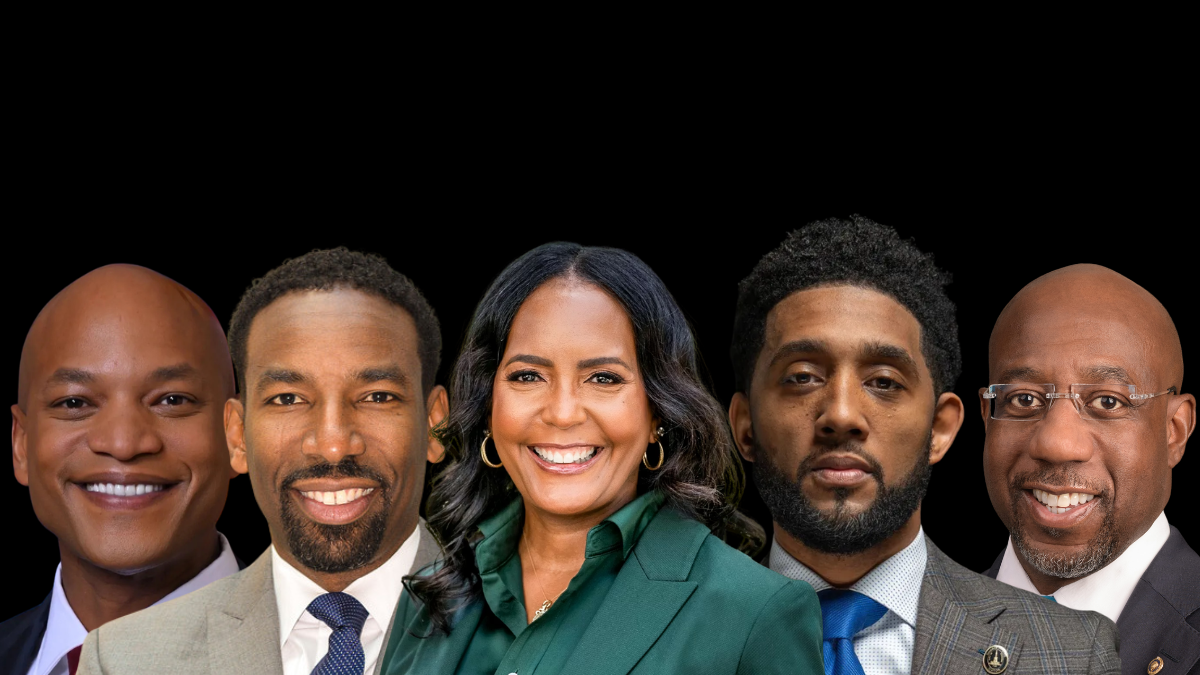
Black male leaders across Georgia and the country gathered this week for “Men for Keisha,” a national virtual call to action rallying support behind former Atlanta Mayor Keisha Lance Bottoms in her bid to become the first Black woman elected governor in U.S. history.
Hosted by The Gathering Spot co-founder Ryan Wilson and broadcast on Roland Martin‘s Black Star Network, the event opened with a prayer from Dr. Howard John Wesley, senior pastor of Alfred Street Baptist Church in Alexandria, Virginia, who told attendees they were gathering “as the Mordecais who believe that our Esther has come.”
Wilson reminded the group that Bottoms won the Democratic primary decisively, taking 56 percent of the vote in a seven-candidate field and carrying 158 of Georgia’s 159 counties without a runoff. Darrell Anderson, a 45-year Atlanta small business owner and founding member of the Men for Keisha campaign, framed the call as a direct response to what he called a false narrative.
“This is a national call from men all across the country to dispel the nonsense, the rumors that men will not support a woman for governor,” Anderson said, before setting a fundraising target of one million men giving $100 or more.
Maryland Governor Wes Moore, the nation’s only sitting Black governor and just the third in U.S. history, spoke to the stakes of the office itself. “Who your governor is matters because the person who introduces the budget is the governor. There’s one prerequisite for every single bill to become law inside of the state of Georgia. That is, it requires the governor’s signature,” Moore said. “Everything seems impossible until it’s done.”
U.S. Senator Raphael Warnock connected the race to a recent fight over redistricting in Georgia, warning that a Republican win could revive efforts to redraw legislative lines. “It is literally about our votes. It’s about our voices. It is about our power,” Warnock said, also pointing to the roughly 600,000 Georgians left without coverage under the state’s refusal to expand Medicaid.
Atlanta Mayor Andre Dickens, who succeeded Bottoms in office, recalled watching her govern through the crises of 2020, from the COVID-19 pandemic to the killing of Rayshard Brooks. “I watched her do the hardest version of this job in one of the hardest years in the history of the United States. She cared and she led,” Dickens said, before laying out a three-part ask for the men on the call: confirm their voter registration, identify ten men in their circle to register and get to the polls, and physically drive them there.
Pastor Jamal Bryant of New Birth Missionary Baptist Church noted that Black men in Georgia lead the state in unemployment at 6.9 percent, and pointed out that roughly 400,000 Black Georgians sat out the last gubernatorial election, which Governor Brian Kemp won by just 55,000 votes.
Baltimore Mayor Brandon Scott urged the men on the call to expand their outreach beyond familiar circles. “Don’t just go to the Union Hall. Don’t just go to your frat brothers. I want you to go to the trap,” Scott said. “I want you to go get the people that no one thinks is going to show up and vote in this race because Georgia can do something that’s never been done before.”
Actor and recording artist Tyrese Gibson spoke about raising two daughters and announced plans to host a fundraiser targeting $2 million in a single night, while Collective PAC founder Quentin James asked every participant to contribute at least $100, noting that Black women historically receive the least funding of any candidate demographic.
Mondale Robinson, mayor of Enfield, North Carolina and founder of the Black Male Voter Project, shared that more than 409,000 already-registered Black men in Georgia who sat out the last three election cycles and calling for what he termed “trauma-informed organizing” rather than shame.
Campaign manager Theron Johnson closed the call with a briefing on where the race stands, saying Bottoms has held a lead of two to six points across recent polling against Republican nominee Rick Jackson, a self-funding billionaire who has already spent more than $100 million on the race.
Georgia’s voter registration deadline is October 5. Early voting begins October 13, ahead of a November 3 election that could decide whether the state elects its first Black woman governor.