

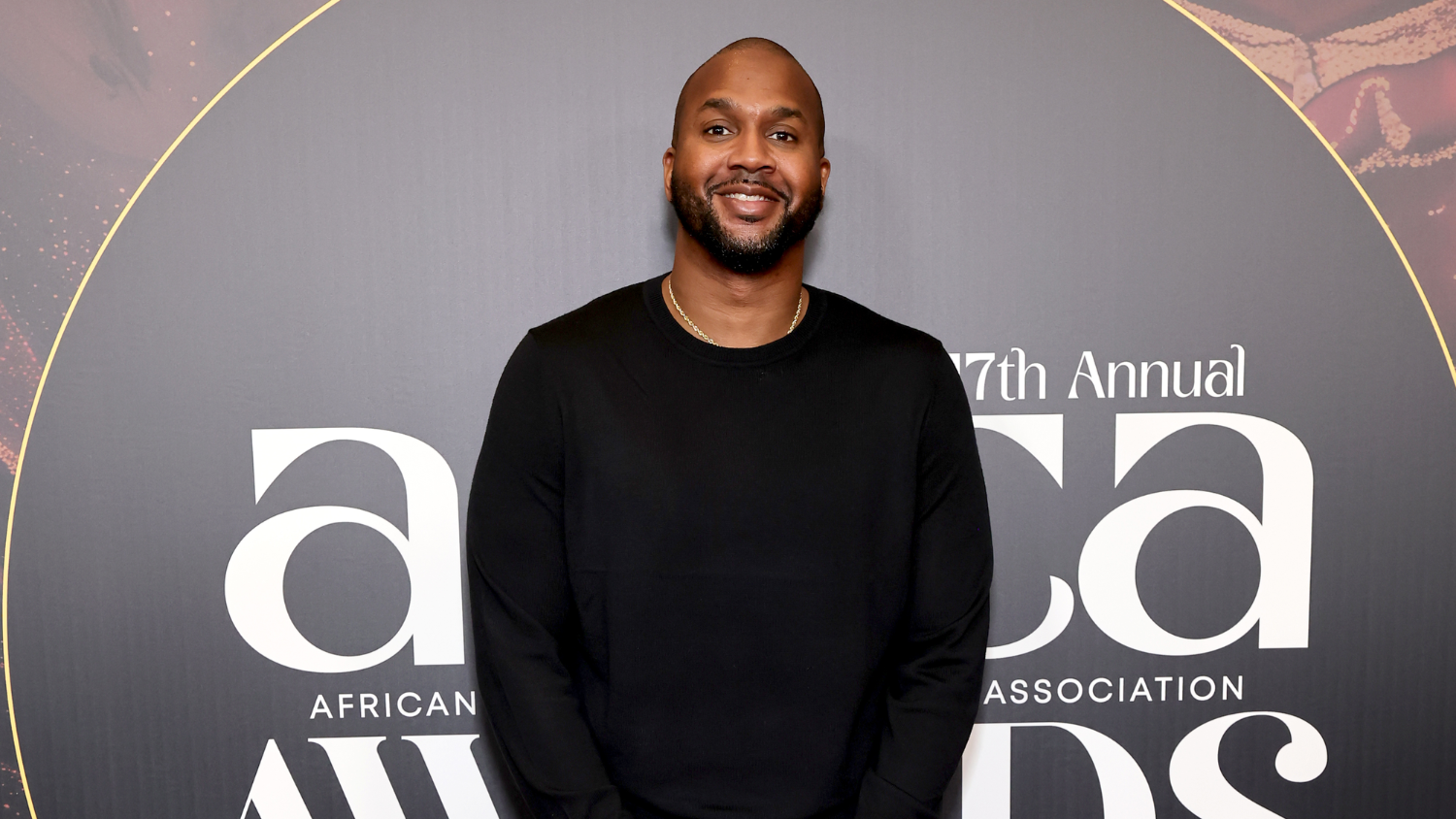
Van Lathan Jr. recently shared his thoughts on the difference between being a “Black American” and being an “American Black man.” Speaking on the One54 Africa podcast with hosts Akbar Gbajabiamila and Godfrey, the journalist and Higher Learning co-host broke down how he separates the two terms and why the distinction matters to him.
The Baton Rouge native and Southern University alum has built a career on exactly this kind of unfiltered cultural conversation, from his early days as a senior producer and on-air personality at TMZ to his current run co-hosting Higher Learning with Rachel Lindsay on The Ringer’s podcast network.
His appearance on One54 Africa, a show built specifically around unpacking the “challenges and culture clashes of growing up African in America,” placed him in his wheelhouse: an interesting, unscripted breakdown of identity, lineage, and what it actually means to be Black in America versus Black from America.
Van Lathan reveals the difference between a Black American man and an American Black man. Also, Van Lathan, Godfrey, and Akbar have a discussion on why the N-word isn’t protected like other racial slurs, with Godfrey saying he wishes the N-word would go away.
— The Art Of Dialogue (@ArtOfDialogue_) August 12, 2026
(🎥 One54… pic.twitter.com/JDbUKEXY3o
“The way I distinguish the difference is this,” Lathan said. “We’re all Black… he is American by nationality, right, so that makes him an American Black man.” Where people tend to get confused, he explained, is that when he calls himself a Black American, he’s not talking about nationality at all; he’s talking about ancestry.
“When I say Black American, what I mean is that my ancestral home is South Louisiana,” he said. “Lineage in my origin, as is the rest of the world, is African.” It’s a deliberate reordering, nationality first versus heritage first, and Lathan was clear that the two aren’t in competition with each other so much as they’re two different lenses for the same identity.
For Lathan, that history carries weight that goes beyond semantics. “It’s very important that Black people know that there is a lineage and a history that predates white supremacy, that predates the invention of the word Black to describe us,” he said. “You just have to know that, because if you don’t know that, then white people invented you, and that’s not the way that it happened. As a matter of fact, it’s probably more accurate that you invented them.”
That point, he added, isn’t just a matter of pride; he framed it as a piece of practical self-understanding that too many people go without, and one he clearly feels obligated to spell out plainly rather than let go unsaid.
As far as the specific culture he identifies with, Lathan credits earlier generations of Black South Louisianans. “That was established by old Black people from South Louisiana that had to reinvent a culture on the fly in some of the harshest, most dire circumstances,” he said. “I honor them by honoring their cultural technology.”
Importantly, he was careful to frame this as additive rather than exclusionary: “That’s not to be different or to set myself apart from worldwide diasporic Blackness; that’s not what I’m trying to do,” he said. “But my identity is in them, and their unique sacrifice, struggle, and what they had to do.”
It’s a direct line he draws from his own sense of self back to the people who came immediately before him, treating that inheritance as the foundation everything else is built on.
Check out the full interview below.
The conversation is part of a broader, ongoing exchange Lathan has been having across platforms — including recurring appearances on One54 Africa — about identity, lineage, and the sometimes fraught relationship between Black Americans and the wider African diaspora. It’s a topic he’s returned to more than once, and one that continues to resonate given the show’s built-in audience of Black Americans and African immigrants working through those same questions together.