

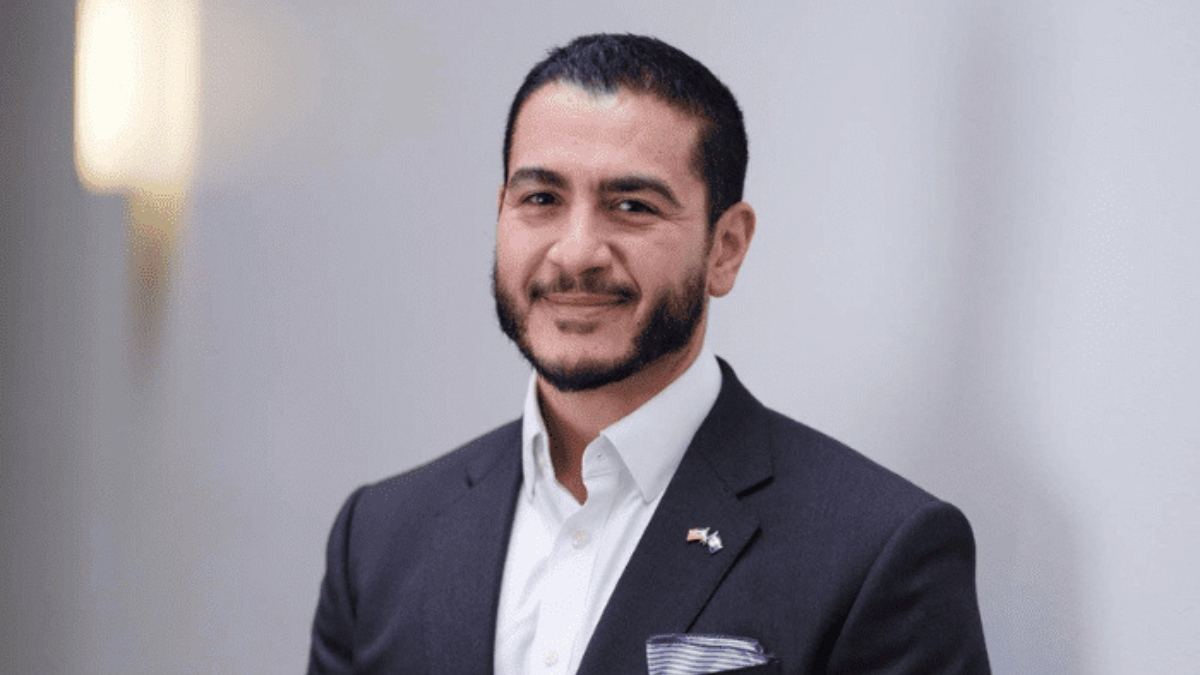
Progressive leader and former public health official Dr. Abdul El-Sayed has won the Michigan Democratic U.S. Senate primary, defeating establishment-backed U.S. Rep. Haley Stevens.
El-Sayed’s victory represents a significant moment in swing-state politics and a major win for the progressive movement. Overcoming millions of dollars in outside Super PAC spending aligned with Stevens, El-Sayed built a grassroots coalition centered on Medicare for All, economic reform, and an explicit pledge to reject corporate and political action committee funding.
His victory sets up a high-stakes general election matchup this fall against Republican nominee Mike Rogers in a key battleground race that could decide control of the U.S. Senate. Beyond November, the result signals that voters in crucial industrial states are increasingly drawn to populist, independent platforms over traditional party-backed candidates.
WATCH: A Michigan voter explains why he backed Abdul El-Sayed over Haley Stevens:
— Brian Allen (@allenanalysis) August 5, 2026
“I voted for Abdul because he doesn’t take money from AIPAC. I’m not voting for anybody who takes money from AIPAC.”
“Because the money should be spent here, not over there.” pic.twitter.com/yuHeX4Zl8C
For voters meeting him on the national stage for the first time, El-Sayed is far from a traditional politician. Born in Michigan to an Egyptian immigrant father and a Michigan-native mother, his background bridges high-level academia, medicine, and frontline public service. After graduating from the University of Michigan, he earned a doctorate in public health as a Rhodes Scholar at Oxford University before completing his medical degree at Columbia University.
His career in public health quickly propelled him into executive leadership. In 2015, at just 30 years old, El-Sayed became the youngest health director of a major American city when he was appointed to rebuild the Detroit Health Department following the city’s municipal bankruptcy. During his tenure, he gained national recognition for initiatives that provided free eyeglasses to schoolchildren, held industrial polluters accountable, and remediated lead from elementary school drinking water.
El-Sayed first entered the national political spotlight during his 2018 bid for Governor of Michigan, running on an unapologetically progressive platform backed by Senator Bernie Sanders. Since then, he has remained a prominent figure in national health policy, serving on President Joe Biden’s 2020 Healthcare Unity Task Force, co-authoring Medicare for All: A Citizen’s Guide, and hosting the public health podcast America Dissected.
Abdul El-Sayed:
— Hanifseth (@Hanifseth19) August 4, 2026
“AIPAC and Israel are not the same as Judaism and the Jewish people.
I love Judaism and I love the Jewish people.
The most dangerous thing is expanding antisemitism to include criticism of Israel.”
He is absolutely right!
pic.twitter.com/GZXu9pM0AJ
For many Michigan voters, the primary served as a referendum on campaign finance, corporate influence, and federal spending priorities. Speaking to CNN on election day, Michigan voters summed up the sentiment that fueled El-Sayed’s grassroots momentum over Stevens:
“Abdul. And why is that? Because he doesn’t take money from AIPAC. I’m not voting for anybody who takes money from AIPAC. And why is that? Because the money should be spent here, not over there,” one voter shared with CNN. “Overall change in people who had an independent view and thought process of what’s right for the voters, not what’s right for corporate PACs or what’s right for any affiliations that support them,” another voter shared.
Throughout the campaign, the contrast in foreign policy and political backing remained central. At a campaign rally in Detroit, El-Sayed directly addressed outside spending, drawing a clear distinction between supporting the Jewish faith and criticizing foreign leadership or political action committees:
“AIPAC and Israel are not the same as Judaism and the Jewish people. I love Judaism and I love the Jewish people. I venerate Judaism and I venerate the Jewish people. I stand with Judaism and I stand with the Jewish people. And the single most dangerous thing that they’ve tried to tell us is that somehow they can extend the definition of anti-Semitism to include a foreign government and its leaders. I call bullshit. No. No. If you believe that anti-Semitism extends to include a foreign government and AIPAC, you are creating a dangerous circumstance.”
El-Sayed went on to connect international human rights directly to local, domestic investments:
“So it is important for us to recognize that we love Judaism and the Jewish people because we love people. And we love Palestinians and their rights because we love people. And we love that our tax dollars get spent here, on schools here, and health care here, because we love people. You cannot claim that human rights end at a border. You cannot claim that you want to invest in our kids when you send our money abroad to kill other people’s kids. You cannot claim it.”
With the primary officially decided, El-Sayed turns his attention to unifying the state’s Democratic base ahead of the general election against Mike Rogers. If victorious in the fall, El-Sayed would make history as the first Muslim elected to the U.S. Senate.