

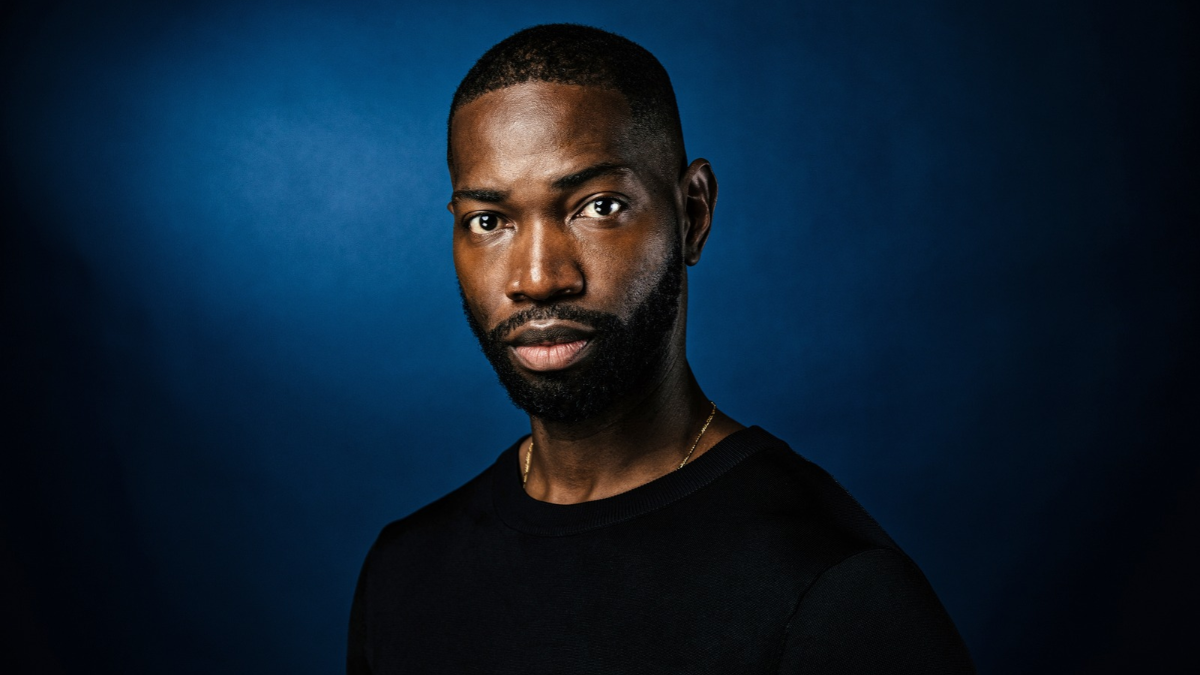
Before he won an Oscar, Tarell Alvin McCraney was a kid in Liberty City learning about August Wilson, Ntozake Shange and Alvin Ailey at the African Heritage Cultural Arts Center. That early arts education, made possible by Miami-Dade’s public schools, taught him a lesson that has guided his whole career. If you don’t see your story being told, tell it yourself.
He did exactly that. McCraney’s semi-autobiographical play In Moonlight Black Boys Look Blue became the basis for Moonlight, Barry Jenkins’ film about a young Black man coming of age in Miami. The film premiered in 2016, won the Academy Award for Best Picture, and earned McCraney and Jenkins the Oscar for Best Adapted Screenplay.
Mahershala Ali also won Best Supporting Actor. A decade later, Moonlight remains one of the most important films about Black manhood ever made.
McCraney’s work has never stayed in one lane. The MacArthur “Genius” Grant recipient is known for The Brother/Sister Plays and co-wrote Steven Soderbergh’s High Flying Bird. He also created David Makes Man, the Peabody Award-winning OWN drama about a gifted boy growing up in South Florida, which he developed with Michael B. Jordan and Oprah Winfrey. He’s also a teacher at heart and today serves as artistic director of the Geffen Playhouse in Los Angeles. This fall, his play Miss Black for President is running in New York through November.
Now McCraney is reuniting with Winfrey for something entirely new. Oprah Winfrey’s AHA is a two-hour immersive experience coming to Sphere in Las Vegas for one weekend only, April 2–4, 2027. Winfrey came up with the idea while watching U2’s opening night at the venue.
She’ll appear live on stage alongside performances from Jacob Collier, poet Ocean Vuong, gospel singer Wintley Phipps and others, with music from Max Richter and original works from artist Es Devlin. McCraney is the show’s writer.
In his conversation with The Quintessential Gentleman, McCraney talks about how Miami shaped his imagination and what he sees in Moonlight 10 years later. He shares what he remembers most about Oscar night and the pitch meeting that brought Winfrey to tears. He also explains why AHA is less about discovering something new and more about remembering what we already know.
[Interview has been edited for length and clarity]
What was it like growing up in Miami from an artistic perspective?
Tarell Alvin McCraney: Miami is a huge inspiration for me and many other folks, because it’s the kind of city where a lot of stories take place. Joan Didion wrote a book about her time there. I know MBJ is right now shooting Miami Vice again. The reason that happens is because Miami is a place of infinite beauty, physical beauty and geographical beauty. It has some of the most pristine weather and beaches in the world, and yet it has all of the drama and complications of an American city mixed in with all of the flavor and heightened stakes of a Caribbean city. Things you can find only in Trinidad or Jamaica, you can also find in Miami. Music from the continent of Africa and from South America finds its way onto the streets of Miami. So it causes people to have stories that overlap, mythologies and cosmologies that mesh. When that happens, you can’t help but be inspired to create a kind of dream world, because you’re constantly living in a state of the idyllic versus the reality of the world.
Where did the inspiration to tell your own story begin?
Tarell Alvin McCraney: I have to give a great shout-out to the public school system in Miami-Dade. I had an incredible arts education that exposed me to a lot of theater and live arts from a very young age, so much so that I would find counterparts from better-resourced neighborhoods who hadn’t had the same exposure I had. I was really fortunate to learn about August Wilson and Ntozake Shange and Alvin Ailey from a very early age at the African Heritage Cultural Arts Center in Liberty City.
One of the things those artists constantly talk about is that if you feel like you’re not represented, if the song you want to sing isn’t playing, then you should make it. I found myself looking at roles and thinking, “I see myself in parts of it, but I think there’s more story here to tell.” I wanted to add to it rather than supplant it, to add those colors of who we are. We know the health of a community by the stories that come from that community. So I wanted my community to have as much representation as possible, which is one of the reasons I started teaching as well. I wanted to add my stories, but also galvanize younger folks to tell theirs.
It’s been 10 years since Moonlight premiered. When you look back at it, is there anything you see now that you didn’t see then?
Tarell Alvin McCraney: Oh my God! Watching that film 10 years later with an audience is incredible. There are folks who were 18 when they saw it the first time who are now 28, and folks who were 15 when they heard about it who are now seeing it as adults. Their reaction is as if they’re seeing a whole new world, seeing things that have changed radically and things that are exactly the same.
One of the things that was really stunning to me is that the actors are older now. Even Mahershala, who won the Academy Award for the film, was a younger man just starting a family, and to see how much he brought to that role so early on was really powerful. It was powerful to watch Ashton and Jharrel, who were 19 and 20 at the time, portray these roles with such heart and such bravery. I literally texted Trevante, “You was acting your ass off in this film.” And he was like, “The rent was due, and the script was good.” I don’t know that they knew what they were doing was profound. I was always appreciative of it, but my gratitude toward them is immense.
What do you remember most about Oscar night?
Tarell Alvin McCraney: Being very hungry. I remember being like, “Whoa, this is really exciting and nerve-wracking and terrifying.” And being so grateful, and forgetting to say the things I wanted to say and not having a chance to say other things. But by the end of the night, I was like, “Wow, I want to be in a position to do something this great again,” and being hungry for that.
Did the Oscar change your career?
Tarell Alvin McCraney: The experience of working on the film keeps teaching me. I’ve learned so much about the industry, about how work happens and what works well and what doesn’t. Inside the business, people do call or answer because of that notice behind your name of “Academy Award winner.” But I often have to remind folks that it does not come with a cash prize. There’s more work to be done to make sure the opportunities that come become financial gain, and there is no certainty that comes with it. Folks can be polite about having a meeting with no intention of engaging your actual work.
How did your collaboration with Oprah Winfrey begin on David Makes Man?
Tarell Alvin McCraney: Meeting Miss Oprah Winfrey for the first time was at the pitch for David Makes Man. Michael B. Jordan and I had been going out to various studios and networks to find a home for the story, and we went to pitch it to OWN. She was in a business meeting at the time. I will never forget Mike Kelly, one of the producers, telling Miss Oprah, as she said hello to everybody, that she should stay and hear the pitch. I thought, “Oh my God, I can’t believe this man talked to Miss Oprah like this.” And she sat down and said, “OK.” You could tell she was very busy.
About five minutes in, she stopped me and said, “When does this take place?” I said, “Right now.” She said, “OK.” Then I began to tell her more, and she stopped tapping and started nodding along with the rhythm of it. By the time we were done, we were all in tears. I thought, “If nothing else comes of this, we had an incredible time telling stories this afternoon.” So I was elated when I got a call saying, “We want to do this.” She continued to be a champion for it. The way she always talked about it was “poetry on television,” and I always appreciated that, because it was a story about a young man in the heart of Homestead, where I spent some of my formative years.
Now you’re working with her again on Oprah Winfrey’s AHA. What is this new experience?
Tarell Alvin McCraney: It’s an immersive experience that allows us to assemble together and engage in our most core memory of self. One of the things Miss Oprah talks about often is that art should remind us of our most core value, which is that we are here, together. Live art does that when a song comes on and we all know it and sing it together, or we all light up a purple light for “Purple Rain” when it comes on for Prince. It’s taking those moments and allowing us to reconnect to our core, remembering that we know more about this life than we think, and that it’s best when we do it together.
We’re taking those aha moments and amplifying them with some of the most astounding technology, imagery and poetry, from Ocean Vuong to Miss Oprah herself, to some incredible special guests I can’t tell you about just yet. Listening to Max Richter’s music in that space, with those speakers, where you’re literally watching worlds come alive in front of you, is going to be incredible. The aha moment isn’t a discovery of something you didn’t know. It’s remembering things we already know. It’s that head nod when you walk past another brother on the street, and he nods back, because you know what to do, whether or not you’ve been taught. It’s getting to those core values in our hearts, and the poetry of our everyday life, magnified in an incredible, immersive way.
How did you become part of it?
Tarell Alvin McCraney: Folks at Harpo were telling me, “Miss Oprah’s working on this thing. Do you know any writers who might be available?” And I was like, “This sounds so up my alley,” because I’m always thinking about ways to activate the live space as a sacred moment of connection. As a playwright, that’s all I’m doing. I’m always reminding us that we’re in a room to listen to a story together, whether that’s an August Wilson play or a basketball game. That experience is so different than viewing it on television or through our phones. Being together can give us the nourishment we need to go on in the trying times we sometimes have individually. When I said those words to the folks at Harpo, they were like, “Can you do it?”
I thought, “Let’s see.” I’m doing a play called Miss Black for President right now in New York, and that runs through November. But I thought I could engage right afterward. So this summer, I started writing with Miss Oprah on a couple of things, and I’ve been working with Ethan Tobman, our director, and the folks at Sphere, who have been showing me incredible technology I didn’t even know existed.
What was the aha moment that made you believe this is what you should be doing?
Tarell Alvin McCraney: I think about this often, and I wonder whether to share it. As a young person, I would rehearse theater at school, and then I would go home and work in a garden. I’d plant squash and really find ways to bring nourishment to those plants. I remember the feeling of understanding how to work within the natural order of things for something else’s growth, which I think connects to bell hooks, who said love is extending yourself, even if it’s uncomfortable, for someone else’s growth. I said I wanted to do that for the rest of my life, and a kind of peace came over me. I call it God. Some people call it grace. But it told me I was in alignment.
It’s like when you’re sitting on the shore and the sun is setting while the moon is rising, and you see a path out across the water. No matter where you go, that path will be there for you. You might not be able to walk it. You might have to swim it, or you might have to imagine it. But it’s there for you to see. That’s what it felt like.
Oprah Winfrey’s AHA comes to Sphere in Las Vegas April 2–4, 2027. Tickets and packages are available at AHALive.com.