

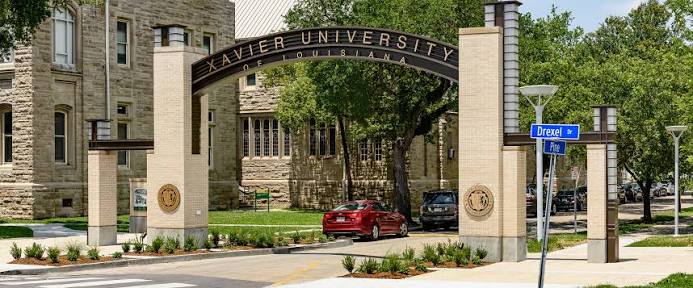
Xavier University of Louisiana and Ochsner Health’s new medical school is cleared to start recruiting students. The Xavier Ochsner College of Medicine received preliminary accreditation from the Liaison Committee on Medical Education, the school announced on October 14.
The New Orleans school, the Gulf South’s only historically Black medical school, plans to welcome its inaugural class in summer 2027. Applications are expected to open through the American Medical College Application Service in the coming weeks, according to WAFB.
“This is a historic moment for Xavier University of Louisiana, for New Orleans and for the future of medicine in this nation,” Xavier President Reynold Verret said, as quoted by Black Enterprise.
Training Where the Need Is
The school is built around a simple idea. “The single best predictor of where a doctor practices is where they train,” Dr. Leonardo Seoane, the college’s president and founding dean, told Forbes.
The need is real. Federal projections estimate a shortage of more than 141,000 physicians nationwide by 2038, and 60 of Louisiana’s 64 parishes are designated health professional shortage areas, Forbes reports.
“From year one, our students will be in the community,” Seoane said. The college’s Ochsner Scholars program offers a four-year tuition scholarship to eligible students pursuing primary care or psychiatry, in exchange for five years of service with Ochsner Health. Tuition runs about 19% below the national average for private medical schools, according to Forbes.
Joining a Short List
Xavier joins a small group of HBCU medical schools that includes Howard University, Meharry Medical College, Morehouse School of Medicine, and Charles Drew University of Medicine and Science. Xavier itself has long been a pipeline: “For decades, Xavier has prepared the next generation of physicians,” Verret said.
The school is also expected to deliver $152.5 million in economic impact across Louisiana by 2040, including $122 million in New Orleans, and more than 1,185 jobs statewide.
For now, the focus is recruiting the class of 2027. If the bet on training doctors where they are needed most pays off, Black communities across the Gulf South could feel the difference for decades.