

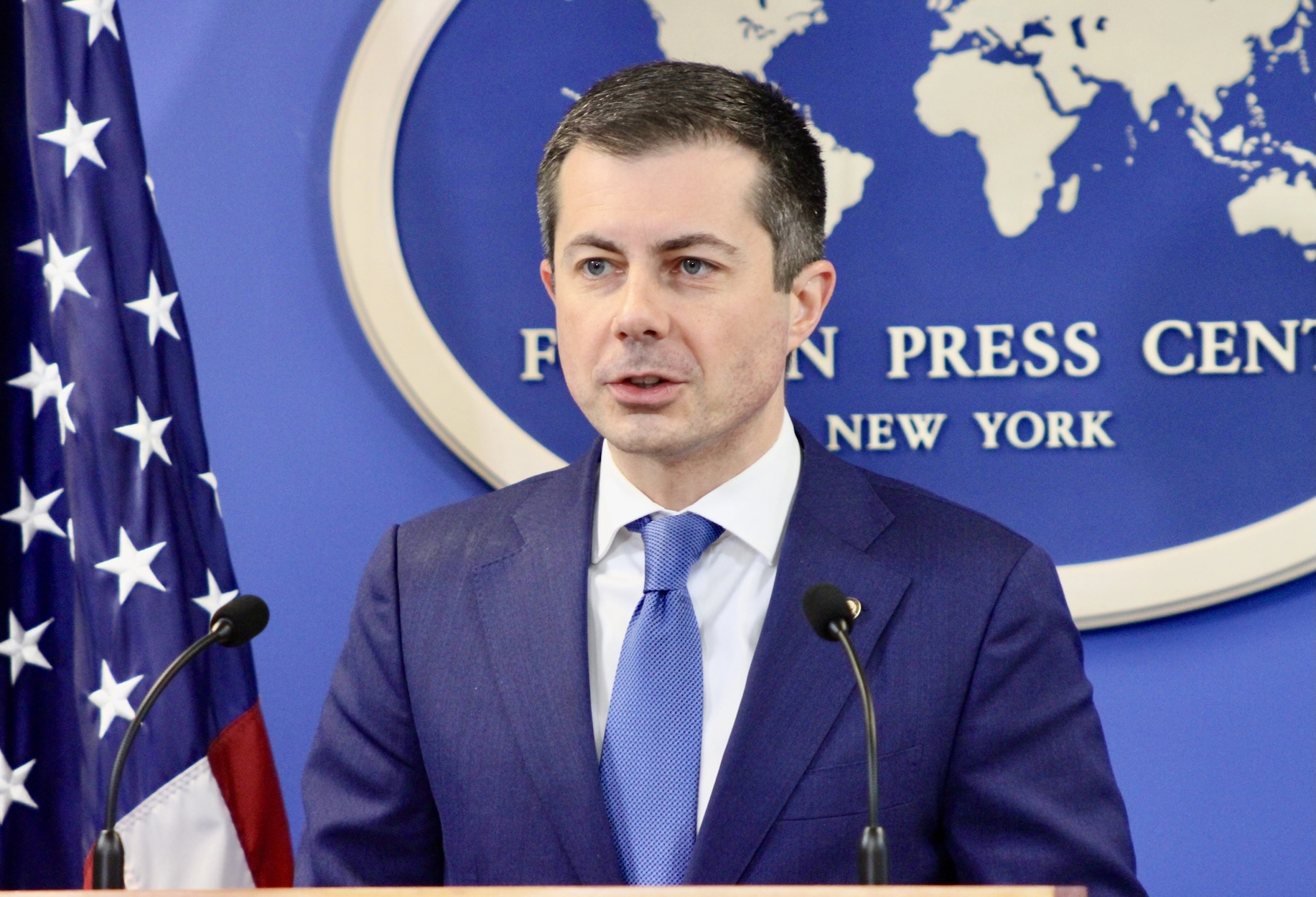
Former U.S. Transportation Secretary Pete Buttigieg has issued a bold call to overhaul the country’s electoral system and transition to a popular vote where every vote counts equally. Speaking as the keynote speaker at the Iowa Democratic Party’s annual Liberty and Justice Celebration in Altoona on Sunday, July 12, Buttigieg argued that the nation’s current political system is in desperate need of structural modernization.
“We need to immediately get to work to build something better,” Buttigieg told the crowd of hundreds of attendees. “Like a political system where everyone’s vote counts the same, and the person who gets the most votes wins the election.”
For Buttigieg, the trip to Iowa was a homecoming. As a relatively unknown mayor from South Bend, Indiana, he pulled off a historic upset by winning the 2020 Iowa Democratic caucuses, launching him into the national spotlight.
“Only in Iowa could a young Indiana mayor enter a field of literally 20 men and women competing for the American presidency, and wind up winning,” Buttigieg reflected.
While Buttigieg is frequently mentioned as a contender for the 2028 Democratic presidential nomination, he kept his immediate focus on the upcoming 2026 midterms, throwing his weight behind regional candidates like gubernatorial hopeful Rob Sand and Senate candidate Josh Turek.
However, it was his sweeping vision for national constitutional reform that made headlines.
Buttigieg argues that the current electoral system is fundamentally undemocratic. Under the existing rules, a candidate can win the national popular vote by millions of ballots but still lose the presidency, a scenario that has occurred twice in the last quarter-century.
Buttigieg has previously floated a long-term solution: setting any electoral reforms to take effect years down the road.
“Maybe when we make this reform, we set it to take effect in the 2030s, when it’s not clear which party is going to benefit,” Buttigieg has explained. He argues that by removing immediate partisan advantages, both Democrats and Republicans might finally agree that “one person, one vote, counting equally, is the fairest way to choose our President.”
Beyond the Electoral College, Buttigieg outlined a “democratic hygiene” checklist focused on restoring institutional trust and expanding grassroots connection.
He began by calling for sweeping Supreme Court reform, demanding a judiciary that is “legitimate and trustworthy in the eyes of the American people” through increased structural accountability. Additionally, he advocated for a constitutional amendment to overturn Citizens United to ban “dark money” from political campaigns and restore transparency to national elections.
Finally, Buttigieg emphasized the need for coalition expansion, urging the party to actively reach out to working-class and rural voters who currently feel abandoned by traditional political institutions.
Predictably, Republicans were quick to dismiss the speech. Following the event, representatives from the Iowa GOP characterized Buttigieg’s visit as national overreach, arguing that his presence proves local Democrats are out of touch with the increasingly conservative state.
Yet, for Democrats recovering from recent national setbacks, Buttigieg’s message was a reminder that victory requires offering a bold, forward-looking vision rather than a simple defense of the status quo.
Photo Credit: DepositPhotos.com