

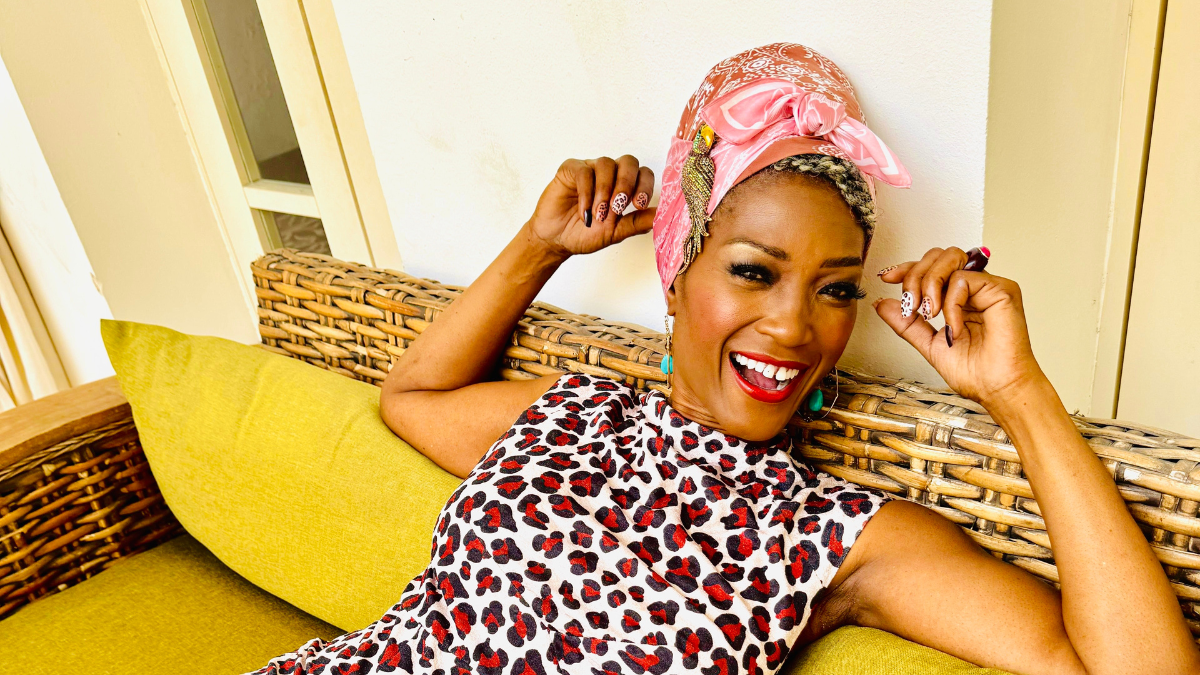
Eight years is a long time to live inside someone else’s skin. For Yolonda Ross, that someone was Jada Washington, the steady, no-nonsense Chicago matriarch at the center of Showtime’s The Chi. When we sat down to talk, it was clear that stepping away from Jada wasn’t just the end of a job. It was something closer to a loss.
“I really liked her,” Ross said. “I had to grieve her. I had to grieve her like everybody else did.”
That grief hit hardest when she wasn’t expecting it. Last year, she was in the back of a car heading to an event when she made the mistake of opening a producer’s email about the final episode. “I spiraled out and was not expecting it. Just bawling…released everything.” She’d spent eight years with a character who was partially her. When it was over, she felt it.
Ross describes Jada as the closest character to herself she’s ever played, “the Black woman you know at work, that you see in the grocery store on Fridays… the Black woman that holds it down, that uses common sense, that a lot of times we don’t know anything about personally.”
There was a quiet strength to Jada, a vulnerability beneath the surface that people responded to. “I see it online, she’s that Black mama, she’s like my mom, my aunt, my sister. All these things that we identify with.”
She also brought that role into real life. When Jada’s cancer arrived on screen the first time, Ross worked with grassroots organizations in Chicago that support Black women through that journey.
“It’s not a one-stop shopping kind of situation when you get cancer. You need a lot of help along the way. And sometimes we don’t know how to ask for help.” Those organizations, she says, aren’t the ones with TV commercials; they’re on the ground doing the work. She shone a light on them, however she could, and she’s still close to the women in those groups today.
After seven seasons as Jada, Ross came back for season eight, this time as a director.
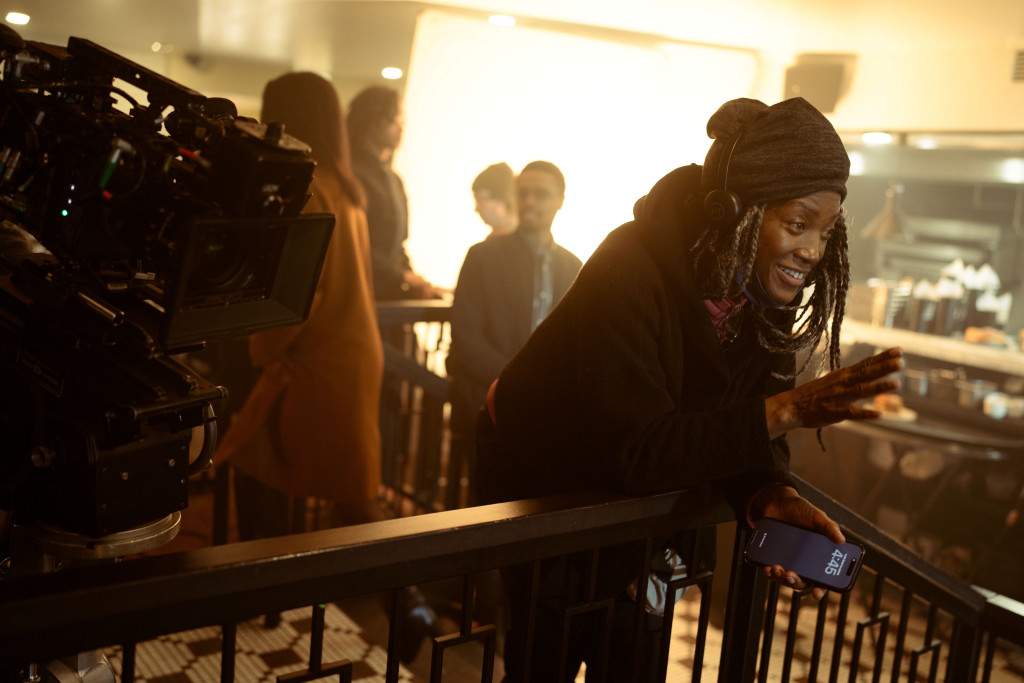
The opportunity arrived as a package deal with difficult news. “It was a good news, bad news thing,” she said. “The bad news was the cancer came back. But the good news was, we can offer you a directing slot in eight.” She’d directed shorts before, but never TV. And not just any TV, The Chi, a show where she had everything invested.
“The Chi is gonna be like the one that I care about the most…Not that I’m gonna give anything less than 200% anywhere else, but with this, you came up with these people.” Knowing the cast personally, understanding how they work and what they feel, made guiding them through scenes that much more meaningful. But she was also clear-eyed about how much she was stepping into the unknown.
“I am a seasoned person on the set, but I also was new all at the same time.” There were departments she’d never interacted with, crew members she’d never crossed paths with because Jada’s world was so contained. “Jada never went outside. She was always inside, warm and cozy.” Stepping into the director’s chair meant stepping into an entirely different Chicago.
What caught her off guard was the reception. “The cast and crew were so supportive. They were so psyched, and I was not really prepared for that. The amount of love and support, I was not ready for it.”
Her episode, titled Beneath the Icy Veil (number three of the final season), premiered on June 5. “Things got to a boiling point. People had to step up or step off. There are a lot of forks in the road.” She found that tension interesting to play out.
The Chi is the longest-running Black drama on premium cable, with eight seasons, record-breaking numbers, and a genuine cultural institution. Ross shares why it lasted: “People see somebody in this cast that reminds them of themselves or family members, or they know the situations. People identify with the characters. And we have a broad range of characters for you to identify with.”
Chicago itself has always been an accountability partner for the show. “Chicago’s gonna let you know if you ain’t doing it right. We’re on the streets. People let us know if something was or was not right.” That feedback, she says, has been positive, and that means something.
She also points to Lena Waithe‘s direct engagement with fans as a major driver of the show’s longevity. “Her online presence, and feeling that people can talk to her and bring things to light, and things come to light on the show. I think that is a very big part of us getting to where we are. People see themselves and she takes that in.”
Ross has three projects on the horizon: a Basquiat biopic, a bilingual dark comedy-thriller, and a Netflix romance.
Samo Lives, the Jean-Michel Basquiat biopic directed by Julius Onah and starring Kelvin Harrison Jr. in the title role. Ross plays Basquiat’s mother.
“It’s amazing to be a part of his legacy,” she said. What excites her is what this film does differently from anything that’s come before. “There’s really only one film out there about Basquiat, and that was told back in the nineties. This one gets into who the man was.” Not just the struggling artist in SoHo, but a young Black man with a Puerto Rican-Black mother and a Haitian father. “He had a family in Brooklyn. He came from somewhere. He went through things. His upbringing and his psychology, those things come out in this film.”
She has scenes with Harrison Jr. that she describes as “quite sweet”, a quiet, specific connection between mother and son that she clearly treasures. And on her co-star: “Kevin’s amazing…He’s amazing at everything.”
Also on the way: Flowers Para Los Muertos, a bilingual indie dark comedy-thriller set in Mexico, and Don’t Ever Wonder, a Netflix romance starring Nia Long and Larenz Tate.
After eight years of pouring herself into Jada Washington, and now a directing credit, a biopic, a dark comedy, and a Netflix romance on the way, Yolonda Ross is not slowing down. She’s just getting started with the next chapter.
The latest episode of The Chi is now streaming on Paramount+. Check out the full interview below.
Photo Credit: Rick Gradone/Paramount+