

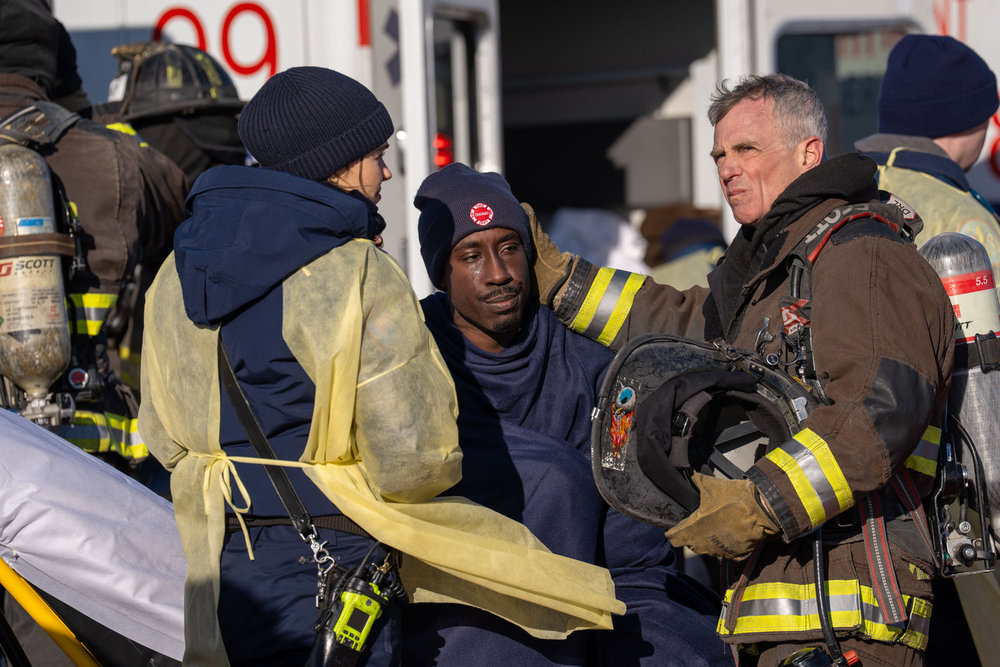
Jamal Akakpo did not grow up wanting to be an actor. He grew up in Chicago playing basketball, channeling his energy into something the neighborhood understood and respected. The creative side came later, in college, when a marketing degree started feeling like the wrong road and acting classes started feeling like the right one.
From those night classes during a summer internship in Los Angeles to a debut on Marvel’s Agents of S.H.I.E.L.D., the trajectory has been one of quiet, deliberate momentum.
His credits since that debut tell a story of an actor who shows up in rooms that matter: HBO’s Watchmen opposite Regina King and Yahya Abdul-Mateen II, portraying the legendary Bass Reeves. Atlanta alongside Donald Glover and Bryan Tyree Henry. DC’s Black Lightning, S.W.A.T. and most recently, NBC’s largest-ever One Chicago crossover event, a three-hour television moment that pulled in over six million viewers and put Akakpo in front of the biggest audience of his career as Jamie Holt, a confident young firefighter from Truck 68.
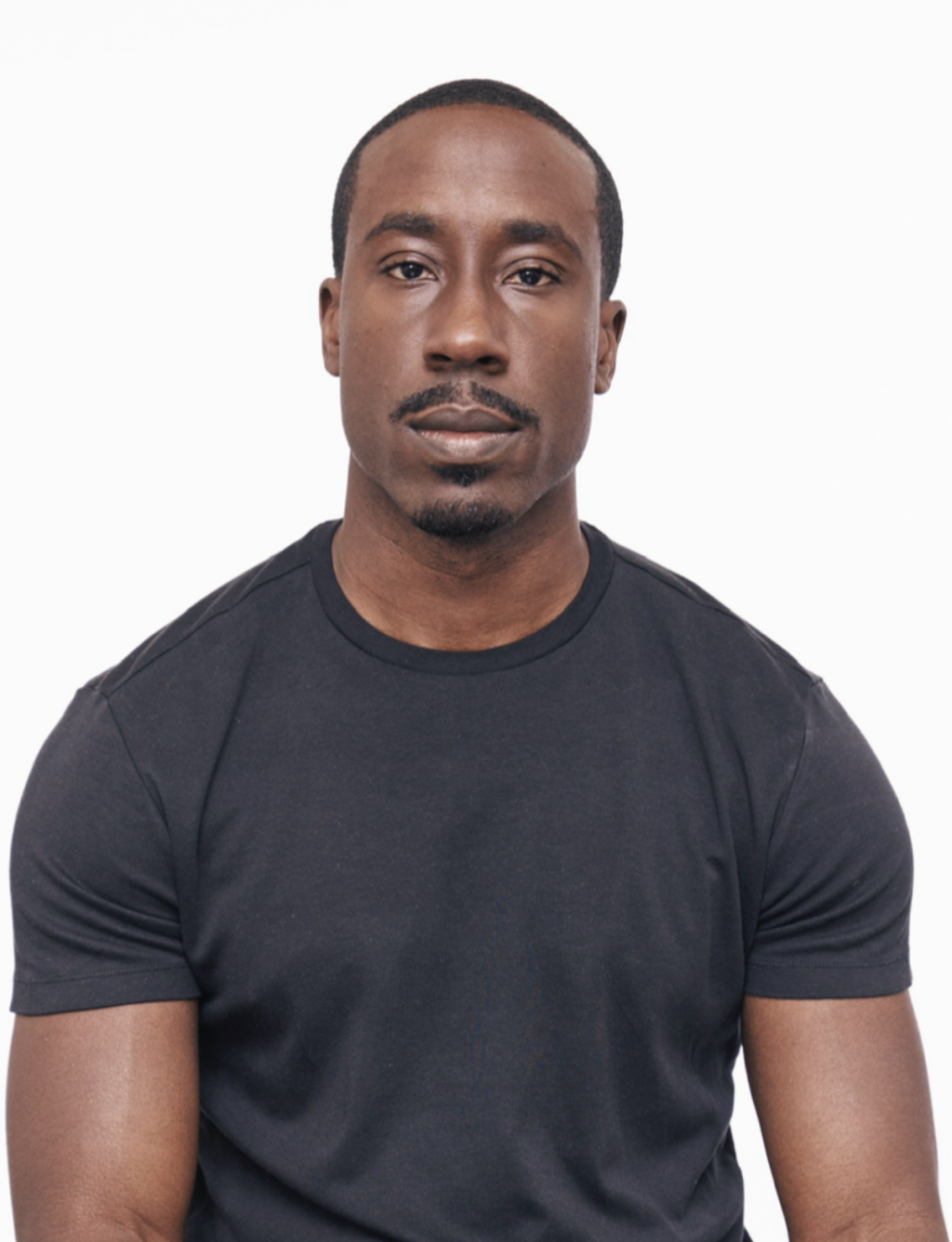
But Akakpo is not just an actor. He is a filmmaker, director, writer, and producer, and his current short film Talk to Somebody, produced alongside Rome Flynn, Tyrese, and Van Lathan, is making the festival circuit before heading on tour to colleges, universities, Boys and Girls Clubs, and juvenile detention centers. The film is about a teenage boy whose therapy session will determine whether he goes to juvie or gets a second chance. It is the kind of story Akakpo was built to tell.
We chatted with Akakpo about his Hollywood journey, the One Chicago crossover on Chicago Fire, and his upcoming short film.
QG: What was it like growing up in Chicago? Was there always this artistic side to you?
Jamal Akakpo: Honestly, it’s crazy. Growing up in Chicago, for me, it was an amazing experience. But as far as the art, I can’t lie. I didn’t come up as an artist. I came up as an athlete. I played basketball. Everybody from my neighborhood was playing basketball; people were just using basketball as a tool just to express themselves creatively, as an outlet. So the artistry kind of came later.
QG: At what point did the artistry come? What was that first introduction?
Jamal Akakpo: I would say the first introduction for me, the artistry bug, would have been in college. That’s kind of when I was just trying to figure out what I wanted to do with life and getting my degree. I got my degree in marketing and just kind of figuring out, is this the route I want to go? And then the creative juices started flowing and I had to really explore that. And I’m happy I did because, you know, I’m here now.
=
QG: Your first acting credit was Marvel’s Agents of S.H.I.E.L.D. How did that happen?
Jamal Akakpo: I got an audition and went over. This is back when we were still doing a lot of auditions in person. So I went over and walked in that office, and I auditioned, and I booked it. And it was just like, wow. It was Marvel. It was a hit show. And so I was just so happy to do that, especially that being my first credit. It was an amazing experience.
QG: And then you were in HBO’s Watchmen. You played Bass Reeves. How was that?
Jamal Akakpo: Watchmen was a phenomenal experience. I love being a part of that show, and I love being able to play Bass Reeves, just all of the historical context that I learned about the character and the way they wove it into the storyline. It was great. Working with Regina King, she’s amazing, and just the way she performed in that show, it was one of the highlights of my career, especially early on.
QG: And Atlanta with Donald Glover and Bryan Tyree Henry. Your starting stage is what many actors dream of.
Jamal Akakpo: That set was great. I mean, it’s Atlanta, it’s hard to describe, it’s just Atlanta. And so getting the opportunity to be with Donald and Brian and just what they did, my scene itself was just funny, just a whole lot of fun, man. I loved that show. And like you said, “I’m just getting lucky, getting these roles.” I’m just blessed.
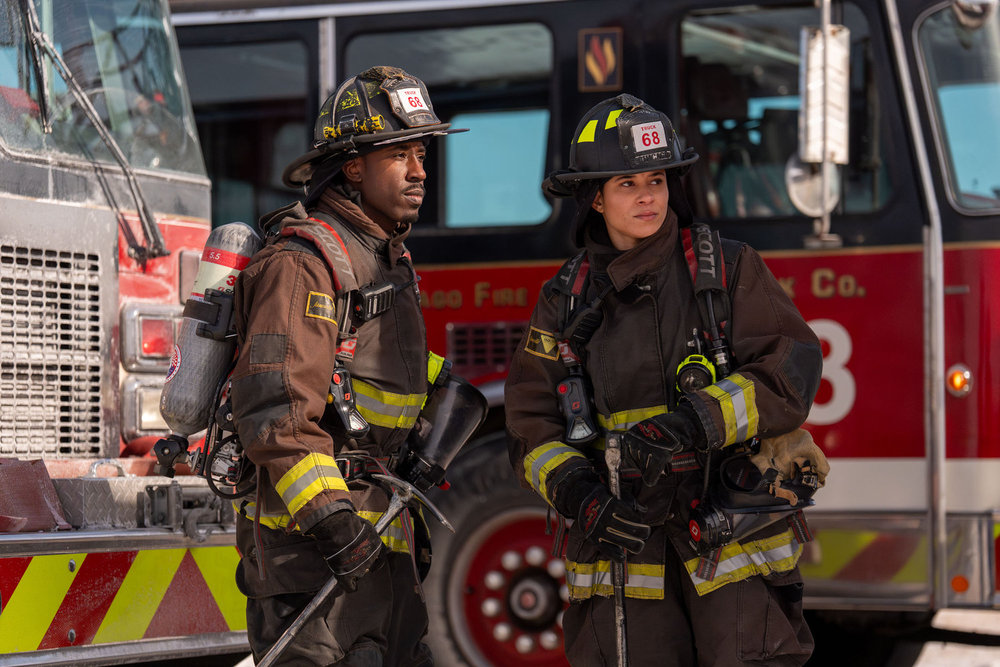
QG: Let’s talk about the One Chicago crossover and Chicago Fire. What was it like being a part of something that big?
Jamal Akakpo: For me to be a part of the One Chicago crossover, when I got the audition, and I found out I booked it, I just had so much gratitude. Being from Chicago, once they started with all the Dick Wolf One Chicago shows, I know the significance and how the city rallied behind that. And so just to have an opportunity to be a part of that, let alone the crossover, which is a three-hour event, I was in so much gratitude.
And just seeing the end result of how everything came together, it was so big. We had the plane, we had all of these crazy things. It was cold. And it ended up being the biggest crossover to date with six million plus viewers. Being a part of that, I saw firsthand how the team execution was just amazing from top to bottom.
QG: You came back for a second episode. What was that like?
Jamal Akakpo: Coming back, man, that was amazing. What happened in the crossover with the stakes of everything, me losing my partner, Macy, and just the sickness that we saw with all the hundreds of people that died, coming back as Jamie Holt and dealing with that, them highlighting that, showing that mentally I was kind of disturbed, but trying to fight through it. I think it was amazing just the way they allowed me the space to play that out and how Firehouse 51 came and kind of took me in and helped me.
I didn’t know I was coming back. And then they told me, and then I saw what capacity I was coming back in, and I was like, wow, this is great. Just having the opportunity to breathe life into Jamie the way I did, and them giving me the space to do so, was amazing. I’m forever grateful.
QG: At what point did you realize just being in front of the camera wasn’t enough and that you wanted to work behind the camera too?
Jamal Akakpo: I think I realized that pretty early on. As an actor, I love being an actor, but sometimes we don’t have control. There are so many forces that we have no control over, and you just kind of have to wait and see. I trust the process and what God has planned for me, but sometimes it’s nice to be in control. And I learned that when you’re behind the scenes, creating, producing, writing, directing, you have a little bit more control. And so from that standpoint, I kind of took ownership in that and decided to take up space in it. Because I have a point of view and I think I have interesting stories to tell.
QG: How has being a filmmaker helped you as an actor?
Jamal Akakpo: I have so much more understanding, and I don’t take things as personal. As an actor, we put so much work into our craft, and we build these characters to life and we try to bring truth to them, and sometimes it doesn’t go our way. A lot of times, one could take that personally. But being on the other side, I really understand it’s not personal. Whether you’re not getting cast for a role, whether your scenes get cut, there are so many other factors that have nothing to do with the actor and their performance. It’s a whole system. So I just bring truth to my character, I do my job as an actor, and then I let it go.
QG: Your producing partners are Rome Flynn, Tyrese, and Van Lathan. What do you all have cooking?
Jamal Akakpo: We got a short film called Talk to Somebody. It’s about a teenage boy having to deal with his therapy session — and this is the therapy session that makes or breaks whether he’s going to go to juvenile detention and potentially big boy jail, or he’s going to get the stamp of approval from the therapist and be rehabilitated and let go, given a second chance. We drop in on this conversation, and we see how it goes. We’re exploring the mental health component of a young youth in crisis, and a Black therapist in this role, trying to relate and help, trying to steer him on the right path.
Tyrese is big with mental health; he’s talked about it for years, it’s not performative with him. So I think him being a part of it is great. And Van, as a journalist and Oscar-winning producer, and Rome, expanding from acting into the producing space, it’s an amazing team.
Check out the full interview.
Photo Credit: Peter Gordon/NBC, Glen Dandridge