

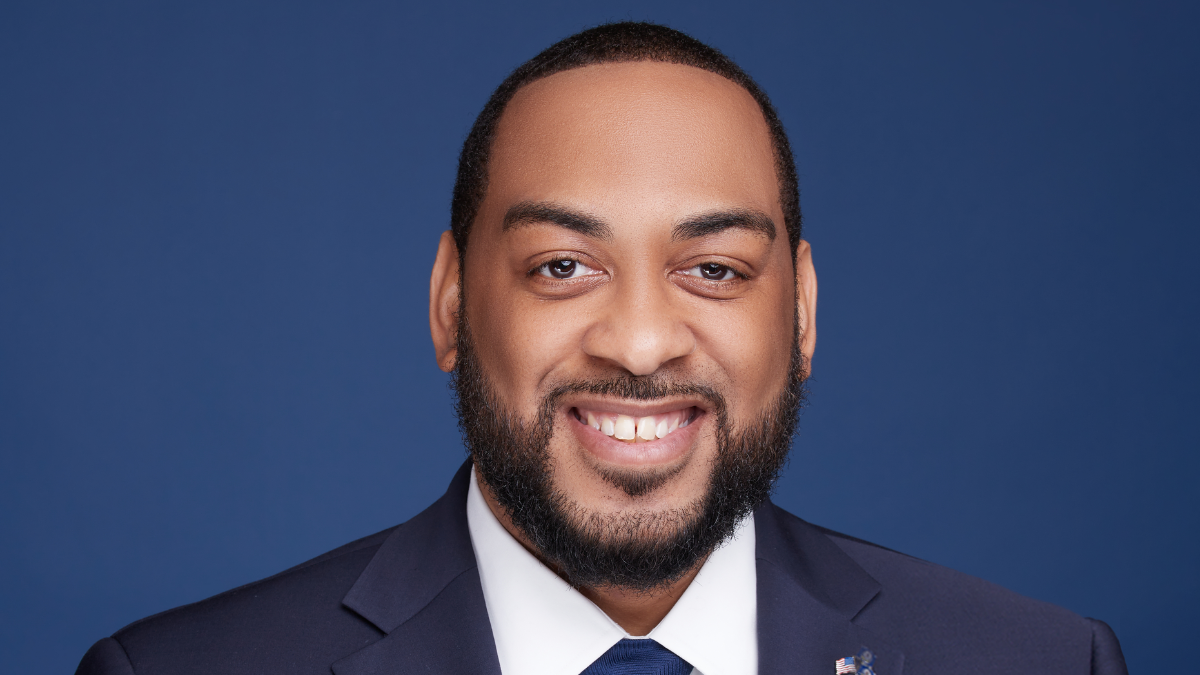
For 40 years, Mitch McConnell was the most powerful man in the United States Senate. He leaves it with a 71 percent disapproval rating in his own state. That number, 71 percent of Kentuckians who do not approve of the man they kept sending to Washington, tells you everything you need to know about the opening Charles Booker is running through.
The seat McConnell is vacating is the kind of opportunity that comes once in a political generation. Kentucky has not sent a Democrat to the U.S. Senate since 1992.
And yet the proof of concept that Democrats can win here exists: Governor Andy Beshear holds a 50 percent statewide approval rating, and in Kentucky’s most recent special election, the Democratic candidate overperformed expectations by 42 points. The map is not fixed.
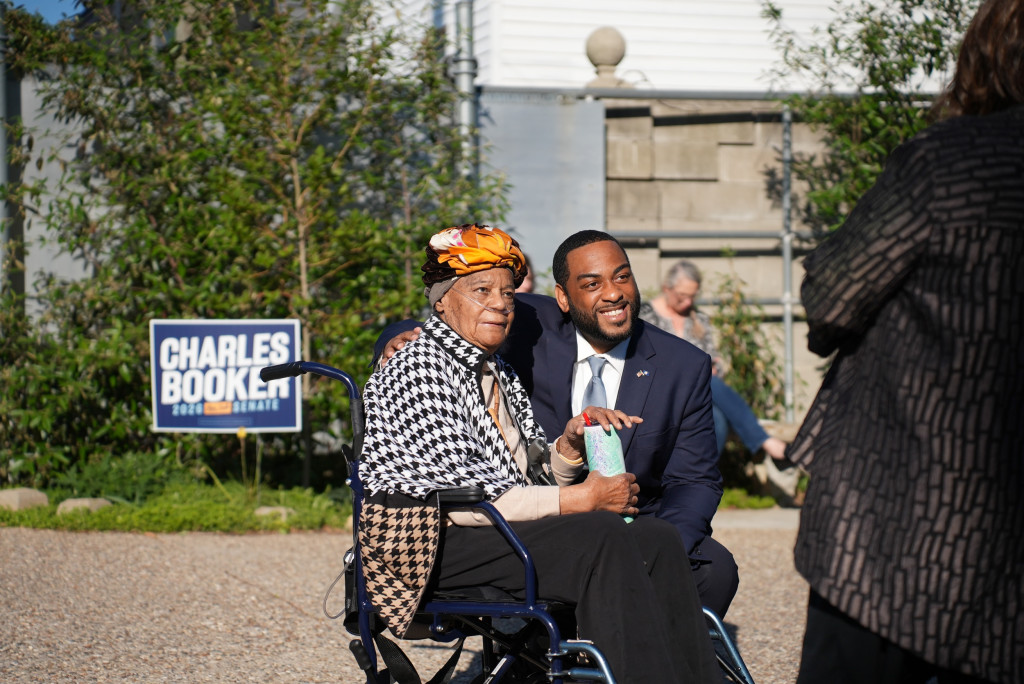
Booker knows it better than anyone. He has been preparing for this moment, quite literally, for years. He served in the Kentucky state legislature as the youngest Black Kentuckian to do so in nearly a century. He worked for two governors. He directed fish and wildlife. He built “From the Hood to the Holler“ into one of the country’s most talked-about political frameworks, using the phrase to connect Kentuckians across geography, race, and class around the shared economic pressures facing all people. That message anchors his closing primary ad, “Fighting for You,” a direct appeal to Kentuckians tired of rising costs, tariffs, broken politics, endless war, and leaders who have left working people behind.
“We are fighting for families, workers, teachers, farmers, seniors, young people, and Kentuckians across party lines who are ready for something different,” said Charles Booker. “Kentucky is open, and this seat is winnable.”
He ran for this seat in 2020 and 2022, losing both times but building the name recognition, the infrastructure, and the coalition that now has him leading the Democratic primary by 18 points heading into May 19. This is his third run. And it feels different.
Booker grew up in the West End of Louisville, one of the poorest zip codes in the Commonwealth. He is a Type 1 diabetic who has had to ration insulin to survive. He watched his mother skip meals so he could eat. These are not talking points. These are his lived experiences that shape every conversation he has on the trail and every policy position he puts forward.
The Working People’s Bill of Rights, his economic agenda built around affordability, AI worker protections, guaranteed wages, and portable healthcare and retirement benefits, is not theory. It comes from lived experience.
Since announcing his candidacy on December 3, 2025, Booker has led in every public poll, earned the endorsement of Kentucky’s organized labor movement, secured a rare cross-primary endorsement from former Congressman John Yarmuth, and built a coalition that includes base Democrats, Republicans, independents, non-voters, first time voters, and working people who are tired of being taken for granted.
We sat down with Booker ahead of the May 19 primary for a conversation about the race, about what it means to be a Black man running statewide in Kentucky, about the Supreme Court’s recent attack on the Voting Rights Act, and about what he wants Black men across the country to hear from him directly.
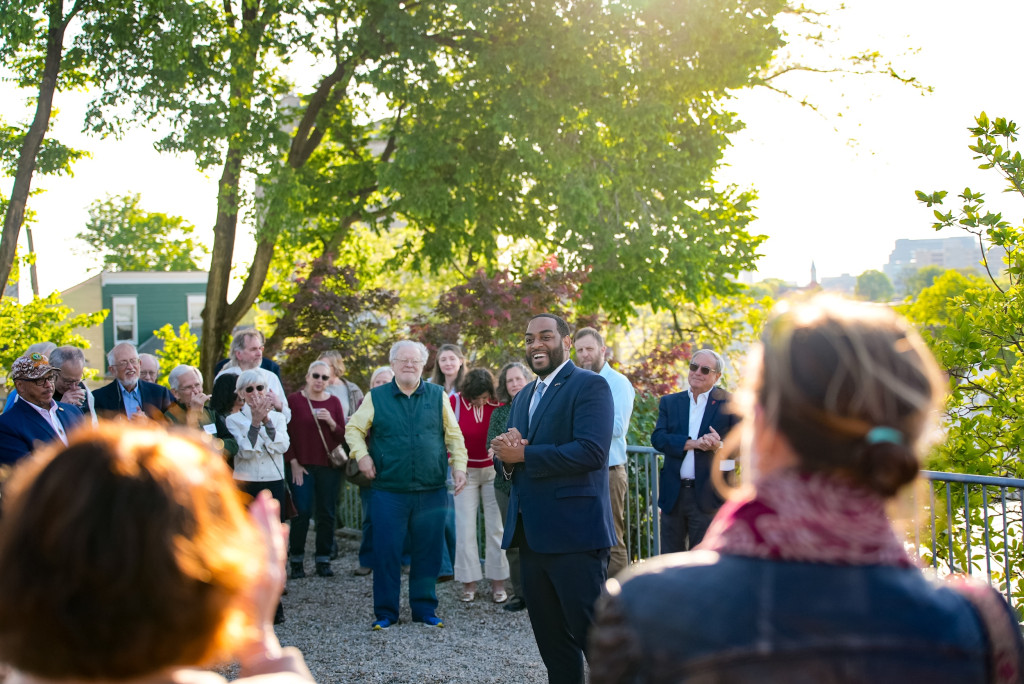
[Interview has been edited for length and clarity]
The Quintessential Gentleman: You are a Black man running a statewide campaign in Kentucky, a state that has not elected a Democrat to the U.S. Senate since 1992. What does it actually feel like to be in those rooms, in those counties, asking for votes from people who may have never voted for someone who looks like you?
Charles Booker: I was surprised years ago. I’ve been doing this for over a decade. I was a director of fish and wildlife, served in the state legislature, youngest Black Kentuckian to serve in nearly a century. And I worked for two governors. So I’ve been all across Kentucky for years. And my first experience going up in the holler, cause I’ve lifted up this rallying cry, from the hood to the holler, going up in the hollers for the first time and actually finding people who saw a lot of the same struggles I experienced growing up in the hood. Having to work through tough times, having to ration medicine to take care of the family. I’ve had to do that as a Type 1 diabetic. And I’ve realized that there’s a common bond here that if we ever leaned into it, we could change things, all of us. And it’s the spirit of the Rainbow Coalition. So this stuff isn’t new. We just tap back into that power.
QG: A lot of Black politicians in red or purple states feel the pressure to shrink, to soften their edges to make moderate voters more comfortable. Have you ever felt that pressure?
CB: Not at all. And you know, people across Kentucky, and I think regular folks generally, you can smell BS, especially when you’ve come from the struggle, you’ve had to make ends meet. You don’t have time for games. And one thing I’ve learned is it’s not about agreeing on everything, but it’s about respect and treating people like you actually care about them. I served in the legislature where Republicans have a supermajority, and these are a lot of Trump supporters, MAGA folks or whatever you want to call them. And I was able to get legislation passed, and it wasn’t because we agreed on a lot of things. It was because I had the courage to be vulnerable on the things we agree on. And I wouldn’t let them back away from me. My mission is about the people.
I think it’s been refreshing to a lot of folks across Kentucky and even nationally. You’re seeing a lot of races where there are unlikely candidates that are winning. And it’s because people are tired of the status quo and anyone who’s genuinely speaking to regular folks, they’re finding a base of people that are ready to see something other than Donald Trump screwing them over, or Mitch McConnell, for us here in Kentucky.
QG: This isn’t your first Senate race. You have been here before. What is working in 2026 that wasn’t working in 2020 and 2022? You’re currently leading the race by 18 points. What’s different?
CB: I’m fired up. I’m encouraged. I’m a little tired too, but man, I’m so inspired to be on this journey. I thank God for the chance to take a stand with my family. And that’s really what this campaign’s all about. The work we’ve put in, building community, showing up in every county, listening to people, that’s what’s different. People can see it’s real. And what we’ve been building is actually how you win.
QG: We recently had a decision from the Supreme Court that has, if you look into it, really dismantled the Voting Rights Act. What are your thoughts on that?
CB: The Court’s decision is an attack on all of us. It’s an attack on the fundamental premise of democracy, that your voice matters, that your vote counts. What we’re seeing is a coordinated effort to make it harder for people who have historically been excluded from power to participate. And the response cannot be to disengage. The response has to be to build something so big and so loud that silence becomes impossible. That’s what this campaign is. That’s what showing up in every county is about. You do not let them win by staying home.
QG: What do you say to Black men who may be skeptical of both parties right now? There’s been a lot of conversation around the lesser of two evils, not wanting to vote. What is your message to Black men specifically about the skepticism they may have?
CB: I understand the skepticism. I really do. When you’ve been lied to, when you’ve been taken for granted, when you show up and nothing changes, that exhaustion is real and it’s earned. But I want Black men to think about what disengagement actually costs. Not in the abstract, in your daily life. The price of insulin. The wages that haven’t kept up. The hospital that closed. The job that was automated away. These aren’t policy debates. These are the conditions of your life. And they are directly shaped by who holds power.
I’m not asking Black men to trust a party. I’m asking them to trust me, someone who has lived what they’ve lived, who has had to ration medicine, who has been broke, who knows what it means to be squeezed from every direction. And I’m asking them to vote like their lives depend on it. Because they do.
QG: You have the Working People’s Bill of Rights, affordability, AI worker protections, portable healthcare, guaranteed wages. For a person right now working a job that doesn’t offer benefits or security, who has watched automation quietly take jobs from people around them, what does your plan actually do for them?
CB: It puts power back in their hands. Right now, the system is built for corporations, not people. If you change jobs, you lose your healthcare. If a company decides a machine is cheaper than you, you’re out. If you work full-time and still can’t make ends meet, that’s by design. The Working People’s Bill of Rights says: your healthcare travels with you, not with your employer. Your wages are guaranteed when you work full-time. And if a company is going to use AI or automation to replace workers, there has to be accountability for what happens to those people. We cannot keep building an economy where the gains go to the top and the losses go to the worker.
QG: What has Mitch McConnell’s tenure cost Kentucky, and the country?
CB: He built a career protecting billionaires while working Kentuckians got squeezed. That’s not an accusation, that’s the record. Rural hospitals closed. Wages stagnated. The opioid crisis devastated communities he was supposed to represent, and he blocked the legislation that could have helped. He protected pharmaceutical companies while Kentuckians rationed insulin. He protected Wall Street while Kentucky families couldn’t make rent. And nationally, he spent decades blocking anything that would have made government actually work for regular people. The 71 percent disapproval rating in his own state isn’t a number. It’s a verdict.
QG: You are asking Trump voters, people who voted for him twice, to trust a Democrat. That’s a hard ask in 2026. What do you say to that voter?
CB: I don’t ask them to trust a Democrat. I ask them to trust me. There’s a real difference. Trump didn’t win because of a party; he won because people believed he was speaking directly to them. Whether or not he delivered is a different conversation. But the lesson is clear: people respond to someone they believe is fighting for them as a person, not as a demographic or a party base.
I’m from Kentucky. I grew up struggling. I have stood with miners in Harlan County. I’ve been on picket lines. I’ve been at kitchen tables across this state. When a Trump voter sits across from me and I talk about the cost of insulin or the hospital that closed or the job that got automated away — we’re not talking about Democrat versus Republican anymore. We’re talking about the same enemy. And the enemy is not each other.
QG: If you win in November, you become the first Black U.S. Senator from Kentucky. What does that mean, not from a political narrative perspective, but for the kid in the West End of Louisville who is watching this race right now?
CB: It means everything and nothing at the same time. It means everything because that kid needs to see it. Needs to know it’s possible. Needs to understand that where you come from is not a ceiling. The West End of Louisville is not a sentence. Growing up without doesn’t mean you end up without. That visibility matters in ways that go beyond politics.
But it means nothing if I go to Washington and forget where I came from. The win only matters if the work that follows it is real. If that kid’s life actually gets better. If the hospital stays open. If the insulin is affordable. If the job pays a living wage. That’s the only version of winning that counts.
Photo Credit: Courtesy of Charles Booker