

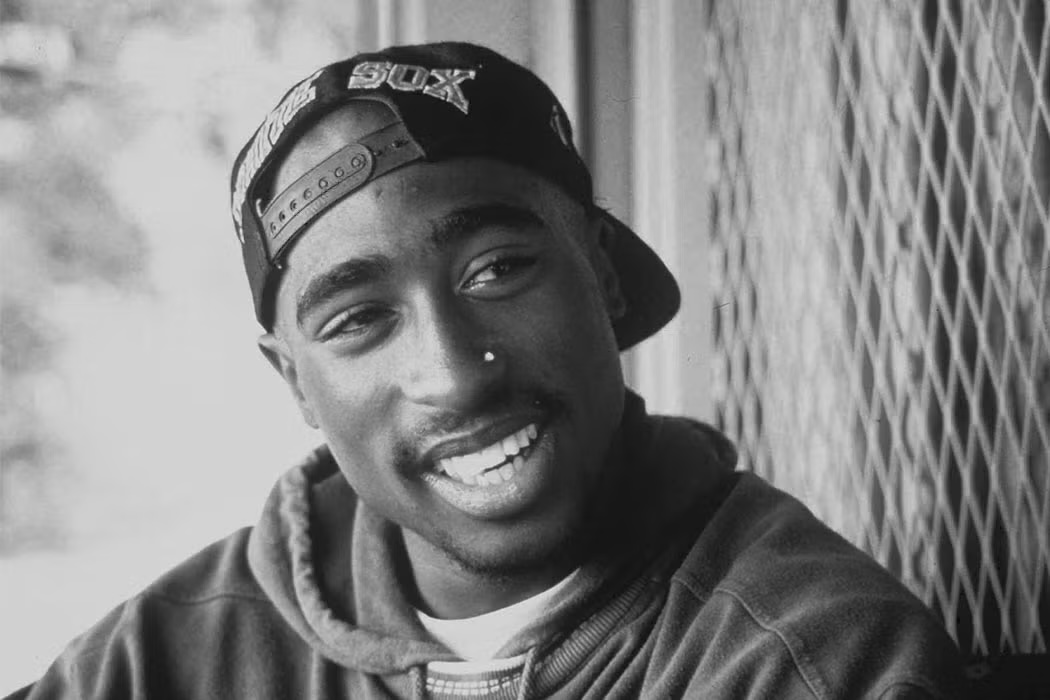
It’s been thirty years [Sept. 13th, 1996] since the untimely loss of rapper, actor, activist, and revolutionary Tupac Shakur. Since then, each year on his death anniversary, it seems the world and those who knew him manage to mourn and honor the rapper, with repeated, regurgitated, and repurposed fables comprised of promises of knowing the man who never got the chance to live a full life.
But what if that has become the problem involving his legacy?
Since the fatal death of Shakur, there has been a surplus of books, documentaries, television specials, and films exploring the life of Tupac Shakur. Even more recently, the swift nine-day trial surrounding his mysterious murder, where Los Angeles gang member Duane “Keefe D” Davis was found guilty of murder, still lingers with an air of suspicion.
Davis’ conviction doesn’t feel like justice to those who knew Shakur and subscribe to the folklore of the true events that led to Shakur’s death, and the events that served as a catalyst.
How did we arrive at Davis’ murder conviction? Well, Davis’s 2019 self-published memoir, Compton Street Legend, is how. In the book, which Yusuf Jah wrote, he confesses to being the killer; albeit Davis claims he didn’t write the book, he profited from the book that he claims has fabricated details.
Despite the conspiracy theories that’s towered this murder for thirty years, the rumored killer is Davis’ nephew Orlando “Baby Lane” Anderson, who was murdered two years after Shakur, a skirmish that continues to serve as the catalyst for both deaths. Prosecutors argued that Davis acted as the “on-the-ground on-site commander of the effort to kill Tupac.”
Keefe positioning himself as such, whether fabricated or factual, serves as motive for him attaining revenge for his nephew who was violently assaulted by Shakur and entourage on the night of September 7th, 1996.
Was Davis actually on trial for the murder? Well, yes and no. Davis spent the last decade parading from podcast to podcast speaking about his involvement in the murder, which is why he wasn’t charged with pulling the trigger, but with being the person who orchestrated the drive-by, in addition to providing the car and weapons used in the crime, whilst placing himself in the car.
Now at 63 years old, Davis has become the man whose left holding the criminal onus, which could have been prevented if he could have refrained from being so gregarious.
Upon reading Jeff Pearlman‘s book Only God Can Judge Me, I’ve concluded that all subsequent PAC projects merely scratched the surface of who Tupac Shakur was. Once completing the 400 pages of Pearlman’s monograph, you’ll be tormented with the question: what happens to a person’s cultural identity when they can no longer control the story of them that’s being told? And that’s not the Tupac I know? The pages cause you to examine the myths surrounding his life, his image, and the man who we’ve come to know as 2Pac.
Before Tupac took on the persona of Thug Life, he was indeed every bit of his mother’s child. Wise, stern, and rebellious, these attributes comprised what a great man can become. However, there was another side to Tupac that brewed as he progressed towards manhood.
In Only God Can Judge Me, we learn how Tupac was petulant and extremely incorrigible, and his behavior exemplified a constant maniacal threat to themselves. Descriptively, he exudes all the behaviors of someone who suffers from bipolar disorder and attention deficit disorder, but how does one contain a ticking time bomb on the rise to stardom?
It’s been heavily implied that the 2Pac we came to know is nothing more than an extension of the character Bishop he portrayed in the film Juice. Even if those implications are debatable, they still hold merit and haven’t always been refuted by those in his inner circle. As a matter of fact, Pearlman interviewed a whopping 652 people who knew him and were in some form of interpersonal relationship with the rap star.
So, when we talk about preserving 2Pac’s image because he’s no longer here, we must factor in the truth that we’ve been attempting to salvage and preserve an image that was replicated from pages of a movie script.
For years, people have asked: why would someone who was on their ascent affiliate themselves with known gang members? This is why. We never knew the man; we knew the character he portrayed and passed off as himself. Anyone who really knew him never believed he was a thug. It’s been noted that Tupac was quick to throw the first punch when in the company of his entourage and then let a brawl commence as he was whisked away to safety.
It goes without saying that Tupac was many things. Hence, the subtitle of Pearlman’s book, The Many Lives of Tupac Shakur. In his short, impactful life, the rapper whose diet consisted of weed, Newport’s, and Hennessy exhibited many personalities that have managed to resonate with those with whom he had come in contact and those who know of him through his art and activism.
His Thug Life persona may have been performative, and a lifelong character he portrayed, but it was and meant something to his constituents.
Thirty years later, our focus is on the murder trial and not the man whose life was ephemeral. For the last thirty years, we watched his life become reduced and repackaged for a culture that never knew him, because we never knew the real Pac, which causes us to revisit another urban legend the world regales, which is that Shakur concocted a pseudocide and is living in Cuba, a theory Only God Can Judge Me also explores in depth.
Whereas that could be an allegory that adds levity to his legacy – a legacy and life we all should re-examine and reimagine thirty years later as we celebrate a man who allowed us to know who it is he wanted us to see… among the many lives he has lived.