

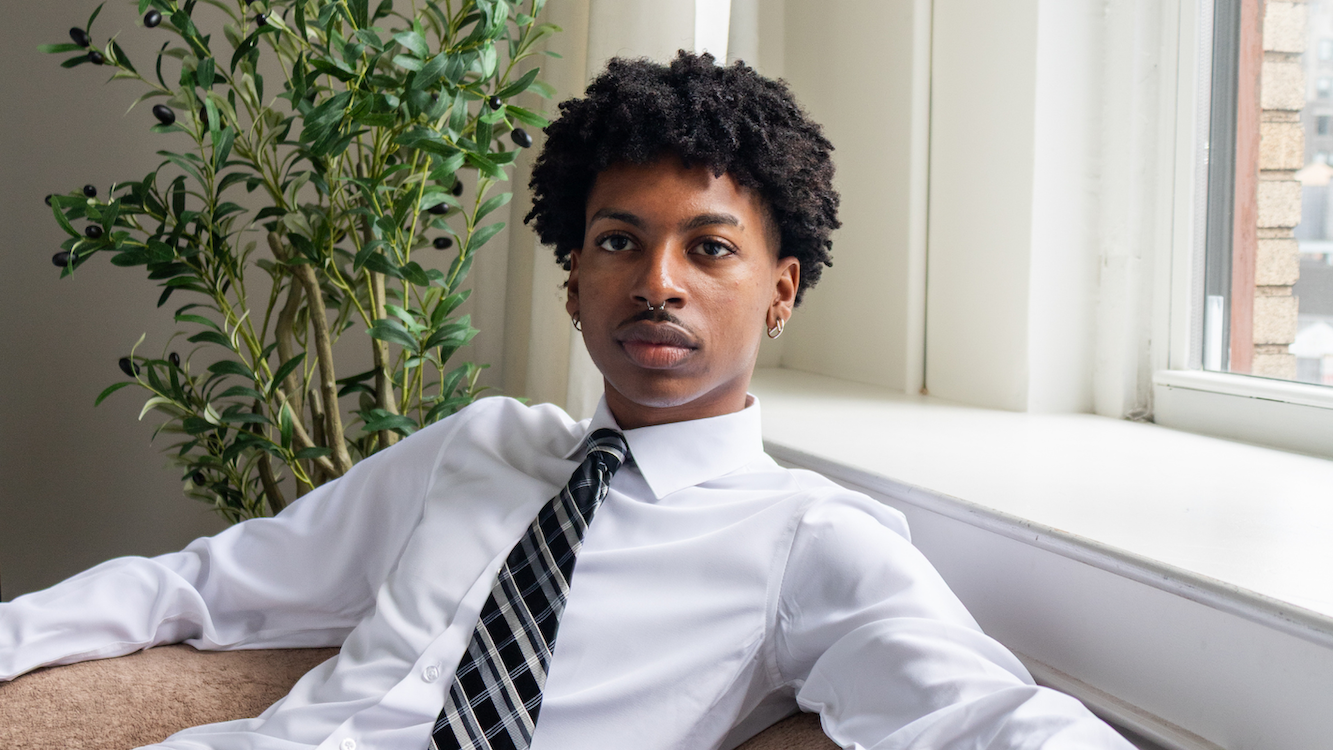
Nearly four decades after A Different World first put Hillman College on the map, the beloved HBCU comedy is heading back to campus, and Harlem’s own Jordan Aaron Hall is part of the new class leading the charge.
Netflix’s revival premieres September 24, exactly 39 years to the day of the original series’ 1987 debut, and follows Deborah Wayne (Maleah Joi Moon), the free-spirited, rebellious youngest daughter of Dwayne Wayne (Kadeem Hardison) and Whitley Gilbert (Jasmine Guy), as she starts her freshman year at her parents’ alma mater and tries to build a legacy of her own out from under their shadow.
Original cast members Guy, Hardison, Darryl M. Bell, and Cree Summer all return alongside a new ensemble of Hillman students, with Debbie Allen back to executive produce and direct multiple episodes, including the premiere, under showrunner Felicia Pride.
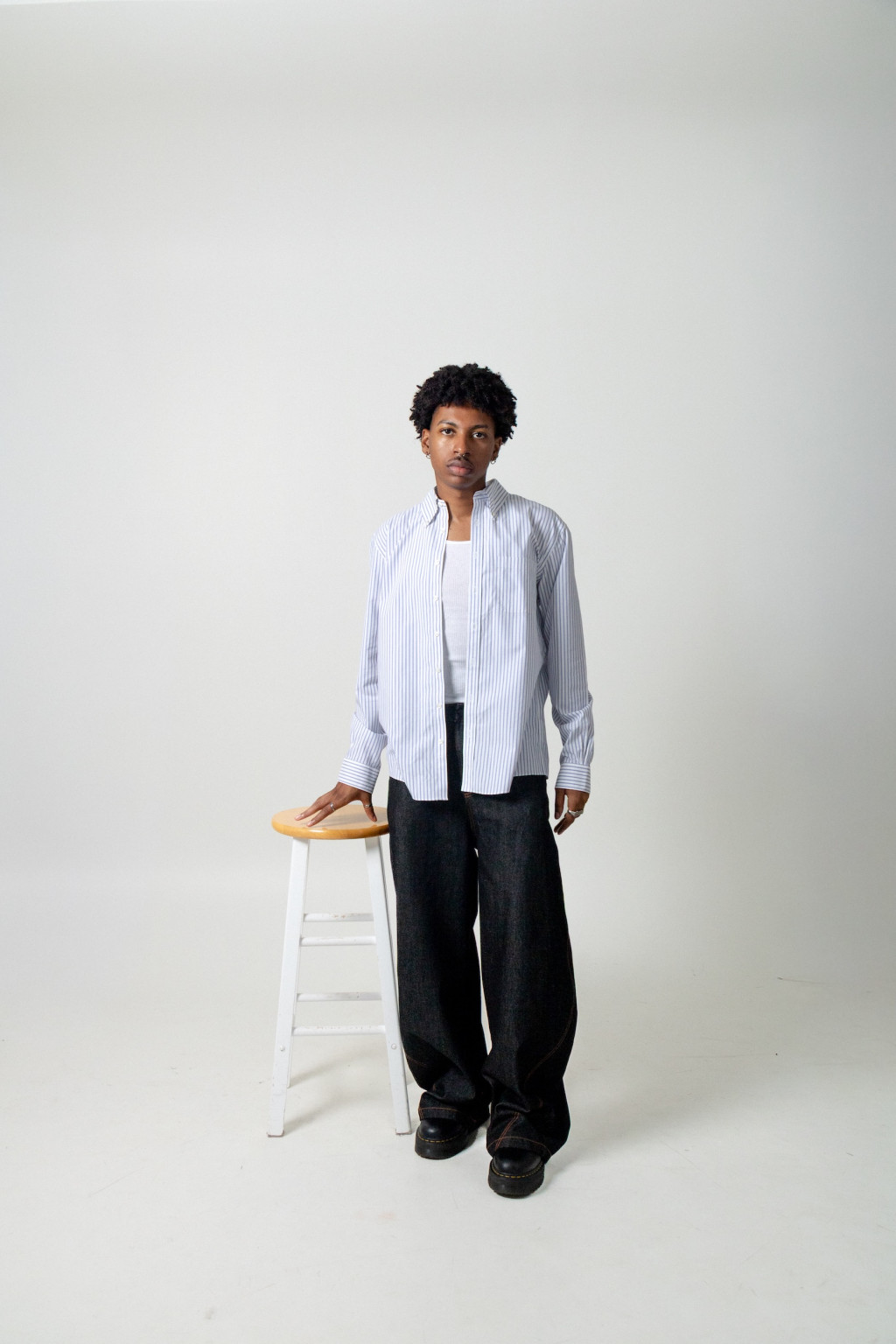
Hall, a Harlem-based multi-hyphenate actor, director, and filmmaker, plays Amir, a psychology major from Harlem navigating friendships, romance, and his own sense of self at Hillman. Fans may already recognize Hall from his role as young Pray Tell in FX’s Pose, or from Amazon’s The Idea of You, opposite Anne Hathaway.
A graduate of the Boston Conservatory at Berklee, Hall began his career starring as young Simba in the national tour of The Lion King before playing young Michael Jackson in Motown the Musical on Broadway, and has since expanded into writing and directing. His short film Graduation Day, which he wrote, produced, directed, and starred in, premiered at the 2026 American Black Film Festival and was selected to stream on American Airlines flights worldwide through July 2027.
The Quintessential Gentleman sat down with Jordan Aaron Hall to talk about his Harlem roots, his path from theater to television, and what it means to step into a show as culturally significant as A Different World.
[Interview has been edited for length and clarity]
\
Jordan Aaron Hall: I’m big Harlem. I’ve been living here since I was a little boy, and my family’s from here. I rep Harlem everywhere that I go.
Where did your career start?
My parents put me in a bunch of sports that I was bad at. I did karate for a little bit; I was a white belt the whole time. When I moved to Promise Academy, they had a theater program when I was in second grade, and there was this woman there, Miss McAvoy, and she did a school play, Beauty and the Beast. I told my teacher I wanted to do the show. They started me with this small role, LaFou, and when I tell you that was it, there was something about that experience that inspired me to keep doing it. People were stopping me, telling my parents, “You should find somewhere to put him in this; he could really go far.” That seed was planted there.
Then I trained at Harlem School of the Arts underneath Mr. Aubrey Lynch, who had just finished being a producer of The Lion King. He trained me and got me to the place that I auditioned for young Simba in The Lion King. That was my first venture into having a professional career, at 10 years old.
What are your thoughts on the training of theater as you transition into TV and film?
I love theater. Theater has an incredible way of teaching someone how to empathize with other people, but also how to really craft a character and to have stamina and discipline. Theater performers live very hard lives; they do eight shows a week most times. I think putting young people that are coming up in theater. Go do some theater. It really will teach you skills that you maybe didn’t have just from sitting at home watching something. And it’s a collaborative experience. Those things that you learn in theater, you’re gonna take with you everywhere. It’s about the team; we’re only as good as the team. Everything in creativity probably has its foundation in theater.
What was your first experience with A Different World, the show as a whole?
When I was growing up, we didn’t have cable, so we had box sets. We would go to the little DVD store on 125th Street; we had Bernie Mac, we had Martin, we had Living Single, we had A Different World, we had Fresh Prince. I don’t think I quite paid attention to it as a kid. But as I grew older, I started to really understand its value and its place in my life, and how it’s become a cultural phenomenon. My dad, it’s his favorite show; my mom, it’s one of her beloved shows. I think it hits you at a different point in your life.
When you first booked the role, what was your initial reaction?
I called my mom. I was crying. She then started crying. I called my dad; he then cried. I’ve been performing since I was ten, and I’ve gotten a lot of great moments to do, but I never really had anything that was like, I can put my stamp on this, and I can really create something from the ground up. That was what this show gave me. It was just a great testament of trusting your timing. I felt blessed, and I felt like it was a really great culmination of a lot of years of hard work.
Is there a pressure that you have when being a part of something that already has such a massive fan base?
I won’t say pressure; I’ll say responsibility. We all feel a sense of responsibility to this story, and to honor the thing that it is that has been so beautiful about it, but also the responsibility to push it forward for a younger generation. There is a need for young Black America to have a voice right now. I think this show will do that. But I wouldn’t say pressure, because I think we had so much fun creating it.
There’s an LGBTQ+ story that’s inclusive in this show. How did you feel about the story that was being told?
I think it’s beautiful, and I think it’s messy. And I think it’s nuanced. And I think that’s what love is. Felicia’s huge thing was, we don’t have to be perfect, cookie-cutter people; we want these people that are flawed, we want them to be three-dimensional. It shows this sort of baby duckling figuring it out, and he gets hurt, but he also has these beautiful moments. I think Amir represents that in a lot of ways.
What does it look like for you from a representation perspective, in terms of telling those types of stories?
I always say I would have loved to see a character like Amir exist on television when I was growing up, because I would have felt seen and heard in a specific way. I don’t think he exists in a way that I’ve ever seen a queer person exist on television. It’s such a beautiful, three-dimensional, well-rounded person that has a past and is trying to reckon with that, but also trying to figure out what his future looks like. I think we all can relate to that, whether you be straight, gay, purple, blue, white, brown, or indifferent.
You were able to be alongside some heavy hitters, some legends in the game. What was that experience like for you?
The experience was beautiful and enlightening. They’re all such legends in their own right. Jasmine Guy is so funny and just naturally has that thing about her. Same with Kadeem, he has this beautiful heart about himself. Cree has this beautiful, ethereal-ness about her. And Darryl Bell is hilarious, still. They understood, hey, we want you guys to do this thing that we did, but do it for y’all. And they really let us take up space. That’s amazing, and it’s something I will never forget.
What do you want audiences to feel after watching it?
I want them to feel inspired. Inspired to go after their dreams, because if you can see these six young Black people doing their thing on screen, so can you. Find your corner of the world and light it up. I think the show is always about community, and I hope that people continue to rely on their community and feel inspired to go out and find those things. I hope they watch and they feel inspired and seen by that beautiful Blackness up there on that screen.
Check out the full interview. A Different World premieres on Netflix on September 24.
Photo Credit: Sarah Katherine Lawless