

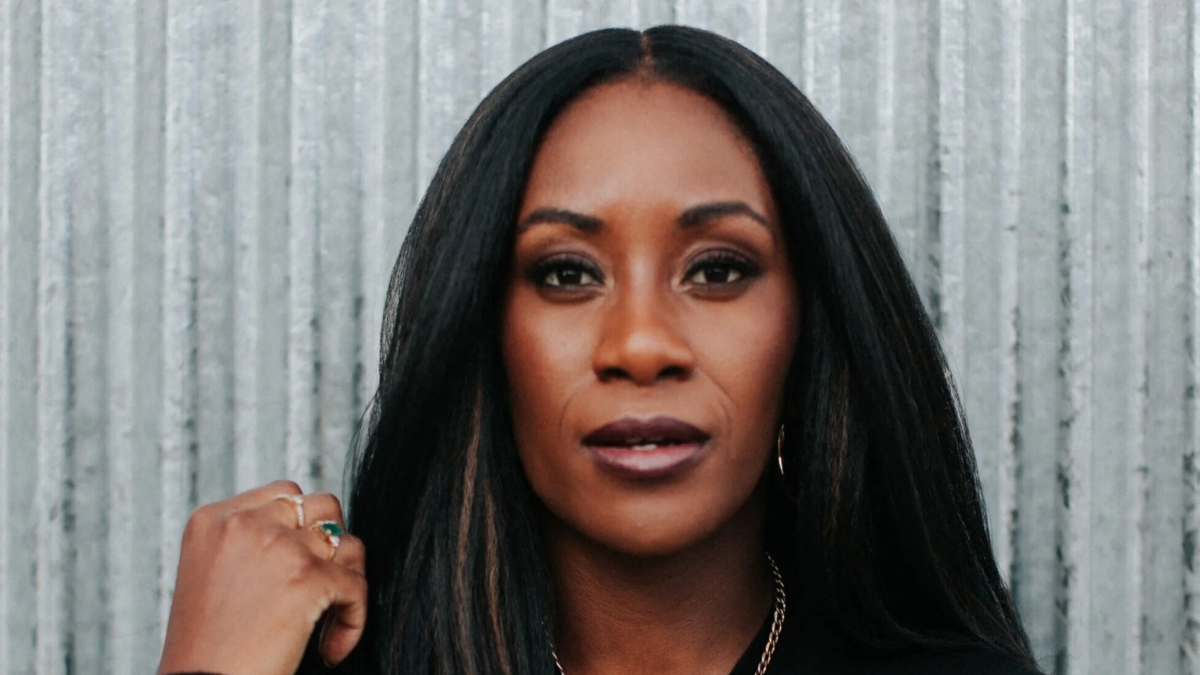
Karen Attiah spent years at The Washington Post being paid to share her opinions. Then, in September 2025, a series of social media posts got her fired.
Attiah was not a straight-news reporter. She was an opinion columnist whose work focused on race, gender, politics, and human rights. Her job involved offering her perspective on complex issues, even when that perspective made people uncomfortable.
That became an issue after conservative activist Charlie Kirk was shot and killed during an event in Utah on September 10, 2025. As people across the country publicly mourned Kirk, Attiah took to Bluesky to question why everyone was expected to respond the same way. She argued that refusing to publicly mourn a white man who had promoted hatred and violence was not the same as supporting violence.
Attiah also pointed to the shooting of two Democratic state legislators in Minnesota earlier that year, saying America had quickly moved on from it. Her larger point was that the country does not respond to every act of political violence with the same level of sympathy or outrage.
By the next day, Attiah was out of a job. The Post said the issue was not simply that Attiah had expressed an opinion. Management argued that her posts crossed a line by disparaging white men based on their race and gender. The newspaper also said the backlash surrounding the posts had damaged its credibility and created safety concerns for other employees.
They classified her actions as “gross misconduct,” allowing the Post to fire her immediately instead of following its normal progressive-discipline process. That decision was made four hours after the Post’s opinion editor became aware of the posts. Management never interviewed Attiah, asked her to explain what she meant, or gave her the option to remove them.
Attiah and the Washington-Baltimore News Guild challenged the firing through arbitration. The central question was whether her comments were serious enough to qualify as gross misconduct and also give the Post sufficient cause to fire her without warning.
In August 2026, the arbitrator ruled that they were not. The decision found that Attiah was referring to a specific group, white men who promote hatred and violence, not attacking all white men because of their race or gender. The arbitrator also rejected the Post’s argument that Attiah was responsible for the threats the newspaper received, stating that the people making those threats were responsible for their own actions.
The ruling did more than declare that the Post had gone too far. The newspaper was ordered to reinstate Attiah and make her financially whole, including giving her full back pay and restoring the benefits she lost after being fired.
Now this story is bigger than Attiah and a few posts on Bluesky. Saying that a newsroom values Black voices is one thing. Continuing to value those voices when they challenge the institution is another. The Post already knew the kind of writer Attiah was. Her work centered on race, gender, politics, and human rights.
The newspaper had even praised her for being a strong voice on social media and helping it connect with younger and more diverse readers. So what changed? Her voice was valuable when it helped the Post reach new audiences. But once that same voice stepped outside the boundaries of what the Post was comfortable defending, and was unafraid to say what others might avoid, the newspaper fired her without even giving her a chance to explain herself.
The arbitrator did acknowledge that the timing of Attiah’s posts could have made them appear insensitive. Still, a newspaper cannot hire an opinion columnist to speak openly about race and politics, then treat her perspective as gross misconduct once it draws backlash. That is often where support for Black voices becomes conditional. Black journalists are encouraged to bring their experiences and perspectives into the newsroom, but they can still find themselves walking on eggshells, trying to figure out how honest they can be before that honesty becomes a liability.
Attiah’s reinstatement is a win, but it does not erase the fact that she spent nearly a year fighting to reverse a decision the Post made within hours. Valuing Black voices has to mean more than hiring them, promoting their work, or using them to reach diverse audiences.
Those journalists should not have to constantly measure how much honesty their institution can handle. Because if a Black voice is only welcomed when it is easy to manage, then it was never fully valued in the first place.