

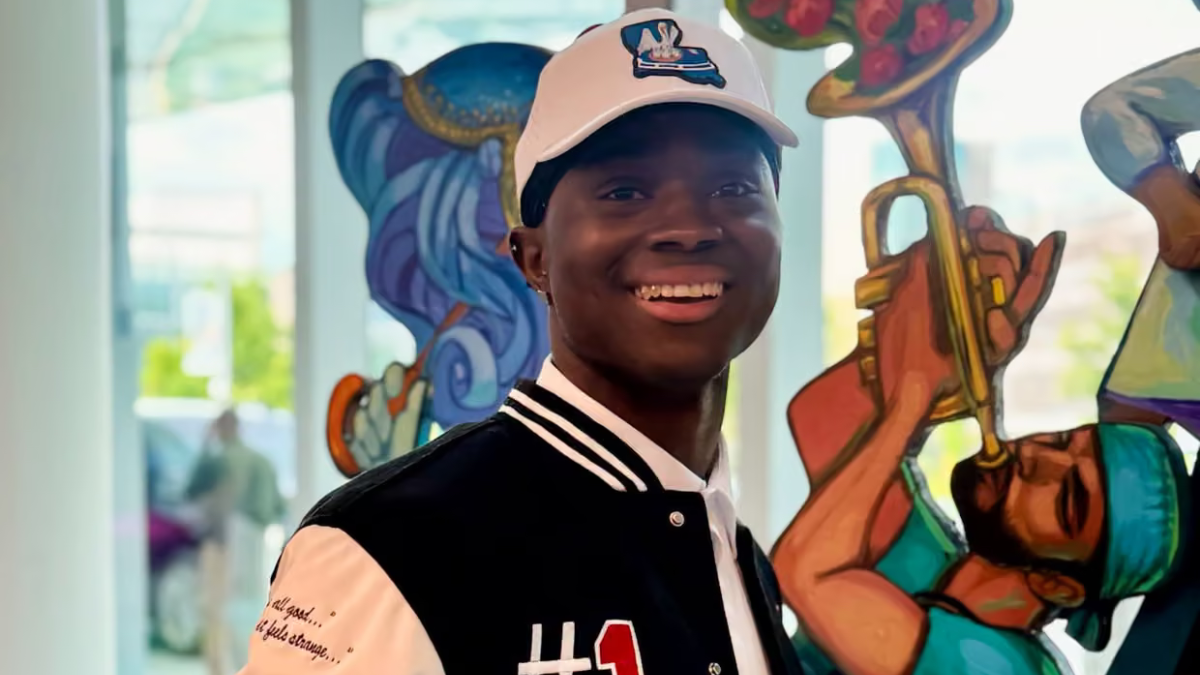
A New Orleans man has officially become the first person in Louisiana to be functionally cured of sickle cell disease using a groundbreaking gene therapy treatment. Daniel Cressy, a resident who has spent his entire life battling the debilitating and painful genetic disorder, underwent the cutting-edge cellular therapy at Children’s Hospital New Orleans.
Today, medical experts have officially declared him free of the disease’s symptoms, marking a monumental milestone for clinical science and offering a beacon of hope to millions of families worldwide.
For Cressy, the successful treatment represents more than a medical miracle; it is the beginning of a life free from pain, fear, and constant hospitalization.
Earlier this year, Daniel Cressy was one of fewer than 100 people in the world to receive gene therapy for sickle cell disease, and today he is the FIRST person in Louisiana to be functionally cured! His powerful journey shows why access to lifesaving treatments and potential… pic.twitter.com/8oev6R5Dap
— Ben Crump (@AttorneyCrump) June 24, 2026
To understand the magnitude of Cressy’s cure, it is vital to understand the brutal reality of living with sickle cell disease (SCD). Sickle cell is an inherited red blood cell disorder. In a healthy body, red blood cells are round, flexible, and disc-shaped, allowing them to glide effortlessly through even the smallest blood vessels to deliver oxygen throughout the body.
For those with sickle cell, a genetic mutation causes these cells to become stiff, sticky, and shaped like crescents or “sickles.” Instead of moving smoothly, these malformed cells frequently clog the bloodstream and block oxygen flow. This blockage triggers what are known as vaso-occlusive crises, sudden, unpredictable, and excruciating pain episodes that often require high-dose narcotics and emergency hospitalization.
Over time, the repeated lack of oxygen to vital organs causes permanent damage to the spleen, kidneys, liver, and lungs. It also dramatically increases the risk of stroke and chronic fatigue, ultimately shortening the average life expectancy of patients by decades.
Sickle cell disease is a global health issue, but it is deeply tied to specific genetic ancestries. The disease is disproportionately found in people of African descent, with statistics in the United States being particularly stark. Approximately 1 in 13 Black or African American babies are born with the sickle cell trait, and about 1 in 365 are born with the active disease.
The treatment that cured Cressy is part of a wave of newly approved gene therapies, such as Casgevy and Lyfgenia, which utilize advanced gene-editing technology.
Rather than relying on a traditional bone marrow transplant, which requires finding a perfectly matched sibling donor, this therapy uses a patient’s own stem cells. Scientists extract Cressy’s stem cells and use gene-editing technology to reprogram them, essentially turning on the body’s ability to produce healthy fetal hemoglobin, which prevents the cells from sickling.
The process is incredibly rigorous. It requires intense chemotherapy to clear out the patient’s diseased bone marrow before the newly edited, healthy stem cells are infused back into the body. Once the new cells take root (a process called engraftment), they begin producing healthy, round red blood cells.
As hospitals and medical centers across the country begin rolling out these advanced therapies to more patients, Daniel Cressy’s story is a reminder that the end of sickle cell disease is closer than ever before.
Photo Credit: Manning Family Children’s Hospital