

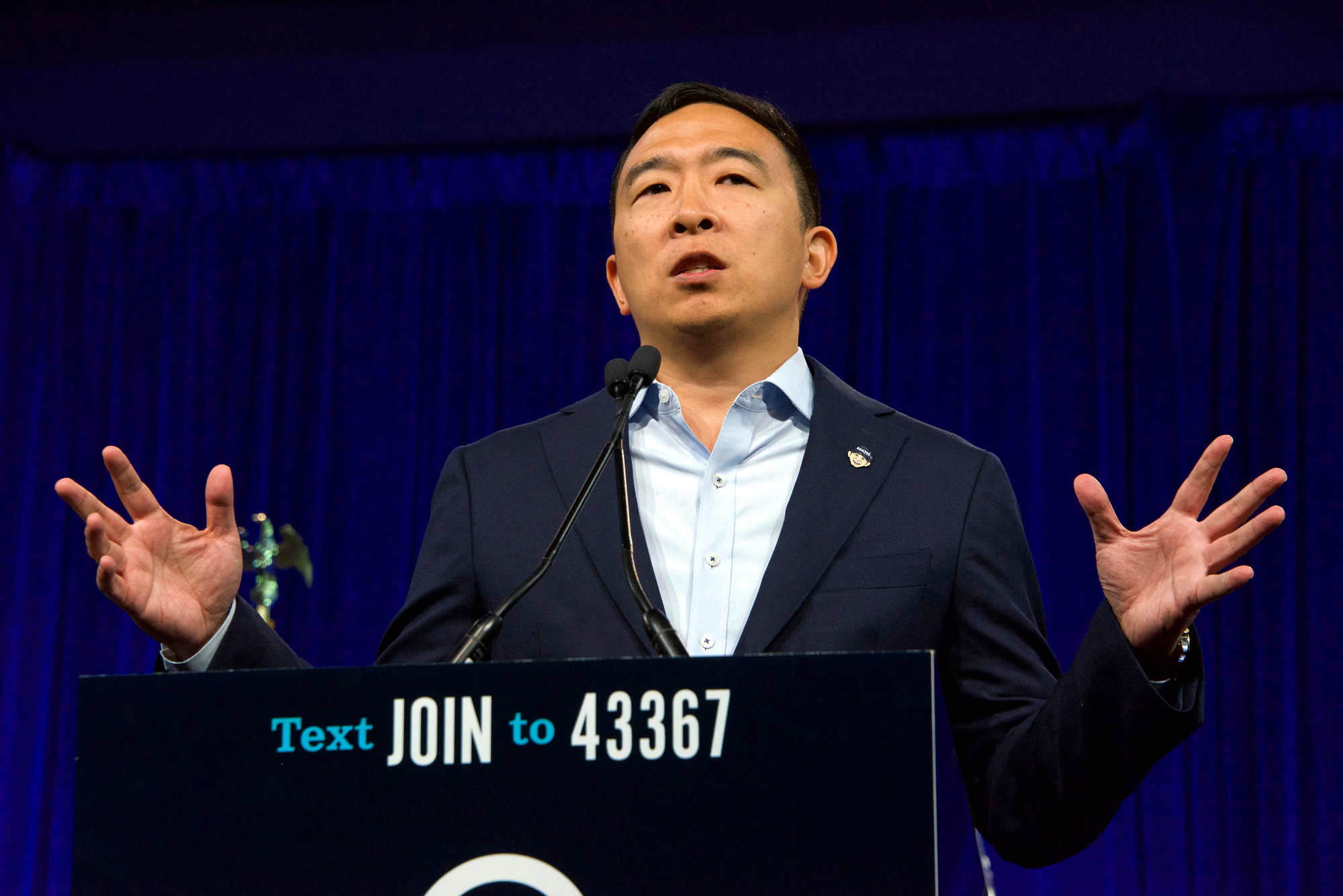
Andrew Yang believes that if we don’t change how we tax technology right now, the future of human labor looks incredibly grim.
Appearing on CNBC’s Squawk Box, the CEO of Noble Mobile and founder of the Forward Party laid disruptive proposal: stop taxing human labor and start taxing artificial intelligence and robots instead.
“You tend to tax things that you want to discourage and you want less of,” Yang explained. “And we’re going to be in a position where we want to shore up labor in every quarter, in every organization and environment.”
According to Yang, the narrative that technological revolutions always create more jobs than they destroy is officially outdated, as the modern AI wave is fundamentally designed to operate entirely without human labor. With an estimated $1 trillion currently being poured into infrastructure, data centers, and development, tech giants and major corporations are under immense pressure to recoup those massive costs.
The numbers point directly to job cuts because, in order to justify unprecedented capital spending, companies must look for hundreds of billions of dollars in cost savings, which Yang notes will inevitably come from reducing corporate headcount.
This displacement is already shifting the workforce and creating what Yang describes as a wave of “involuntary entrepreneurs”.
Companies are aggressively replacing junior engineers and junior analysts with AI automated systems. This disruption quickly goes up the ladder, forcing laid-off middle managers to start their own businesses out of sheer economic necessity rather than a genuine market opportunity.
“We know different. It doesn’t make any sense,” Yang said regarding tech leaders claiming the shift will be fine for workers. “The easiest people to fire are the people you haven’t hired yet.”
When asked if the government could ease the transition by upskilling displaced workers, Yang calls past federal retraining efforts an absolute failure.
“I looked at the success rates of U.S. government-funded retraining programs for the manufacturing workers in the Midwest, and the general effectiveness rate was 0%,” Yang stated.
He explained that these programs frequently resulted in private certification schools opening up, taking government money, handing out valueless certificates to workers, and then shutting down. Instead of transitioning to new careers, the displaced workers ultimately left the workforce entirely or went on disability.
While taxing AI might sound like an uphill political battle, Yang pointed out that some of the biggest names in tech are already asking for it.
Dario Amadei, the CEO of Anthropic, has explicitly proposed a 3% “token tax” on AI infrastructure. Furthermore, industry figures like Vinod Khosla, John Arnold, and even Elon Musk have openly discussed a future moving toward “universal high income” or alternative economic safety nets due to the sheer abundance created by automated labor.
However, Yang drew a hard line between an AI tax and the wealth taxes proposed by politicians like Elizabeth Warren.
“I think a wealth tax is a bad idea because capital is portable, human beings are portable,” Yang noted, adding that wealth taxes on a state level are “super dumb.” An AI tax targets the actual system generating the corporate efficiencies.
Ultimately, Yang warns that the clock is ticking before economic frustration boils over. “The money is going into the cloud toward the AI companies and in a few years toward the robotics companies,” Yang concluded. “We have a power… elections have consequences, and we’re living it right now.”
Photo Credit: DepositPhotos.com