

You probably didn’t watch soap operas. Let’s just get that out of the way. But your mother did. Your grandmother definitely did. And if you grew up in a Black household, there was a television somewhere in that house, probably the kitchen, maybe the living room, that had one of those shows on every afternoon like clockwork. The volume was up. Nobody was to interrupt. And whatever was happening on that screen was, for that hour, the most important thing in the room.
You didn’t understand it then. Honestly, you probably didn’t try to. It was a whole lot of people in expensive clothes having dramatic conversations in rooms that looked nothing like yours. You’d walk through, catch a few seconds, keep it moving. But something stuck, the music, a character’s name, the way the women in your family reacted to whatever was unfolding on screen. Soap operas were their thing. Not yours.
That’s fair. But here’s why it matters now: CBS has renewed Beyond the Gates for third and fourth seasons, the first new daytime soap opera in 30 years, and it is built around a Black affluent family in Washington, D.C. Not a supporting cast. Not a subplot. The whole show.
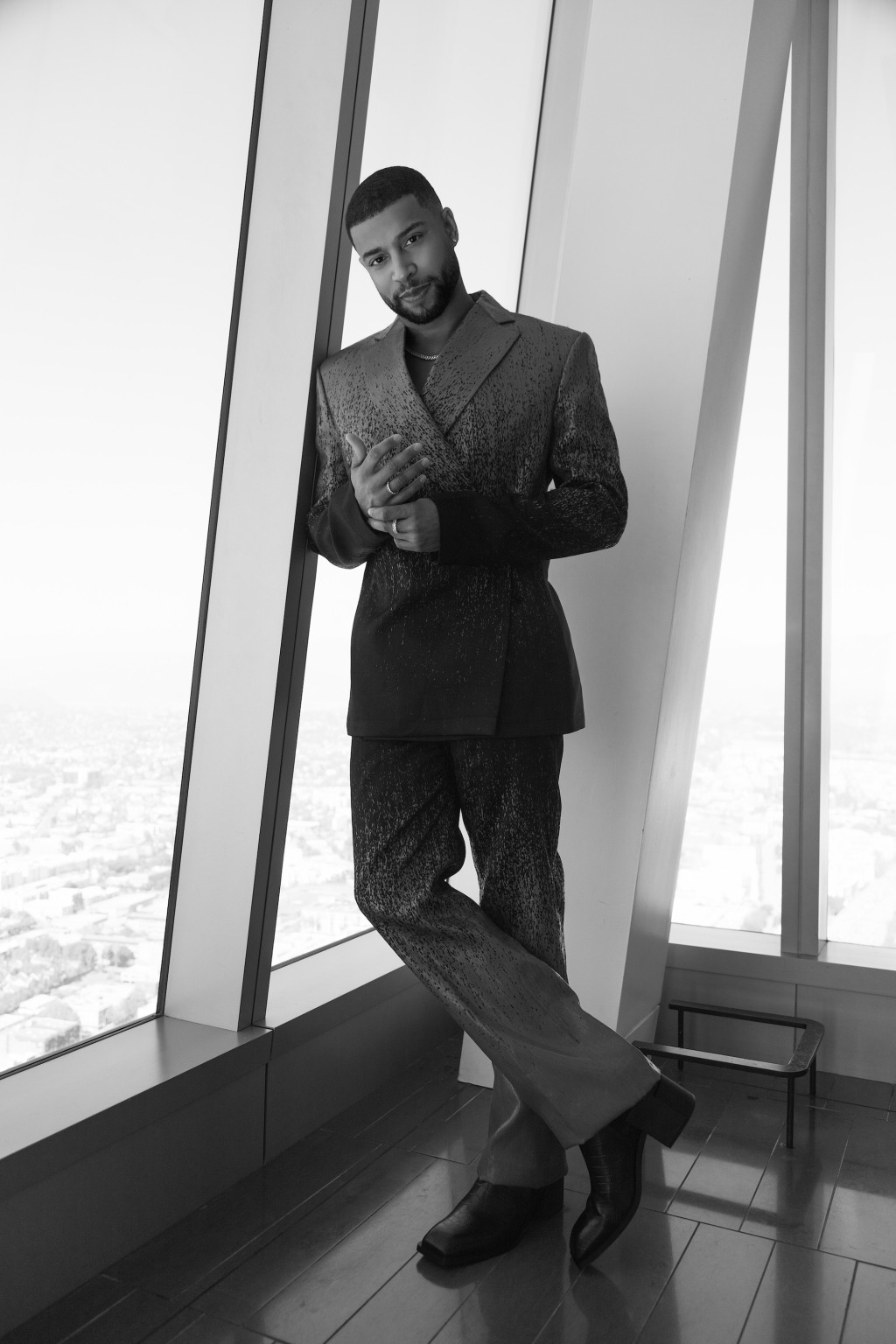
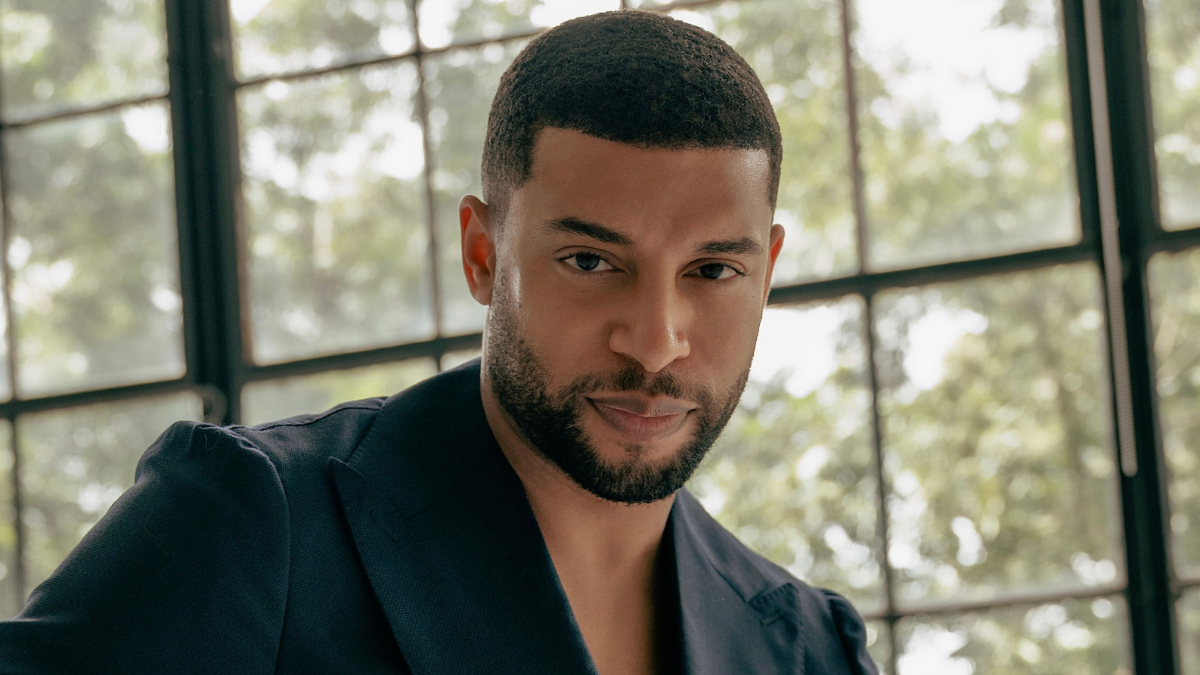
And one of the men at the center of it is Brandon Claybon, a 15-year industry veteran from Oakland, Tennessee, who worked his way through commercials, modeling, guest spots, and a stint on General Hospital before landing the role that changed everything.
This isn’t really a story about soap operas. It’s a story about what happens when a show that looks like us finally exists, what that means for representation, for Black excellence, for Black men in Hollywood, and for the actor who gets to be in the room where it happens. We sat down with Claybon to get into all of it.
Beyond the Gates is not simply a soap opera with a Black cast. It is a reframe of what daytime drama can look like when the creative vision starts with Black life at the center rather than on the side. Claybon understood the weight of that from the jump.
“It’s like a resurgence,” he told us in our exclusive interview. “It’s like a phoenix raising from the ashes.” He points to the ripple effect the show has already had across the genre, the return of Shemar Moore and Vivica Fox to The Young and the Restless, a renewed energy across daytime programming that the industry hadn’t seen in years. Beyond the Gates didn’t just fill a gap. It raised the bar.
For context, the last Black-led daytime soap was Generations, which ran from 1989 to 1991, and even that show split its focus between a Black family and a white one. Beyond the Gates is different. “This is about a Black affluent family in the DC area,” Claybon says, “and the Dupree family are here to stay.”
The show airs on CBS Monday through Friday at 2 p.m. Eastern, which also means Claybon is working at a pace most actors never experience. “This is day in, day out. It’s Monday through Friday,” he said. “There isn’t a lot of time to be thinking about my next job because this job right here, I’m working non-stop each and every day.”
Martin Richardson is the kind of character that rewards patience, in the writers who built him and in the actor who plays him. He is a congressman and family man whose values run deep: devotion to his family, responsibility to his constituents, and an abiding sense that the legacy left behind matters more than the one you inherit.
Claybon sees pieces of himself in Martin, not in the political title, but in the instinct. “People all my life have told me that I’m a politician,” he laughs. “And sometimes I don’t know if that’s a good thing or a bad thing. But it’s really because when I’m out and about and I’m seeing people, I walk up to everyone, I speak, I’m shaking hands, holding babies, hugging. So I think that’s one thing that we have in common, just the politics of it all.”
The word representation gets used so often it can start to lose its meaning. But Claybon confirms its definition, highlighting the actual moment when a real person, in a real place, sees something on a screen that shifts what they believe is possible.
“I meet so many different people traveling the world,” he said. “But they stop me and say, ‘Thank you. I see myself in you. I see myself as one of the Duprees.’ And I don’t think other people see us in this light.”
He’s equally generous when he describes audiences outside the Black community encountering the show for the first time, people who come to him genuinely moved, saying things like: I didn’t know you guys deal with the same things we deal with. Love, loss, money issues, everything. Claybon, who grew up around farms in rural Tennessee, gets it. He doesn’t get upset at the ignorance the way someone who grew up in a major metro might.
“There are times when people are just not connected with the outside world,” he said. “Sometimes we get caught up in what’s around us, and that’s our community. And it takes a lot of courage to step outside of that. So I totally understand when they come up and say, ‘I’ve never seen this before.’ I get it.”
He also says it’s about visibility, not just about demographics. It’s about dimension. “If we’re not singers or rappers or entertainment-driven, they don’t necessarily see the doctors, the lawyers, the nurses,” he says. “They just can’t wrap their heads around it. But we’re out here, and we’re out here strong.”
We asked Claybon straight: where do Black men actually stand in Hollywood right now? Are we moving forward, treading water, or quietly sliding back?
“I think we have a lot of room to grow, but I think we are in a healthy space, just with the amount of producers, studio heads that we have in our corner.” He names names: Sheila Duckworth, Michelle Satter, Tyler Perry, Gina Prince-Bythewood, Debbie Allen, Shonda Rhimes. These are the people who have built the table and kept pulling chairs up to it.
But he’s not naive about the moment. The industry is, as he puts it, “kind of all over the place”, streaming wars, shifting budgets, an entertainment economy that nobody fully has figured out yet. In that environment, the gains Black men have made can feel fragile.
Claybon has used the slower periods in his career to build. During COVID, when sets shut down and the industry went quiet, he didn’t wait. He produced. His first film, Free to Be, a documentary about four individuals in the LGBTQI+ community and their fight for equal rights, has screened at 27 film festivals. His next project, a short film called Autumn and Summer, is currently making the festival rounds.
Beyond the Gates airs Monday–Friday at 2 p.m. ET / 1 p.m. CT on CBS. Check out the full interview below.
Photo Credit: Jon Daily