

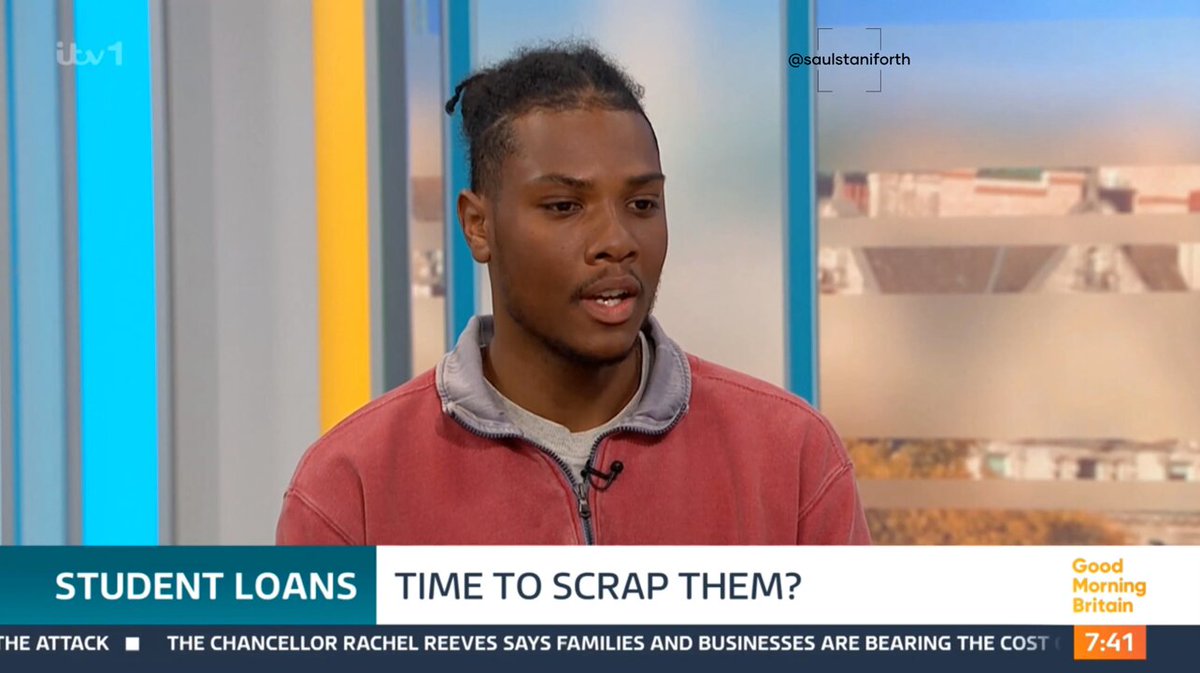
Starting your adult life with “mortgage-sized debts” shouldn’t be the price of getting an education. That was the core message delivered by political campaigner Jovan Owusu-Nepaul during a recent appearance on Good Morning Britain.
Arguing passionately for the complete abolition of student tuition fees, Owusu-Nepaul highlighted the severe financial strain current policies place on young people across the UK.
During the televised segment, Owusu-Nepaul, who holds a degree in history, revealed his own daunting financial reality. After initially borrowing around £45,000 to fund his university education, his student debt has since ballooned to roughly £65,000. The most frustrating part? He has been making regular repayments the entire time.
We should abolish student tuition fees. pic.twitter.com/MBOFD7MXkY
— Jovan Owusu-Nepaul (@JOwusuNepaul) April 14, 2026
For Owusu-Nepaul, this represents a systemic failure that traps graduates in an endless cycle. He went so far as to describe the situation as becoming an “indentured servant to the student loans company for your entire working life.”
When pushed on the fact that roughly half of students will never fully repay their loans anyway, he noted that this reality actually makes things worse. The psychological weight of paying a constant tax on an unpayable debt only makes the financial burden feel heavier.
The ripple effects of these massive debts go far beyond the education sector. Owusu-Nepaul drew a direct line between student loan repayments and the ongoing UK housing crisis.
With graduates losing an extra £200 to £300 from their monthly paychecks to service their loans, saving for a house deposit becomes increasingly impossible. Instead of putting away money for their futures, starting families, or getting onto the property ladder, young people are watching their earnings be absorbed by ever-growing loan balances.
He also pointed out a frustrating irony in the current system. While international students travel from around the world to access the UK’s top-tier universities, skyrocketing domestic debt is effectively locking many British citizens out of those same educational opportunities.
The debate inevitably turned to a classic counterargument: Why should the half of the country who doesn’t go to university pay extra taxes to subsidize those who do?
For Owusu-Nepaul, the answer comes down to how the government values its citizens. He argued that the state needs to have an “honest conversation” and recognize that pursuing an education should be treated as a societal good rather than an individual punishment.
If the government truly values young people wanting to better themselves, he argues the cost should be heavily subsidized by the taxpayer, much like it was for the generations before them who attended university for free.