

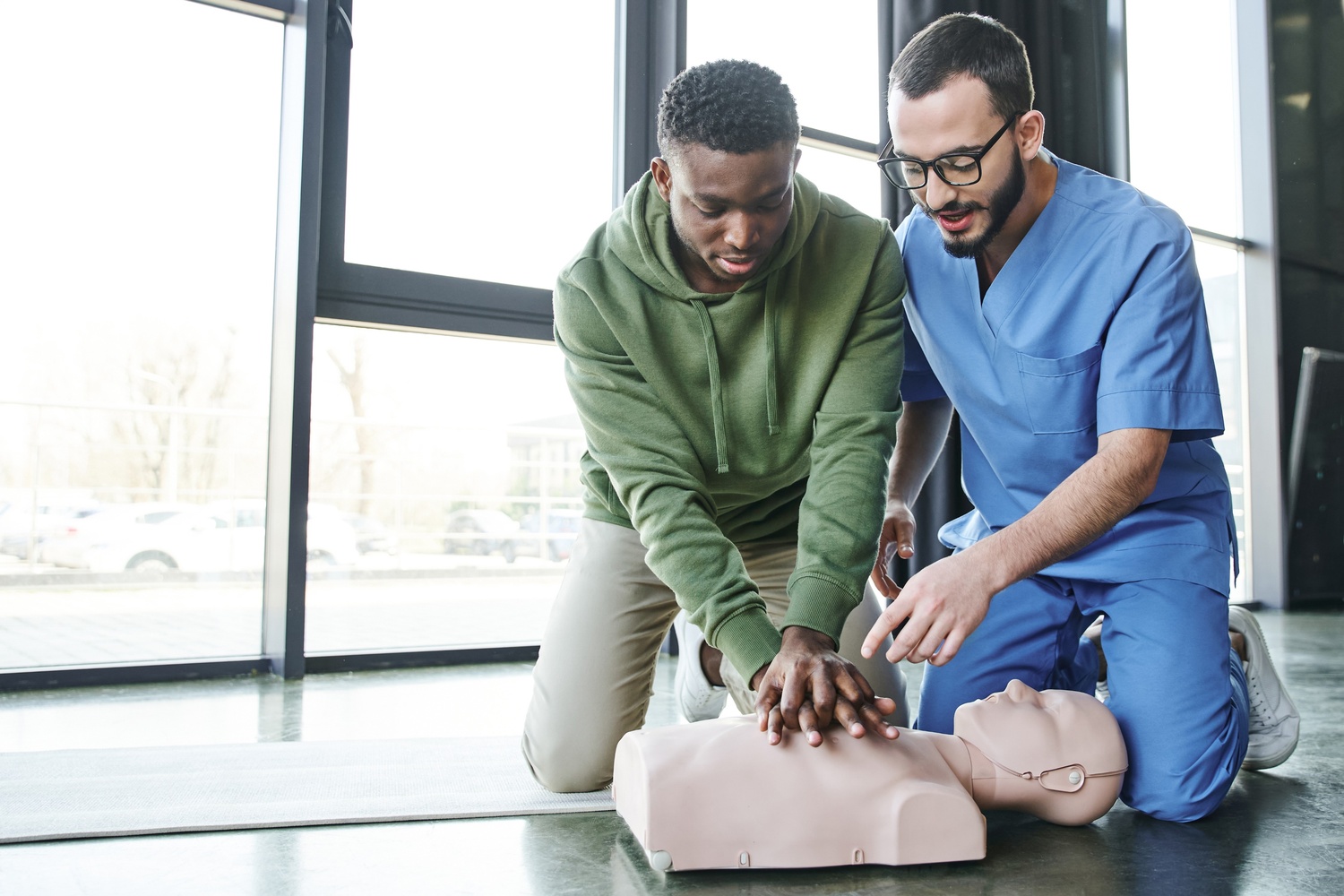
Imagine you are sitting at dinner when the person across from you suddenly grabs their chest and slumps over. Your heart starts thumping against your ribs immediately. You might feel a sudden urge to run for help or, conversely, find yourself unable to move or speak. This is the ‘fight-flight-freeze’ response.
While this instinct helped our ancestors survive physical threats from predators, it often hinders us in modern medical crises. When a person’s life depends on quick, logical decisions, a brain flooded with cortisol struggles to process information. You cannot rely on ‘gut instinct’ here because your gut is currently screaming in terror.
Understanding that calmness is a deliberate skill rather than a natural gift changes how you handle these moments. You can learn to regulate your biology and maintain situational awareness through specific, repeatable steps. It starts with recognizing what is happening inside your own body.
The Science of the ‘Amygdala Hijack’
The human brain follows a strict hierarchy when it perceives a threat, often choosing survival over logic. This process begins in the amygdala, a small region that handles emotional processing and triggers the stress response. When you encounter a medical emergency, the amygdala sends an immediate alarm that shuts down the prefrontal cortex, the area responsible for rational thought and decision-making. Essentially, the part of your brain that knows how to call 911 or apply pressure to a wound goes offline to make room for raw instinct.
Identifying the physiological shift
You can identify this ‘hijack’ by monitoring your physical state. As the amygdala takes over, your body releases a surge of adrenaline and cortisol. This causes your heart rate to spike and your breathing to become shallow. You may notice ‘tunnel vision,’ where your peripheral sight disappears because your brain is focusing entirely on the perceived source of danger. These symptoms indicate that your body is preparing for a physical fight rather than the calm, methodical thinking required to help a patient.
Naming the emotion
Breaking this cycle requires a deliberate mental intervention to re-engage the prefrontal cortex. Research shows that the simple act of labeling your internal state—literally saying ‘I am feeling panicked’ or ‘My heart is racing’—forces the logical brain to wake up. This labeling process requires cognitive effort that the amygdala cannot perform. By naming the sensation, you decrease the emotional intensity of the situation. This shift allows you to move from a state of blind reaction to a state of purposeful action, which is necessary for providing effective aid.
The 60-Second Reset
When a medical crisis occurs, you have about one minute to stabilize your own nervous system before your ability to help others degrades. If you do not consciously lower your heart rate, your movements will become clumsy and your thoughts fragmented. Grounding yourself is a physical requirement, not a mental luxury. By using specific physiological triggers, you can force your body to exit the panic state and restore your response capacities to an optimal level.
Resetting biology with box breathing
The fastest way to signal safety to your brain is through controlled respiration. Box breathing is a specific technique used by emergency responders to maintain focus under pressure.
Follow a 4-4-4-4 pattern:
- Inhale through your nose for four seconds
- Hold that breath for four seconds
- Exhale through your mouth for four seconds
- Hold your lungs empty for four seconds
Repeat this cycle three times. This process physically regulates your heart rate and stops the production of excess adrenaline. It moves you from a gasping, shallow breath pattern into a rhythmic state that oxygenates your blood and clears your head.
Snapping back with sensory grounding
Should you start feeling disconnected from reality, apply the 5-4-3-2-1 exercise to ground your focus immediately.
- Identify five things you can see
- Four things you can touch.
- Three things you can hear
- Two things you can smell
- One thing you can taste.
Do not just list them; actually focus on the texture of your clothing or the hum of a refrigerator. This exercise forces your brain to process external data rather than internal fear. It breaks the ‘loop’ of panic by demanding sensory input, which re-anchors you in the present moment where the work needs to be done.
Focusing the mind with a command phrase
Once your body is stable, you need to narrow your mental focus using a short, repetitive mantra. A common phrase used in high-stakes training is ‘Slow is smooth, smooth is fast.’ This reminds you that rushing leads to mistakes, and mistakes require more time to fix. Repeating a simple command keeps your internal monologue from spiraling into ‘what if’ scenarios. It gives your brain a single track to follow while you assess the patient or talk to emergency dispatchers.
Situational Assessment
Before you touch a patient, you must evaluate the environment to ensure you do not become a second victim. A public space can contain hidden hazards that exacerbate a crisis. Look for immediate physical threats such as moving traffic, downed power lines, or fire.
In cases involving a suspected infectious, contagious, or communicable disease, identify the need for personal protective equipment like masks or gloves before making contact. Pausing for five seconds to scan the perimeter prevents you from rushing into a dangerous situation that would then require a medical clinic or emergency department team to rescue two people instead of one.
Environmental safety checklist
Check the following variables before approaching:
- Physical hazards: Spilled liquids, broken glass, or unstable structures.
- Bystander dynamics: Ensure the crowd is not impeding access or creating additional stress.
- Available tools: Locate the nearest first aid kit or automated external defibrillator (AED).
The primary survey
Once the scene is safe, use the DRABC protocol to identify life-threatening conditions.
- Danger: Check the area again. Ensure no new threats have emerged. This includes looking for overlooked hazards like leaking fluids, aggressive animals, or unstable debris that could fall during treatment.
- Response: Tap shoulders and shout. Check if the person is conscious or alert. Use a loud, clear voice and observe if they track you with their eyes or respond to a firm pinch on the shoulder.
- Airway: Tilt head, lift chin. Ensure the passage for air is clear of obstructions. Look inside the mouth for any foreign objects, vomit, or blood that might block the throat while you maintain the head position.
- Breathing: Look, listen, and feel. Check for normal chest rise for 10 seconds. Put your ear close to their mouth to hear air movement while watching the chest; if breathing is irregular or absent, prepare to begin CPR (cardiopulmonary resuscitation).
- Circulation: Check for severe bleeding. Control major hemorrhages immediately. Scan the body for pooling blood or soaked clothing, applying direct, heavy pressure to any open wounds to prevent the victim from going into shock.
Triage and task prioritization
If you are managing a complex situation with multiple injuries or limited resources, you must adopt a triage mindset. This involves ranking actions based on immediate lethality. Massive bleeding always takes priority over broken bones or minor lacerations. If the situation is part of a larger community crisis, local authorities or an emergency committee may deploy medical countermeasures like vaccines or specific antidotes. Your job in the first few minutes is to keep the patient stable until higher-level care arrives.
If multiple people are present, delegate specific tasks. Point to one person and tell them to call 911; point to another and tell them to find an AED. This prevents the ‘bystander effect’ where everyone assumes someone else has acted. By breaking the emergency into smaller, manageable tasks, you maintain a logical workflow.
Effective Communication with Emergency Services
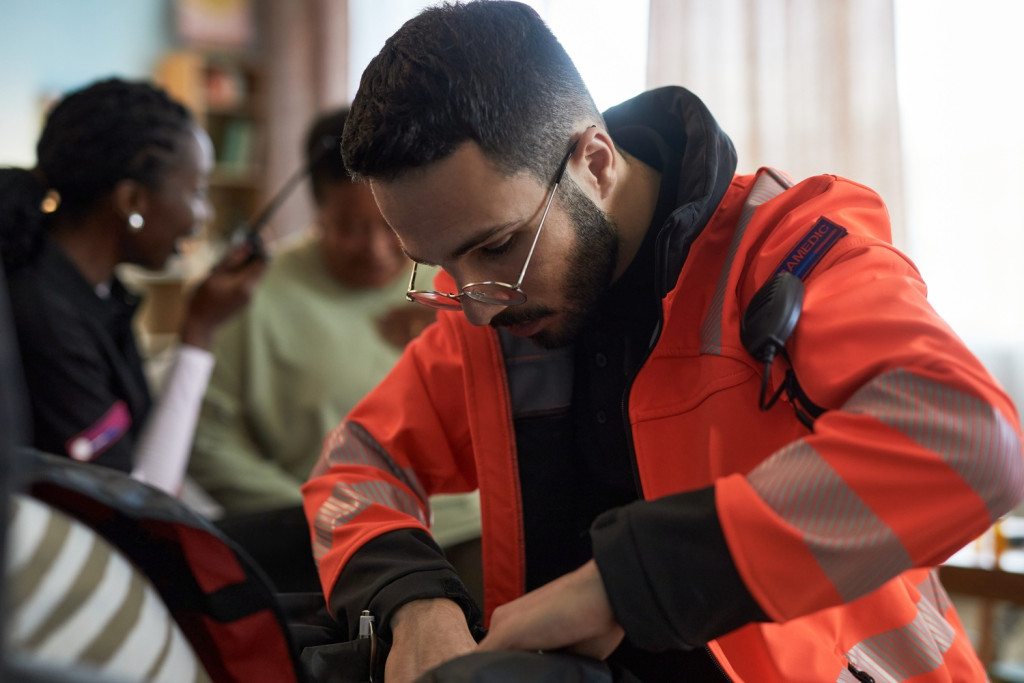
When you dial 911, you are connecting to a remote extension of the medical team. You must treat the dispatcher as your external ‘logical brain’ because they are trained to remain objective while you are in the middle of the crisis. Allow the operator to lead the conversation entirely. They follow specific protocols designed to extract the most relevant data for the paramedics. Answer their questions directly and stay on the line until they tell you to hang up.
Once the location is established, state the nature of the emergency clearly—for example, ‘unconscious adult’ or ‘heavy bleeding.’ Be prepared to describe the victim’s current status using the DRABC steps you just performed. This information helps the dispatcher determine which public health measures or specific medical units are required for the scene. Providing precise, concise answers ensures that the incoming team arrives with the correct gear and mindset.
In larger health crises, dispatchers may also ask questions that seem repetitive but are essential for screening and safety. They are assessing the situation using established protocols that integrate with broader health systems to manage hospital capacity and response times. You do not need to provide a medical diagnosis; leave the diagnostic tools to the professionals. Your role is to act as the eyes and ears for the emergency services.
Managing the Environment and Bystanders
Bystanders often want to help but lack direction, which leads to clutter and noise that can escalate the victim’s panic. To prevent this, you must practice aggressive delegation. Use clear, physical identifiers to break the bystander effect. Instead of shouting for someone to help, point directly at an individual and say, ‘You in the red jacket, stand by the street and wave the ambulance down.’ Assign another person to clear a path or gather any nearby medical devices, such as an AED or a first aid kit. Giving people specific, simple tasks removes them from the immediate circle of the victim while making them productive members of the rescue effort.
The atmosphere you create directly impacts the victim’s physiological state. If you are shouting or moving erratically, the victim’s heart rate and blood pressure will climb in response. This is because ‘calm is contagious.’ By maintaining a low, steady voice and deliberate movements, you signal to the victim’s nervous system that the situation is under control.
Keep the area as quiet as possible by asking unnecessary spectators to move back. Minimizing external chaos allows you to hear the victim’s breathing and ensures you can hear instructions from the emergency dispatcher. Controlling the environment ensures that the space remains a functional area for treatment rather than a site of confusion.
Post-Emergency
Once the ambulance departs and the immediate danger passes, your body will begin to withdraw the chemical support that kept you functional. This is the ‘let-down’ effect. During the crisis, your system was flooded with adrenaline and cortisol to mask pain and sharpen focus. As these levels drop, you may experience uncontrollable shaking, sudden bouts of crying, or profound physical exhaustion. These reactions are biological, not emotional weaknesses. Your nervous system is simply recalibrating after a period of extreme high alert.
Mental health first aid is just as critical as the physical actions you took on the scene. You should seek a debrief, whether with professional responders, a counselor, or a trusted peer. Talking through the sequence of events helps your brain move the experience from active, traumatic memory into long-term storage. If you suppress the details or ignore the stress, you increase the risk of long-term psychological strain.
Taking the time to hydrate, eat a meal, and rest allows your body to clear the remaining stress hormones. Prioritizing your own recovery ensures you remain capable of responding to future needs without carrying the weight of past trauma.
Preparation is the Antidote to Fear
You do not need a medical degree to save a life; you simply need the willingness to stay present and follow a logical process. Responding to a crisis is a matter of managing your biology and performing basic intelligence gathering to assist professional rescuers.
While these steps provide a foundation, nothing replaces hands-on practice. Your next step should be signing up for a certified CPR and first aid class in your local area. Gaining these practical skills ensures that when an emergency happens, you can act with confidence instead of hesitation. Proper training and mindset turn a witness into a capable responder.