

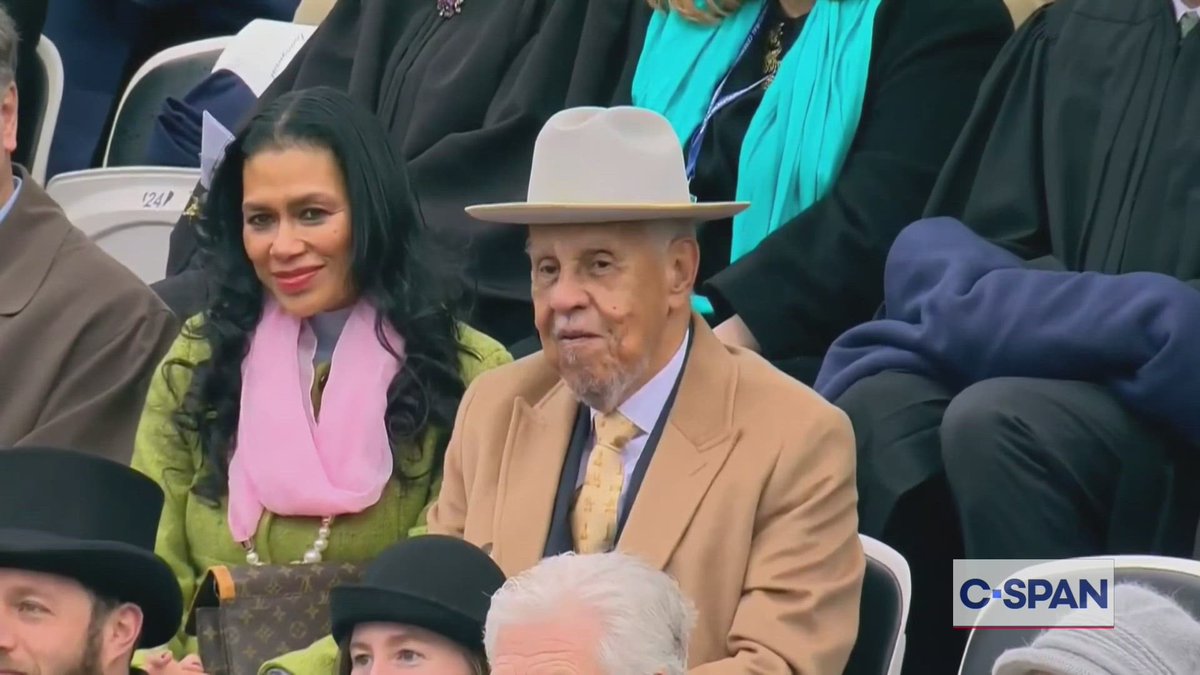
As Virginia prepares to make history once again, one of its most historic figures is front and center. On Saturday, Doug Wilder, the first Black governor in Virginia history and the first Black governor elected in the United States, watched the Commonwealth swear in its first woman governor, Abigail Spanberger.
The moment fell on Wilder’s 95th birthday. Thirty-six years after he broke one of Virginia’s most formidable political barriers, Wilder now bears witness to another long-awaited milestone in the state’s evolving story.
Speaking from the Wilder School of Government and Public Affairs in Richmond, the former governor expressed little surprise at Spanberger’s victory. He noted that polling from his own school consistently showed her leading throughout the race.
More importantly, Wilder was deliberate in how he framed Spanberger’s achievement. He stressed that she was elected not as a “woman governor,” but as a governor, period. In his view, her success came from competence, preparation, and a campaign that connected with people across the state, rather than from symbolism alone.
That distinction matters to Wilder, who has long resisted being defined solely by the barriers he broke, even as he understands their significance.
“I think it’s a continuation of the progress that Virginia has made,” Wilder said, reflecting on the broader arc of the state’s political evolution. Once viewed as reliably conservative, Virginia has become something more fluid, what Wilder describes as a “people state,” one that responds less to party labels and more to candidates who show up, listen, and engage.
From his time as mayor of Richmond to lieutenant governor and eventually governor, Wilder rejects the notion of rigid political aisles, saying he looks at people for who they are, what they bring, and how they relate to the lives of Virginians.
In his assessment, Spanberger followed that same blueprint, traveling the state, appealing to voters wherever they lived, and refusing to take anyone for granted.