

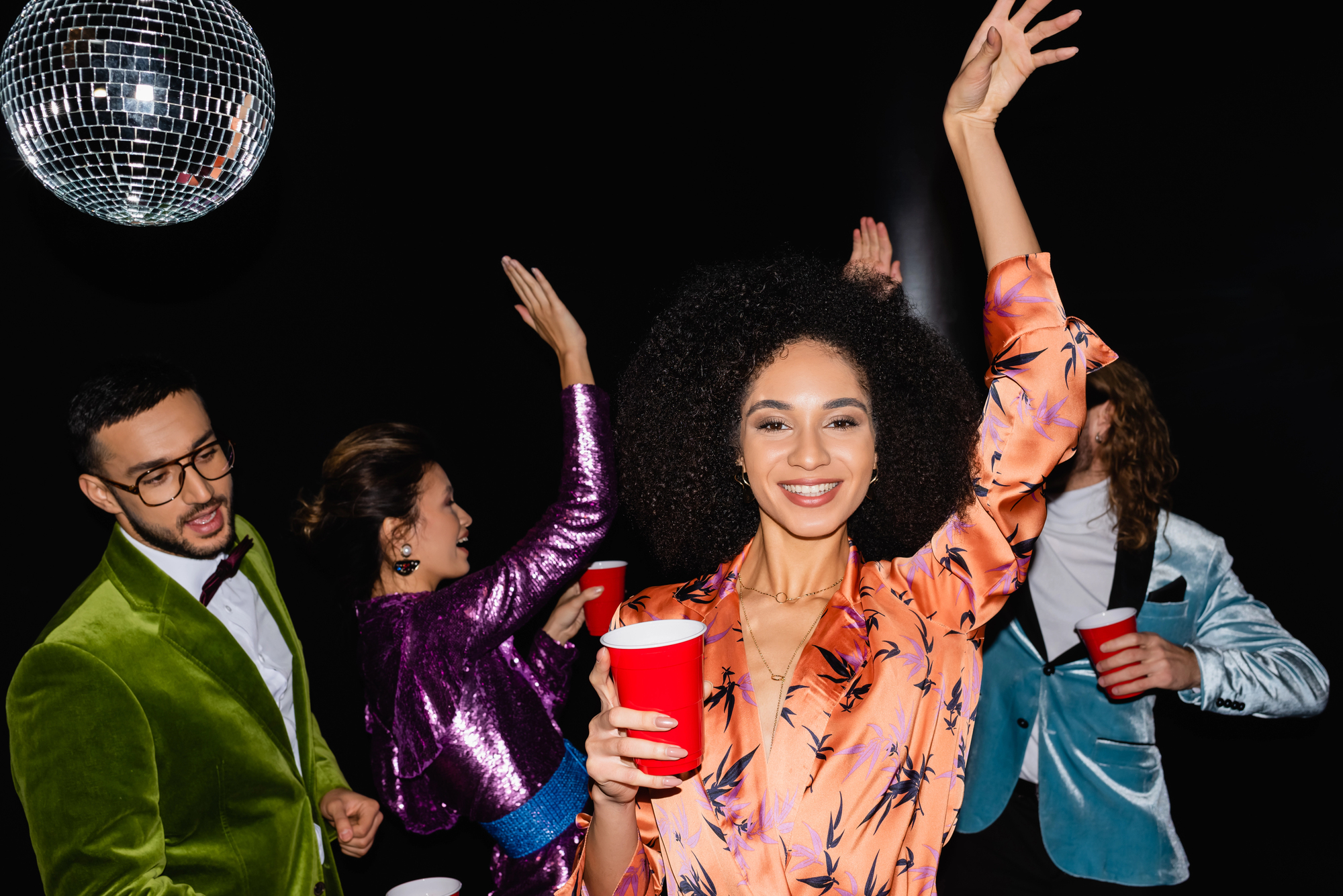
When I think about the value of the “turn-up” function, I go back to a deeply philosophical conversation I once had with R&B dance cosmonaut, Kelela, while working at Vulture.
As we discussed her album Raven and how dance music kicked down the mainstream door in the late 2010s and early 2020s, the 42-year-old artist described the project as a conjuring, a work whose meaning revealed itself as it came together. She said that even after she had written much of the album, she realized, “A lot of what I’m dealing with is the emotional stuntedness of men.”
Let’s put a pin in that.
Later in the conversation, I asked her about her own clubgoing practice, and her voice lit up with this exuberant kind of lilt. “I don’t think the album would hit in that way if I wasn’t going to the club… Like, Happy Ending and Contact aren’t just club tracks cus they sound like club tracks. I’m literally talking about seeing somebody in the club and it being a whole night of just being wrapped up in that while also partying. It’s such a sight for me. I don’t know how to explain it.”
So, Kelela, through Raven, is simultaneously confronting emotional stoicism in romance while also finding release and intimacy in the lush abundance of communal experience. There’s nothing stoic about the serendipitous stimulation shared between strangers, lovers, friends, potential friends, or the one-off somebodies we might meet at the function.
This, for me, is the real potential in the ritual of coming together, not just being present in the same space, but actively participating in it. That standing-on-the-wall s**t is for the birds!
This practice has faced all kinds of existential threats, thanks to the ’rona and, even beyond that, the pervasive isolationism that has seeped into our spirits over the last decade or so. The digital outrage over what’s considered “cringe” has only intensified our shyness about being out in public.
But as we’re seeing with the rise in anxiety, depression, and self-harm linked to loneliness, humans don’t really do so well on our own. We need one another, not just voices, texts, or moving images on a screen, but the full experience of humanity, IRL.
As of late, these ingredients, the amplification of our digital experiences over our real ones, a deadly virus, the pretension over who or what is “cringe,” and the rampant individualism at the center of this country’s influence, have all collided. Some of this is out of our control, and some of it feels more like self-sabotage. Why aren’t we more invested in the experience of spontaneity?
This is the part where we add a couple of caveats.
- For the immunocompromised, I get it, we don’t want to put anyone at risk. Sometimes isolation is an act of love. The key is finding community with people who share those same values and concerns. And if those groups don’t already exist where you are, be the change you want to see. Build one. Maybe it’s a masked-up game night. Maybe it’s a masked, private karaoke session. The point is connection doesn’t have to disappear; it just has to be intentional.
- For the introverts, I’d say this: there are people in your world who are willing to sit in silence with you. It may not look like what we typically consider a “party,” but connecting with folks who understand that your social battery isn’t always charged could be your pathway to community. So much can be said in silence
- For those who are struggling with sobriety, the bar or club clearly isn’t the best spot. But peep point number one: more and more cities are opening non-alcoholic bars, and some traditional bars even dedicate nights specifically to sober folks. Sometimes it just takes a little exploration.
And that’s what we’re really advocating for here: to explore the people, cultures, and rituals that already exist around us. Combating our own stoicism (and that of others), pushing back against loneliness, and resisting a broader social order that profits from our disconnection takes effort.
It takes intention. It takes a deep love for one’s life, rooted in the understanding that trying to face existential dread alone, without leaving room for spontaneity, community, or lived experience, isn’t really living at all.
Photo Credit: DepositPhotos.com