

In an era oversaturated with reboots, revivals, and reimaginings, it’s easy to get jaded. Some reboots feel like lazy cash grabs, leaning too hard on nostalgia without offering anything new. That’s what makes Bel‑Air so good.
Over four seasons, Peacock’s dramatic reinterpretation of The Fresh Prince of Bel‑Air not only defied expectations but also set a new standard for how to bring a classic into the present without losing its soul.
When Bel‑Air first dropped in 2022 during Black History Month, many of us weren’t sure what to expect. Turning one of the most beloved sitcoms of the ’90s into a prestige family drama? That sounded risky, even blasphemous to some.
But from the first episode, it was clear this wasn’t a remake. This was a “reimagining,” as the cast and crew like to call it. And that distinction made all the difference.
Instead of trying to recapture the laugh-track charm of the original, Bel‑Air built something grounded, bold, and timely.
It took the concept that made the original so memorable, a Philly teen thrust into the wealth and culture shock of Bel‑Air. It turned it into a vessel for deeper storytelling about identity, belonging, class, and legacy.
Where Bel‑Air shone most was in how it played with nostalgia. Rather than rely on cheap references and one-liners from the original, the show offered “Easter eggs” with intention.
It was more like a nod to the fans who grew up watching Fresh Prince, rather than an attempt to repackage old punchlines. From visual callbacks (like Will’s jacket) to character arcs (Carlton’s evolution), longtime fans were rewarded, but new viewers weren’t excluded. That balance is tough to pull off, and Bel‑Air made it feel seamless.
The characters were redefined, but not reinvented to the point of being unrecognizable. Will (played by breakout star Jabari Banks) brought a different emotional register than Will Smith’s original portrayal, one that felt raw, modern, and sincere. Carlton (Olly Sholotan), Phil (Adrian Holmes), Viv (Cassandra Freeman), Hilary (Coco Jones), Geoffrey (Jimmy Akingbola), and Ashley (Akira Akbar) each were given new depth and dimensionality. They weren’t caricatures; they were complex people facing complex issues.
And while it could have coasted on nostalgia alone, Bel‑Air didn’t flinch from tackling real issues like mental health, drug abuse, the complexities of marriage, pregnancy challenges faced by Black women, and Black masculinity. It allowed itself to breathe in ways sitcoms never could, without losing the heart and humor that made the source material so magnetic.
The final season gave us something very few reboots do: closure.
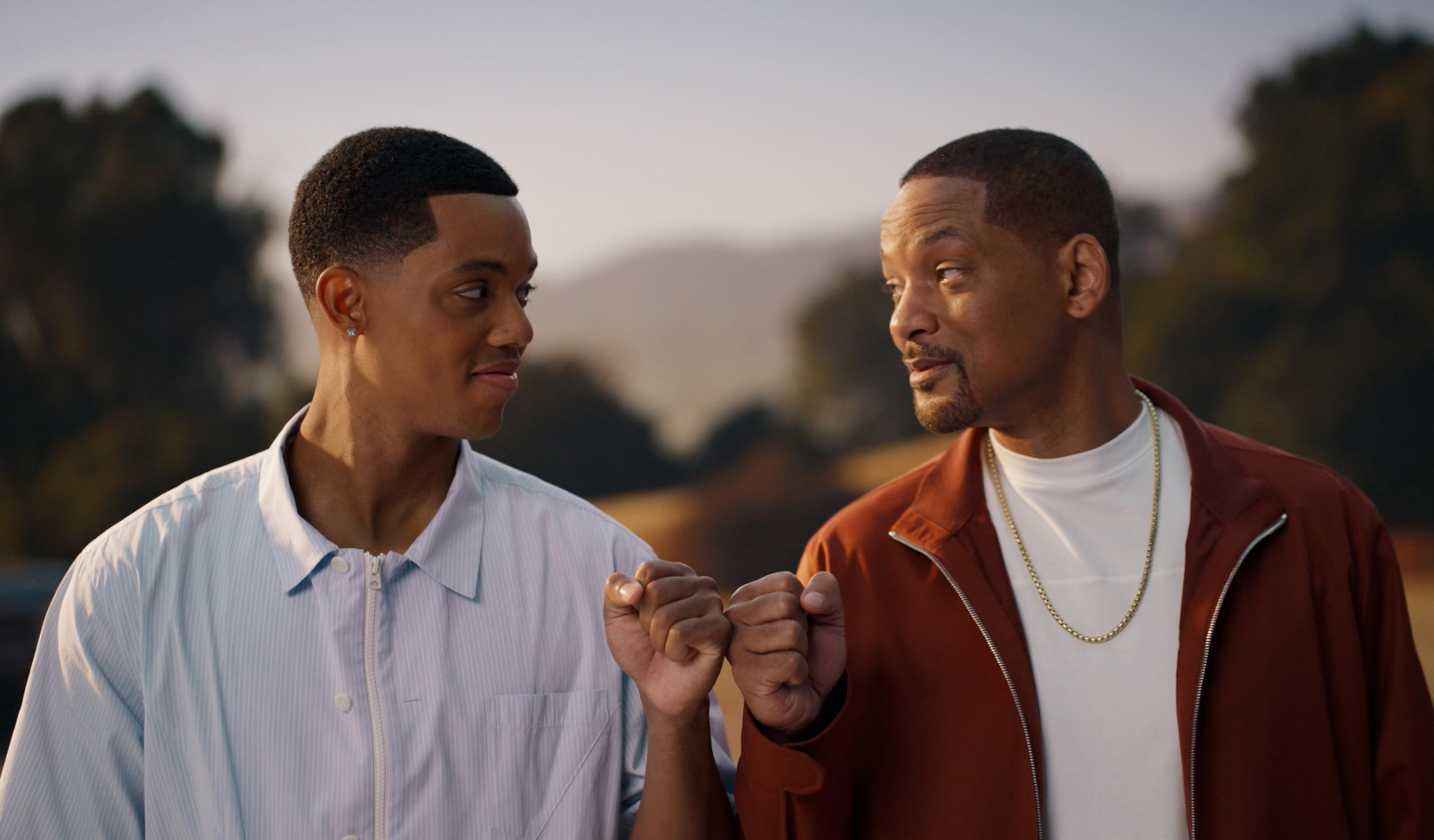
The last scene of the series, with Will Smith himself appearing as a future version of the character he made iconic, was a full-circle moment that hit all the right notes.
It wasn’t just a celebrity cameo; it was a handoff, a symbolic and emotional bridge between the legacy of the original and the impact of the reimagining. That moment alone cements Bel‑Air as one of the best IP revivals of the streaming era.
And let’s not overlook how the show treated its legacy cast. Over its run, Bel‑Air brought in familiar faces in smart, respectful ways, not gimmicky or forced. It was clear the creators weren’t trying to erase the original; they were building on it.
One of the reasons Bel‑Air worked is that it wasn’t afraid to evolve. Season by season, the show found its rhythm, deepened its themes, and took creative risks that paid off.
Whether it was Hilary stepping into influencer culture or Uncle Phil wrestling with political power and personal sacrifice, Bel‑Air never played it safe. And it didn’t have to.
The tension, the growth, the conflict, it all came from a place of love for the characters and a deep respect for the story’s roots. That’s what made it feel real. That’s what made us care.
If there’s one thing the entertainment industry should learn from Bel‑Air, it’s this: Honor what came before, but build something bold enough to stand on its own.
Use nostalgia as an entry point, not a crutch. Respect your audience enough to give them something new, something that feels rooted in today’s world, with characters who reflect modern realities and stakes that matter.
So many legacy IPs are sitting on the shelf right now, waiting for their turn. But unless the teams behind them are willing to take risks like Bel‑Air did, to reshape the narrative without betraying the essence, they’ll miss the mark.
Bel‑Air didn’t just reboot The Fresh Prince. It redefined what a reboot could be. It showed us that the past and the present don’t have to compete; they can collaborate. They can evolve together. And when done right, they can create something that speaks to both generations at once.
It’s not often that a remake honors its origin and levels it up. Bel‑Air did just that.
Future creators, take note: this is how you do it.