

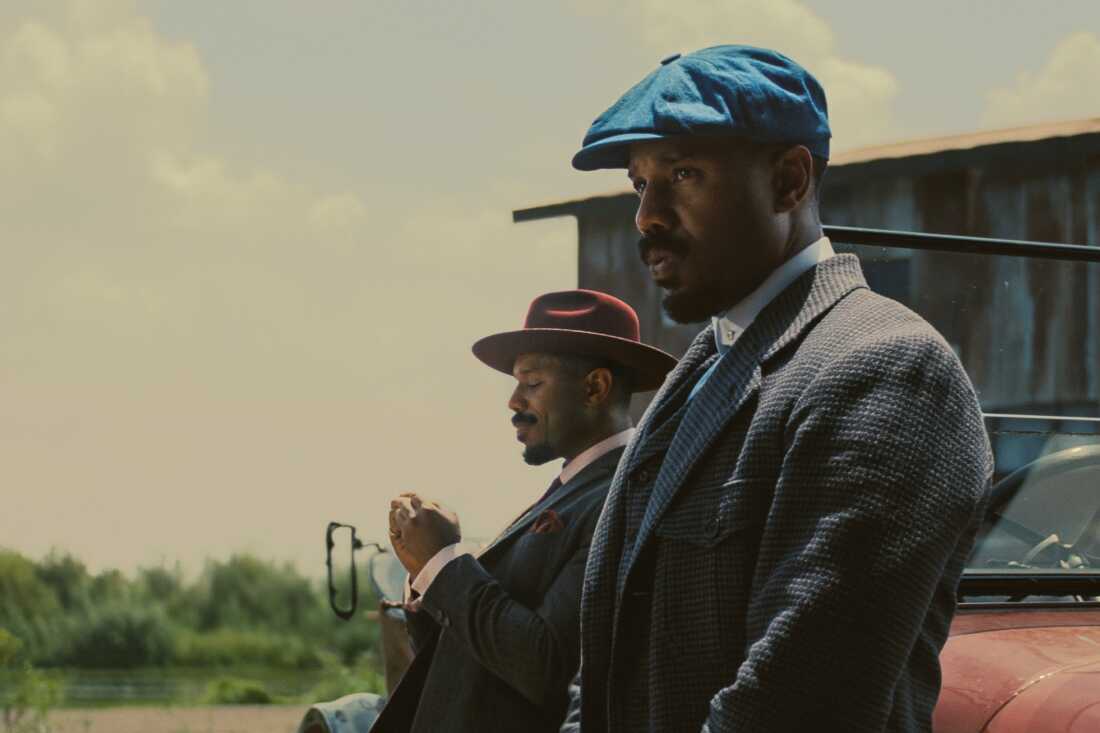
Michael B. Jordan has delivered some incredible performances throughout his career, but playing twins Smoke and Stack in Ryan Coogler’s Sinners pushed him into uncharted territory.
During a recent episode of Variety’s Actors on Actors, Jordan sat down with Jesse Plemons to break down the intimate, internal, and surprisingly physical work that went into building two men who share DNA, history, and trauma… but not the same emotional blueprint.
Plemons, who watched Sinners for the first time on a flight from Venice to Telluride, couldn’t help but open the conversation with admiration.
“I was blown away,” he told Jordan. “That movie, on a box office level and on an artistic level, truly gave the entire industry a sense of hope. You’d probably follow Ryan Coogler almost anywhere, but where do you start when you’re preparing to play two characters?”
For Jordan, the foundation wasn’t costumes or makeup; it was psychology.
“Playing two characters — identical twins at that — there was a lot of nerves,” he admitted. “Wiping all that away, it was like, ‘Lemme just focus on building out from their childhood trauma forward. How did that kind of manifest in each brother differently?’”
He described Smoke as the brother who swallowed his pain, quiet and internal. Stack, meanwhile, turned his wounds into charisma, charming, restless, always moving.
“One’s a bit more internal with his pain. He doesn’t say a lot. The other one masks his pain in his charisma and charm. He smiles through it,” Jordan said. “Understanding that those are two sides of me also helped.”
Jordan also revealed how subtle wardrobe choices helped him embody each twin. “I wore shoes that were too small for Stack because I liked him antsy, not really being able to sit still,” he explained. “Smoke, a size too big. He didn’t move as much.”
Those differences, posture, pace, and stillness, became the foundation of their identities. And, of course, Jordan credited Coogler as “the perfect North Star for where the story’s going.”
Plemons praised the performance for avoiding the trap of feeling like a “showy” dual role. “You managed to differentiate them just enough without it turning into some actor show,” he said. “It was a true, internal difference in both of them.”
When Plemons asked how Jordan handled switching between characters, Jordan laughed. “It’s organized chaos,” he said. “You have a limited amount of time. We’re shooting on film. So being as prepared as possible was super important.”
Jordan would film several takes as one brother, head to his trailer, and use that time to mentally unwind from one character and rebuild the other. Music became crucial.
“Music was really helpful… as I took off a piece of clothing and put another one on,” he shared. “And I took off my gold caps, which naturally hold my mouth differently and affect how I speak.”
Those small shifts helped him step fully into each twin’s emotional state.
To bring the dual performance to life, Jordan worked closely with a stand-in actor who served as the “twin double.”
“Unsung hero,” Jordan said. “I would show up and run it as the other brother first to let him know exactly where I would be. I had to predetermine my choices as the other brother.”
That rehearsal structure ensured the physicality, eyelines, and rhythm between the brothers felt seamless, even though Jordan was performing each side separately. “Whatever brother went first set the rules,” Jordan said. “We couldn’t occupy the same space.”
What makes Jordan’s performance in Sinners so compelling isn’t that he played two characters — it’s that Smoke and Stack feel like two people who were shaped by the same life but spiraled in different directions. Jordan infused each with specificity, vulnerability, and an emotional truth that anchors Coogler’s story.
And according to Plemons, the result speaks for itself. “They both felt so lived in,” he said. “Not just differentiated — lived in.”
With Sinners continuing its awards-season momentum, Jordan’s portrayal of the twins stands as one of the most nuanced, ambitious performances of his career, and a reminder that when he and Coogler come together, they don’t just make films.
They make moments.