

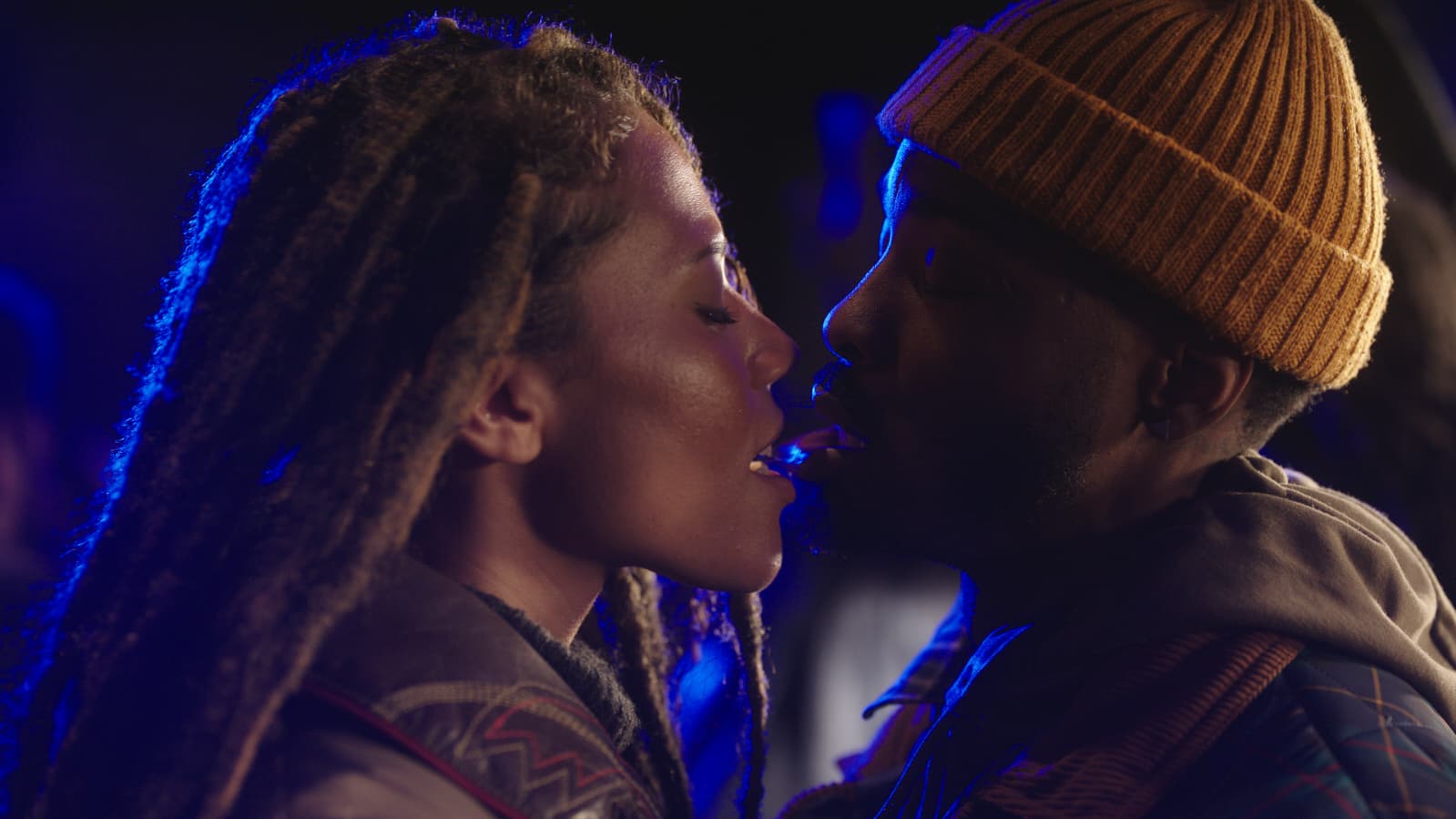
Alterik Miller had a simple observation that turned into a film. Looking at the movies coming out of Philadelphia, he kept seeing the same thing: crime, violence, the grittier side of the city. What he wasn’t seeing was love.
“I’m looking at all the movies coming out of here and nobody’s falling in love no more,” he told The Quintessential Gentleman in our interview. “So I was just like, yo, I’m gonna give Philly a love movie.”
That instinct became 93 ‘Til, the feature directorial debut for Miller and Monumental Film Works, a romantic drama that follows two young creatives, Rahmell, a struggling artist played by Petey McGee, and Yannie, a vintage clothing curator played by Sophia Lucia Parola, as they do something increasingly rare: they choose presence over distraction.
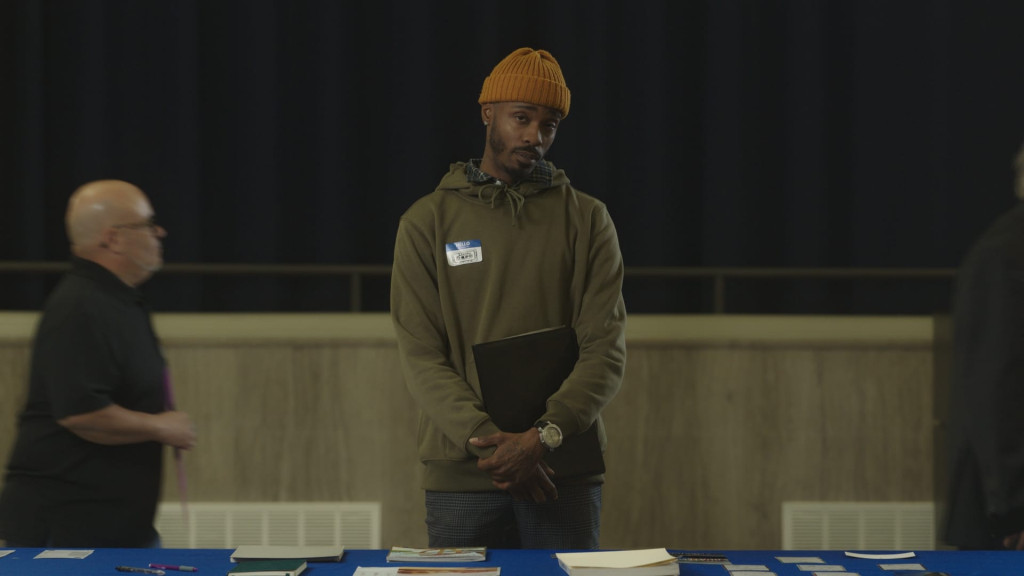
Over the course of a single day in Philadelphia, they slow down, talk, listen, and allow themselves to connect without the armor of screens or expectations. Music, art, and memory guide them through the city, and the film becomes an exploration of intimacy in a culture that resists stillness. The film also stars LaRoyce Hawkins, Taryn Delanie Smith, Kris D. Lofton, and Keith Arthur Bolden.
93 ‘Til premiered at the American Black Film Festival in May, where it drew some of the strongest reactions of the festival circuit, including comparisons to Love Jones and Brown Sugar from Taye Diggs himself. Miller took the compliment in stride.
“Don’t put that on my shoulders,” he said. “I’m okay with us just being where we at.” But the comparisons kept coming, and they weren’t hard to understand. This is a film that lives in that same emotional register, neo-soul textures, Black love rendered with full humanity, and a city that functions as much more than a backdrop.
Miller’s connection to Philadelphia is personal. Originally from Newark, New Jersey, he relocated to South Jersey when his oldest son was born and found himself just over the bridge from the city. “That’s [Philly] like my New York now,” he said. When he looked at what was being made in the city and what was missing, the answer was clear. He started writing, brought in his longtime collaborator Petey McGee, and things fell into place quickly. “This movie was made by God,” Miller said, “’cause everything fell together perfectly.”
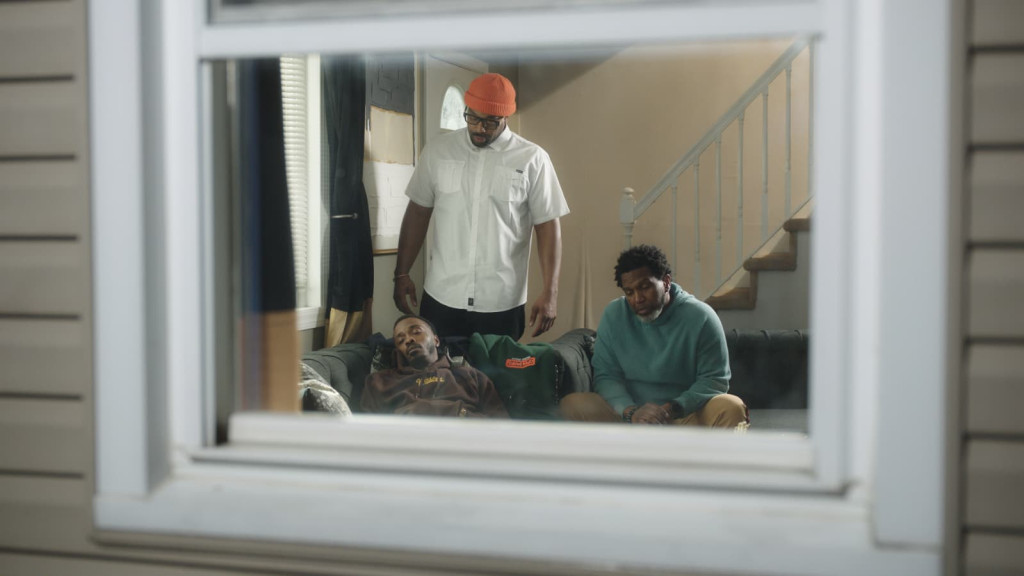
Hawkins, who plays Benji, Rahmel’s brother, in the film, had his own reason to love the location. He just happened to have a show at City Winery in Philadelphia during the shooting dates, which made joining the project that much more seamless.
“I’m very, very grateful just for that location alone,” he said, “because of the way everything lined up for everybody’s availability.”
What started as a conversation about adding his voice to the soundtrack evolved into a full acting role, one that Miller wrote specifically for him after a conversation about what role would and wouldn’t work. “That type of radical honesty is what I look for in partnerships and in relationships in general,” Hawkins said. “The fact that we could just unpack how we actually felt, I think that set us up for the most success.”
93 ‘Til is not just a film with a soundtrack. The music is inseparable from the story. Richard Noel, the executive producer and composer of the score alongside Hawkins, approached it the way a jazz musician approaches a session, listening for the feel of a scene before deciding what it needed. The film was also able to secure top artists for the soundtrack by Romar Bennett.
“The film already had a warm feel and texture to it,” Noel said. “As a jazz musician, and I love hip hop too, you want to bring music that’s going to capture that feel in the film and bring that warmth to the characters, but also know when to pull back.” He drew on a catalog of influences, Coltrane, Miles Davis, classic bebop, to give the score substance and tension without overpowering what was happening on screen.
Hawkins came to his contributions through a different door. Miller pointed him toward Love Jones and Brown Sugar as the emotional reference points. “I ran them back to back,” Hawkins said, “on the day that I knew I wanted to kind of start wrapping my mind around how the music would evoke emotion and good energy. Those movies evoke nostalgic, falling in love type textures. It’s not perfect love, but it’s worth it love, if you stay locked in.”
He and his music partner had songs they’d been sitting on that felt right for the project immediately. “I put it on for Petey in the car and as soon as he listened to it, it’s like that feeling that you get. It reminds you of those nostalgic joints that we love, that we grew up on, that made us feel feelings for people in our lives.”
The film pulls heavily from emerging neo-soul artists, which was intentional. The tracklist includes Alex Isley, Caitlin Nickel, Autumn Page, Roe James, and Indigo Blue, artists who, as Noel put it, just need their break. “I love bringing artists that need that break, that are talented and they just need that to get into the forefront,” he said. “When people heard the song, they’re like, who’s that? We would always be someone or a team that looks to help other artists.”
One of the strongest elements of 93 ‘Til is the chemistry between McGee and Parola. McGee has a philosophy about that. Before filming with anyone, he makes time to simply be a person with them first.
“Chemistry is one of those things I learned very early on is so important to a film,” he said. “People can read it. The chemistry needs to feel real because if it feels fake, us watching it, we going to see that it’s fake.” He and Parola took the time to talk, hang out, and get to know each other before cameras rolled. By the time they were on set, they had real textures to work with. “We are actors in these roles, of course, but now we got something real that we can work with.”
Hawkins echoed that. “Every time you hear action and you out there on that camera, you on the battlefield with your scene partner,” he said. “To know how to have your scene partner’s back is important. Me and Pete learned a lot about each other as men, as fathers, as artists. The more we learned, the more we really knew how to have each other’s back. The point is to help your partner look as good as they can, and they should be doing the same thing for you.”
When we asked the team what they wanted Black men to take away from 93 ‘Til, the answers were consistent. Noel said he wanted to change the narrative about who Black men are and what they’re capable of emotionally. “I felt that it was very important to show that Black men can love,” he said. “You can fall in love. We can pursue and court a woman and feel vulnerable. And I think what we were able to show in the movie is that when Black women left ABFF, they said, we really liked what you did. It showed a side.” That response, he said, told him the film had accomplished what it set out to do.
McGee went even deeper. “You are not what you’ve been through,” he said. “You are not your past. You are not where you come from. You are enough. You’re worthy in any space that you’re in. You’re worthy of love, the love of a woman, the love of a friend, the love of a father, the love of a city, the love of your art. No matter when you are, no matter where you are, no matter how you are, no matter who you are, as a Black man, you are enough and you are worthy.”
Miller closed it out. “You can be ambitious and be emotional, artistic and responsible, and you can be vulnerable,” he said. “Showing vulnerability is a strength. And also, it’s okay to love a Black woman and not be afraid to say it.”
The film is a community project in the truest sense. Hawkins came through on loyalty. The Emmy-winning cinematographer Lucas Falco Cohen came through because he’s a friend. Nearly every collaborator showed up not for a check but for the love of the work. “This is a community film,” McGee said. “Our community showed up for us. Shout out to the community, big time.”
93 ‘Til is currently making its festival run. Stay tuned to The Quintessential Gentleman for updates on its wider release.