

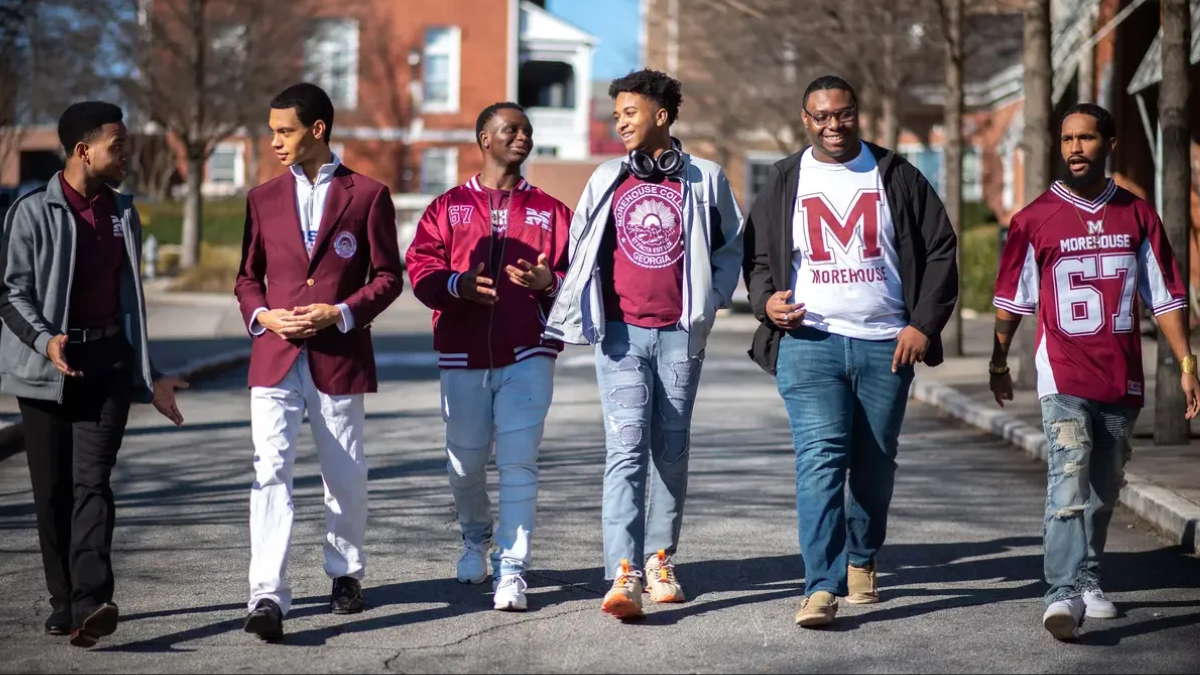
If you ask any graduate of a HBCU about their college experience, you’re almost guaranteed to hear about the sense of community, cultural pride, and lifelong friendships they built. But beyond the yard, the homecoming games, and the academic degrees, it turns out that choosing an HBCU might actually be one of the best investments you can make for your long-term health.
According to a new study published last month in the JAMA Network Open, attending an HBCU as a young adult is directly linked to better cognitive outcomes later in life for Black Americans.
The study, led by Dr. Marilyn Thomas of the University of California, San Francisco, alongside researchers from Boston University, Columbia, Harvard, Rutgers, and the University of Alabama at Birmingham, analyzed data from 1,978 Black American adults. The participants were originally recruited for the REGARDS (Reasons for Geographic and Racial Differences in Stroke) study, and the researchers looked specifically at those who had attended college.
Out of the nearly 2,000 Black college-goers analyzed, roughly 35.3% (699 individuals) had attended an HBCU.
When researchers assessed the participants decades later, at an average age of about 62, the results were interesting. Those who attended an HBCU consistently outperformed their peers who went to predominantly white institutions (PWIs). Specifically, HBCU alumni showed significantly better standardized scores across three major areas: memory, language, and overall global cognition.
While previous public health studies have usually focused on how the amount of education a person receives affects their risk for cognitive decline and Alzheimer’s disease, this exploratory study is one of the first to zoom in on the actual environment of the school.
Interestingly, these cognitive benefits were consistent for those who were college-aged after 1955, meaning the protective effects spanned the pivotal years before and after landmark civil rights policies desegregated education.
The secret sauce seems to be the culturally affirming atmosphere. When marginalized people are placed in spaces where they feel welcome, supported, and culturally validated, it helps mitigate the heavy, chronic stress that systemic racism and discrimination can place on the mind and body over time. This kind of positive collegiate environment provided a protective “cognitive reserve” that lasted well into the participants’ senior years.
With DEI programs currently facing intense scrutiny and funding cuts across the country, this research underscores exactly why safe, supportive educational spaces are so vital.
HBCUs make up only a tiny fraction of the nation’s higher education institutions but have long been celebrated for producing a massive percentage of Black doctors, lawyers, and leaders. But this new data proves something even deeper: HBCUs aren’t just nurturing Black excellence; they are actively protecting Black minds.
Photo Credit: Morehouse College Website