

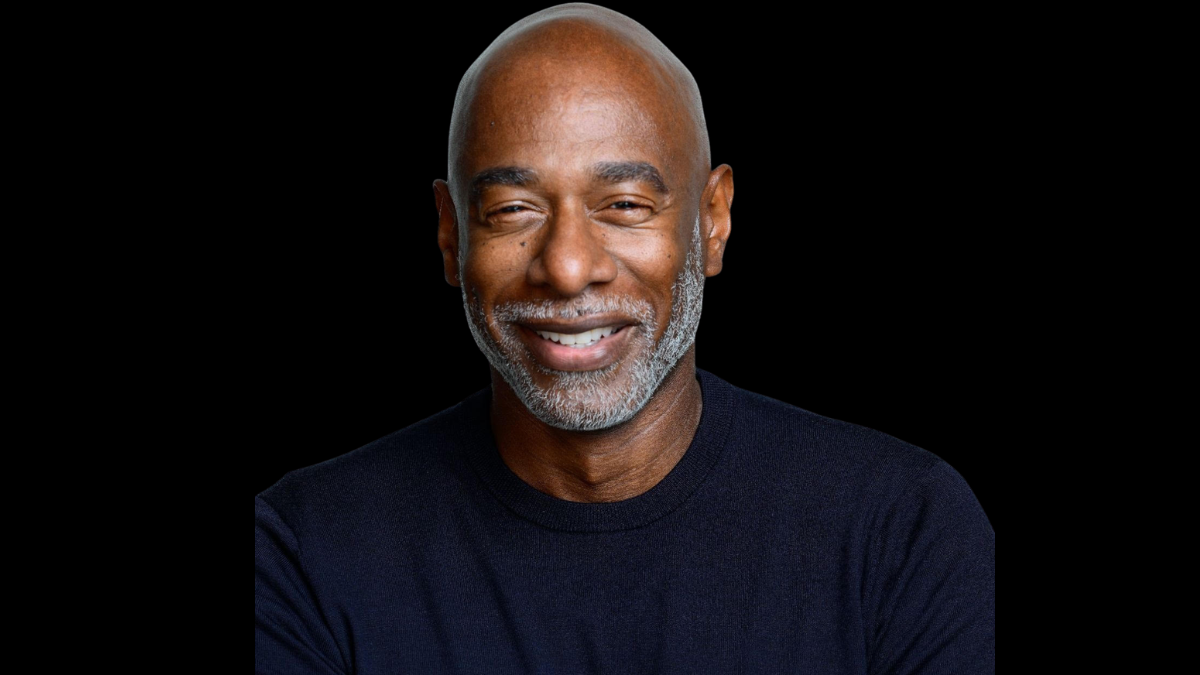
If you have ever found yourself debating whether hip-hop is a universal language or swooning over a beautifully authentic love story on screen, you likely have Michael Elliot to thank. As the screenwriter behind classics like Brown Sugar, Like Mike, and Just Wright, Elliot has been the architect of some of our culture’s most defining cinematic moments.
Recently, we sat down with the screenwriter, producer, and entrepreneur to discuss the secret to crafting a perfect romantic comedy, the current industry conversations surrounding Black cinema, and what it will actually take for Hollywood to greenlight more love stories featuring Black leads.
When asked about the secret ingredient for a Black rom-com, Elliot points to the power of relatability. “I try to think about universal themes,” he shared. “I always wanted to create love stories that… have stars that look like you and I. But the themes are universal.” His goal has always been to capture the essence of what makes classic romantic comedies great, but to “do it in a way where it’s brown faces. It’s brown faces in those roles.”
However, selling that vision wasn’t always easy. Today, Brown Sugar is widely considered a cultural staple, but getting it made required fighting through a thick wall of industry ignorance. “When I did Brown Sugar, right? It was really hard to sell a Black rom-com,” Elliot recalled. He shared a story about giving the script to a major white manager in town who simply didn’t understand it.
“He didn’t even understand. Why this movie was special he couldn’t relate to it,” Elliot explained. “And what was special about it was. It was Black people. Who had good credit. Who had who were successful in their careers.” The disconnect was so real that one major reviewer even called it “unbelievable” that the lead character, Sidney (Sanaa Lathan), could comfortably write a check to help her friend start a record company. “Because they don’t know us, right? They didn’t see us and it was just so hard to do it,” he said.
While things have improved since 2002, the struggle to get Black films produced remains heavily scrutinized. The internet recently sparked a massive dialogue following viral tweets from filmmaker Nina Lee. She revealed that the fate of her upcoming rom-com, That’s Her, is heavily dependent on the success of an entirely unrelated Black film, You, Me & Tuscany.
Lee pointed out that studios often use the box office or streaming performance of one Black film to dictate the greenlighting of others, meaning if You, Me & Tuscany underperforms, That’s Her could be shelved. The revelation prompted industry heavyweights like Will Packer to weigh in on the unfair burden placed on Black storytelling.
For Elliot, this frustrating reality is just business as usual in Hollywood. “Hollywood is a Me Too industry,” he stated bluntly. Because there are still very few Black executives with greenlight power, the genre remains precarious. “And they just don’t understand us, right? The only thing they understand is numbers,” he explained.
Elliot completely validated Lee’s concerns. “I can imagine and believe that there are studios and there are people in town who will only pull the trigger on a rom-com that’s black if that movie performs well. And if it doesn’t, it affects everyone. It affects everybody in this space,” Elliot admitted.
So, how do we dismantle this cycle? According to Elliot, the power lies directly in the hands of the audience. “We got to show up,” he urged. He shared that even undisputed classics like Love Jones didn’t pull massive numbers at the box office during their original theatrical runs.
“If we want these types of stories, we got to watch them. When they’re on Netflix or Prime, we got to stream them. If they come out in theaters, we need to go and see these movies because that’s the difference maker,” he advised.
Fortunately, the rise of streaming platforms has provided new metrics for success beyond traditional box office numbers, which Elliot believes ultimately helps Black films survive and thrive.
Perhaps the most inspiring part of Elliot’s journey is how close we came to never getting Brown Sugar at all. Before the film became a classic, Elliot was a struggling writer who had given himself a strict deadline. Over 30 years old with a young daughter and financial responsibilities, he had spent a little over a year in Los Angeles with no major breakthroughs. Plagued by guilt, he decided it was time to quit the industry, move back to the East Coast, and get a regular job.
“Someone said, ‘Write one more script,'” Elliot recalled. “Well, to me, that was God when I look back, because I went, took a shower, heard her song. That’s where the idea came from.”
The song he heard was Mary J. Blige‘s Seven Days, which served as the core inspiration for the script. In fact, the original title for Brown Sugar was actually Seven Days. Elliot wrote the script with no agent and no manager. In a perfect stroke of fate, he dropped it off at a production company on a Thursday, and exactly seven days later, it was acquired by 20th Century Fox.
His ultimate advice for young creatives on the brink of giving up? Ask yourself if you would do the work for free, and remember that resilience is the only way forward.
“What if I had not written? One more script. Right? My whole life would be different,” he reflected. “You just never know. When things will turn, but things can turn.”
Check out the full interview.