

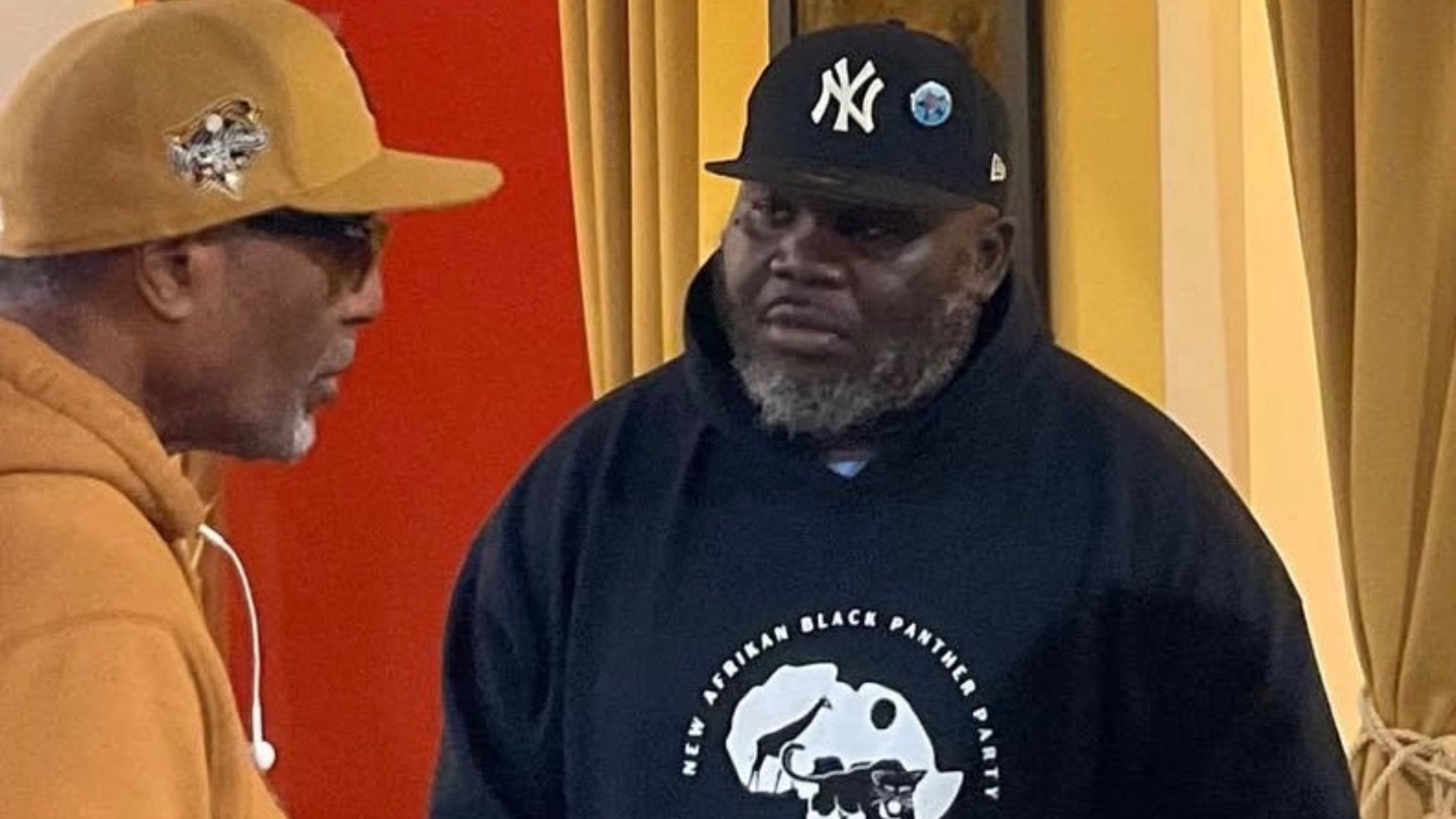
At the beginning of February, I wrote a piece detailing the seemingly controversial reemergence of the New Black Panther Party chapter in Philadelphia. Namely, I questioned the veracity of the chapter’s leader, Chairman Paul Birdsong, who had come under fire from members of the original party, including Xavier Buck, executive director of the Black Panther Party Museum, and Myesha Newton, niece of founder Huey P. Newton.
Following that piece, Chairman Afrika of the New African Black Panther Party called The Quintessential Gentleman’s office, disappointed and frustrated with the characterization of Chairman Birdsong and what he claimed was the minimization of the new group’s work over the last few years.
While speaking on the phone that day, Chairman Afrika agreed to a sit-down with me in order to get the story straight. I have to admit, it was a wonderfully edifying conversation in which both parties came out feeling heard and understood.
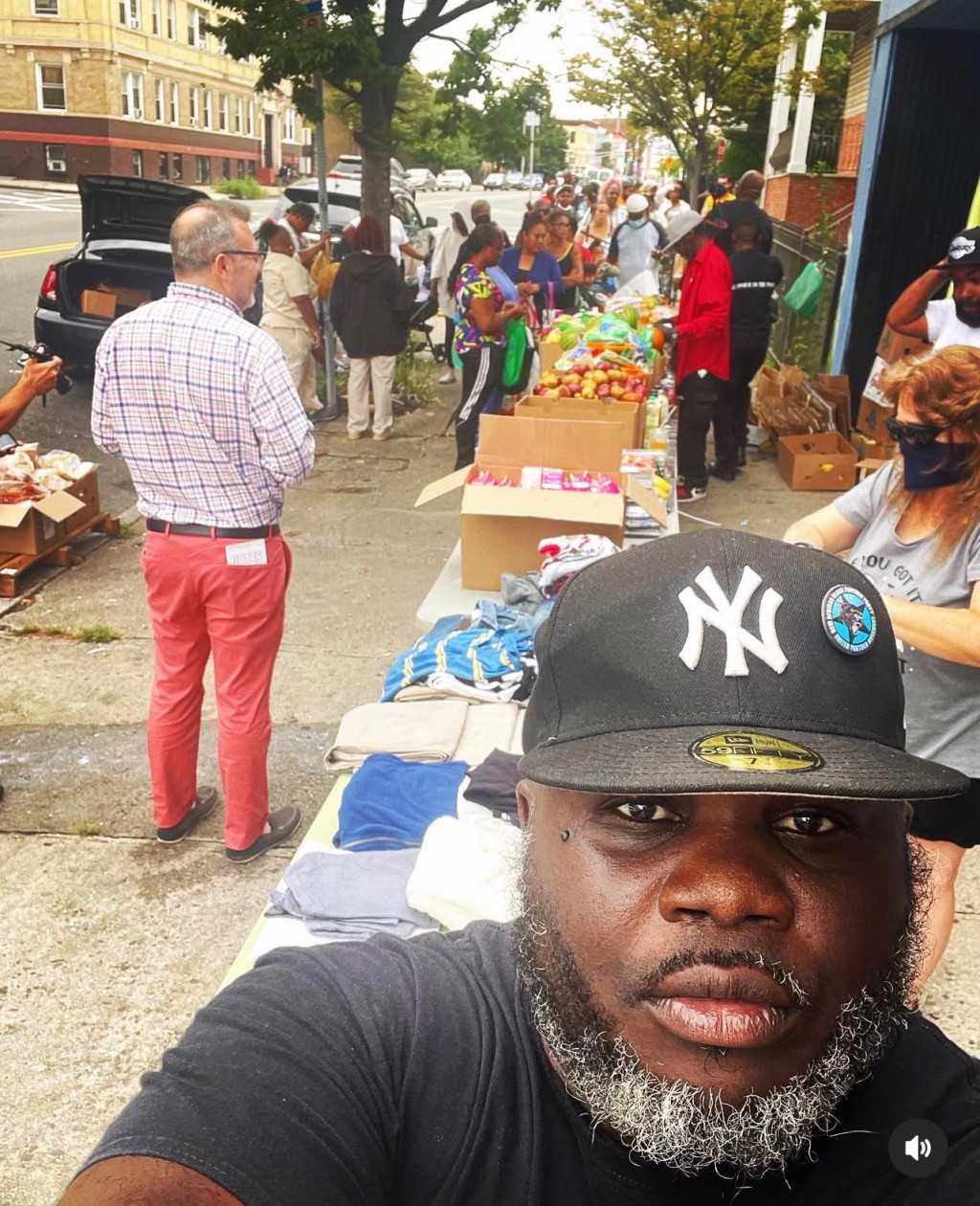
So, let’s get this out on front street: The Party operates food distribution, housing assistance, youth sports, and education programs. In some cases, organizers deliver food directly to residents who feel ashamed to stand in line. “We tell people, ‘Yo, hit the inbox,’” Afrika says. “‘We’ll come bring this food to you.’”
Chairman Afrika goes to great lengths to describe the necessity of providing life-making institutions to the people who need them most. But he also makes it very clear that “this is not a charity.” Instead, he tells us, “These are means of organizing to reach the people, to get to the people, to speak to them, to get them to understand: ‘Look, we are going through this together.’”
Although Chairman Birdsong didn’t mention these programs in last month’s viral clip, Afrika notes that the moment was, indeed, stripped of context. “Everybody around the country, they saw that one clip,” Afrika says. “They don’t know Paul. They don’t know how Paul pays his bills… They don’t see the clothes that Paul wears every day, even though he doing all this work.”
Afrika frames the armed patrols as consistent with Panther history. “The original Black Panthers believed in arming themselves,” he says. “They [Black Panthers] even went and challenged Ronald Reagan because they were trying to come up with the Mulford Act.”
But he acknowledges the imbalance created by viral media. “That messaging didn’t have the balance of, ‘Hey, we’re doing all of this stuff in the community,’” he says. “But obviously… somebody put a phone in his face.”
When I challenge him on the pragmatism of confronting ICE with arms, Afrika rightfully claims that not opposing them with weapons contradicts the idea of a long-term posture of self-defense. Afrika repeatedly returns to political education as the foundation of Panther organizing. “That’s why we do political education,” he says. “To be a Panther, you have to be a Maoist, you have to be a Leninist, and you have to be a Marxist.”
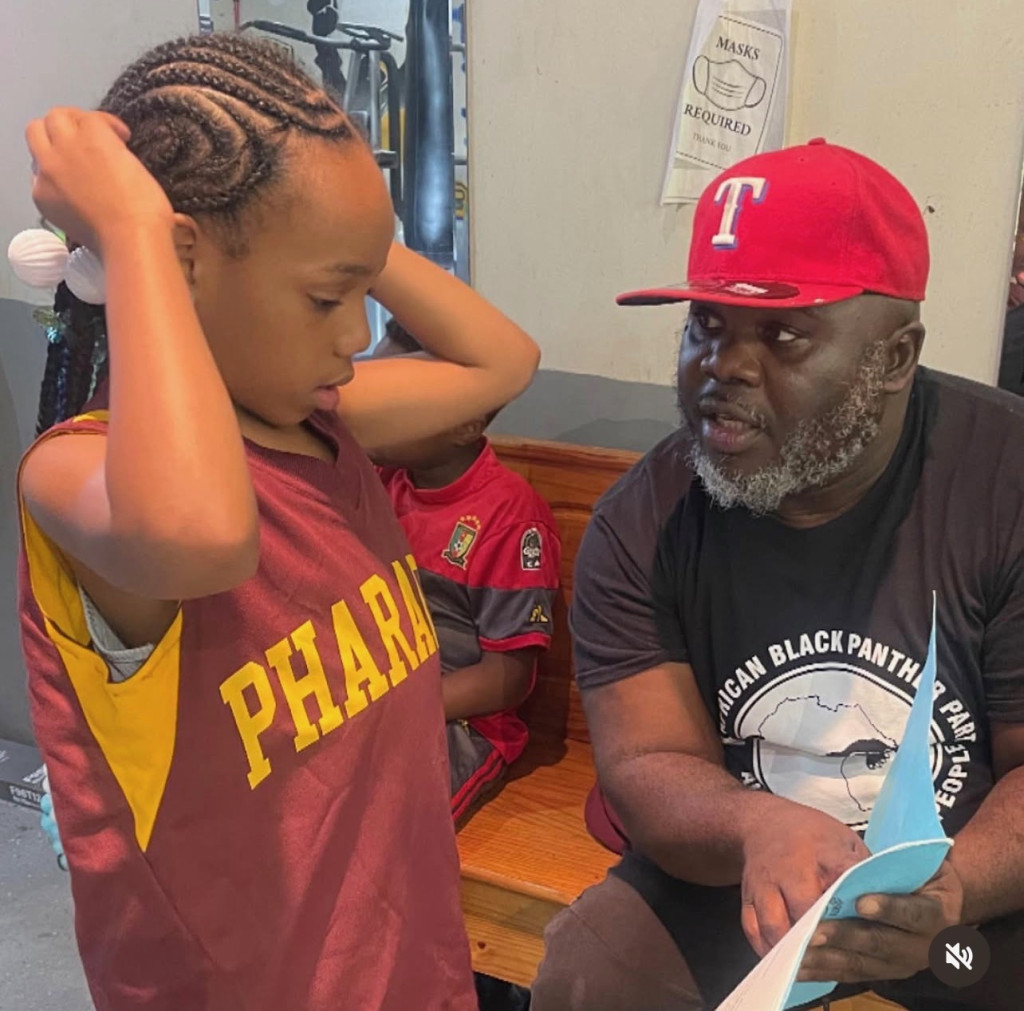
Pantherism, he insists, is not aesthetic or symbolic. “Pantherism is not just a slogan,” he says. “It’s not even a religion that you could just go join. You have to follow the philosophies.”
Those philosophies shape whom the Party prioritizes organizing. “We organize in our communities the people that they call drug dealers, the people that they call drug users, the people that are making less than $50,000,” Afrika says. “The people that they keep coming to use, to go to prison, to maintain the school-to-prison pipeline [sic].”
While I may have misgivings about the PR messaging at the time, I can’t argue with the ethic, and it’s not like there wasn’t an uptick in intrigue for the group. Once Birdsong went viral, “Everybody around the country, they saw that one clip. And after that clip went viral, our phone started ringing,” he says with a chuckle. “People wanted to know who we were, what we stood for, how they could get involved.”
Afrika reserves his sharpest criticism for what he calls ideological drift inside Panther circles. “Some people may be liberals,” he says. “They want to work with the government. They’re afraid of the government.” He notes that this should have been a moment when every Black Panther stood by Chairman Birdsong, but because some members aren’t as versed in the principles, only a few spoke up for him.
He rejects critiques from individuals associated with the official Black Panther Party legacy. “They don’t know what they’re talking about,” he says. “[Myesha Newton] has no idea who Mao is. She doesn’t know who Lenin is. She doesn’t understand Marxism.”
Lineage alone, he argues, does not confer authority. “This is not a monarchy,” Afrika says. “The Black Panther Party wasn’t a monarchy. They are revolutionaries.” He also criticizes former Panthers who disavow the identity. “If it’s a way of thinking… how can you say, ‘I used to be a Panther’?” he asks.
Afrika situates his commitment within personal experience, including incarceration. “I read the Bible… cover to cover,” he says. “I was in solitary. Torture.” That isolation pushed him toward study rather than acquiescing to withdrawal. “I read Mao. I read Marxism,” he says. “The only thing that has made sense is Pantherism.”
Despite warnings to abandon the Panther name, he refuses. “I’m not leaving it,” he says. “Because I believe in the philosophies that Huey P. Newton and Fred Hampton laid down.” His concern, he says, is continuity. “Institutional memory is here for the next people to carry it on,” Afrika says. “Why should we forget it and start something new?”
As he sees it, survival remains the immediate task. “We must build these institutions in our communities if we want to survive,” he says. “I can’t come out of the house, see somebody sleeping in the street… and do nothing about it.”
For Chairman Afrika, Pantherism is neither nostalgia nor provocation. It’s not an aesthetic or just a recognizable name. It’s an obligation to the most oppressed peoples in our communities. And how could you disagree with that?
Check out the full conversation below.
Photo Credit: Courtesy of Chairman Afrika