

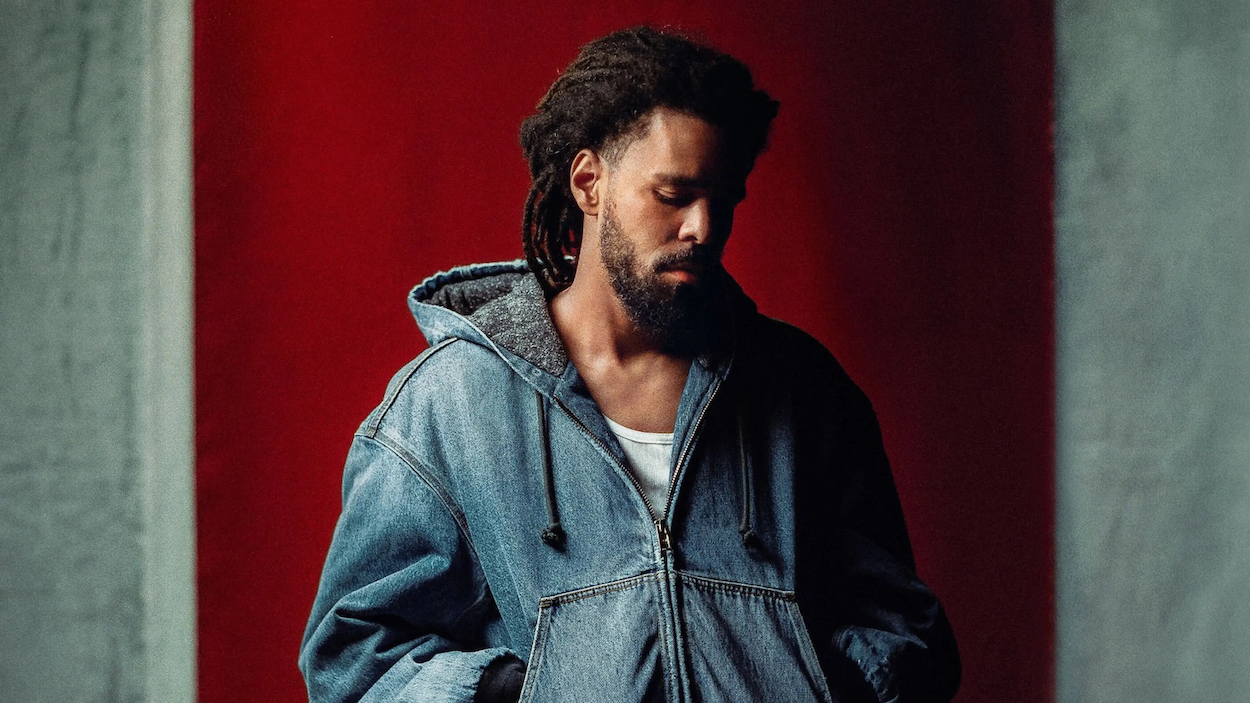
After years of teasing and false starts, J. Cole finally released his final album, The Fall Off. Some albums entertain, some capture moments, and some feel like life documents. The Fall Off sits in that final space, reflective, grounded, and deeply personal.
Structured across the emotional duality of Disc 29 and Disc 39, J. Cole crafts a story rooted not only in his evolution as an artist but in his lifelong bond with Fayetteville, the city that shaped him. At its heart, this album is a love letter to his hometown, Fayetteville.
From Two-Six to Bombs in the Ville, Cole is intentional about one thing: making sure his city is carried with him, no matter how far success has taken him.
The album opens gently, almost like memories and reflections unfolding. Safety plays like a letter from home, reflective and grounding, immediately setting the tone that this is more than music, this is self-examination. That emotional thread continues into Run A Train, where Cole reflects on returning home with success in hand, yet still wrestling with identity and distance from the life he once knew.
The features feel purposeful rather than decorative. Tems brings warmth and soul, Future adds weight and contrast, Burna Boy expands the album’s global heartbeat, Erykah Badu delivers spiritual texture, and Petey Pablo ties everything back to Carolina roots.
The samples are woven seamlessly throughout the project, creating a cohesive soundtrack that feels meant to be experienced from start to finish.
The album carries the energy of a victory run, and if this truly is Cole’s final album, it feels less like an ending and more like acceptance.
Disc 29 captures Cole at a pivotal moment, returning to Fayetteville at 29 after accomplishing what once felt impossible. Yet success brings conflict. He stands at a crossroads between three defining forces in his life: his woman, his craft, and his city.
Here, listeners hear the early stages of the relationship that would become his life partnership, grounded and real rather than romanticized. At the same time, hunger still drives him creatively, and the pressure to build something lasting is evident in his writing.
His connection to Fayetteville remains central, but there is a quiet tension as he tries to relate to old friends while realizing how much his life has changed. Disc 29 feels like motion, a young Black man navigating early fame, success, identity, and transformation in real time. It is not the story of arrival, but of becoming.
Disc 39 shifts from motion to reflection. The hunger is still present, but it is quieter and more internal. Cole opens up about his relationship, now mature and rooted, serving as a foundation rather than inspiration. In Life Sentence, Cole speaks about his very private relationship and opens up in a way we have never heard him share before.
He speaks candidly about the pressure of staying great when you are already at the top, the challenge of outdoing yourself, and the loneliness that can come with sustained excellence. Inspiration, he reveals, now comes less from ambition and more from connection, particularly from fans whose lives have been shaped by his music.
One of the most striking moments arrives on What If, where Cole imagines a dialogue between The Notorious B.I.G. and 2Pac at the height of their rivalry, reflecting on whether reconciliation could have saved them both. The track feels philosophical and deeply human, reinforcing the album’s themes of growth, legacy, and understanding. Disc 39 presents a man older, wiser, and closer to peace.
Cole explores niche topics in Black culture, like The Let Out, which is a story about what happens when the club closes and chaos breaks out. The album is full of memories and experiences only Black people would understand. In Quik Stop Cole reflects on being fearful of stopping at a gas station as a famous figure, but the experience would give him the inspiration and reflection he needed to keep going. Leaving his full emotion on the track, you feel inspired to keep pursuing your own craft as he shares how the outpouring of love from the community is what keeps him inspired.
Part of what gives The Fall Off its emotional weight is the time it took to arrive. The album had been anticipated for nearly a decade, first hinted at through 1985 on KOD, which originally positioned itself as an introduction to this very project. Over the years, Cole revisited and reshaped the idea, allowing it to evolve alongside him.
The album became more than a release; it became a personal mission, one he described as creating his best work and completing what he began. Serving as the follow-up to The Off-Season, The Fall Off completes the long-running arc that began with The Come Up, bringing his journey full circle. After years of teasers, delays, reflection, and growth, the album finally arrived, not rushed, but ready.
Despite its title, The Fall Off does not feel like a decline. It feels like completion. A love letter to Fayetteville, a reflection on identity and purpose, and a victory lap earned through years of growth and self-examination. If this is truly J. Cole’s final album, we can call this the final lap on what is an incredible run in hip-hop.
Stream the full album on the Gentlemen’s Soundtrack on Spotify.