

The National Governors Association (NGA) Winter Meeting is typically one of the few remaining traditions in Washington where bipartisanship is not just expected, but required. Governors from deep red states and bright blue strongholds gather to discuss policy, infrastructure, and the economy.
However, the event usually culminates in a formal business meeting and a black-tie dinner at the White House—traditions that are now unraveling.
The NGA has officially announced it will no longer hold a formal meeting with President Trump during their convenance in Washington later this month. The decision came after it was revealed that the White House intended to limit invitations for the association’s annual business meeting to Republican governors only.
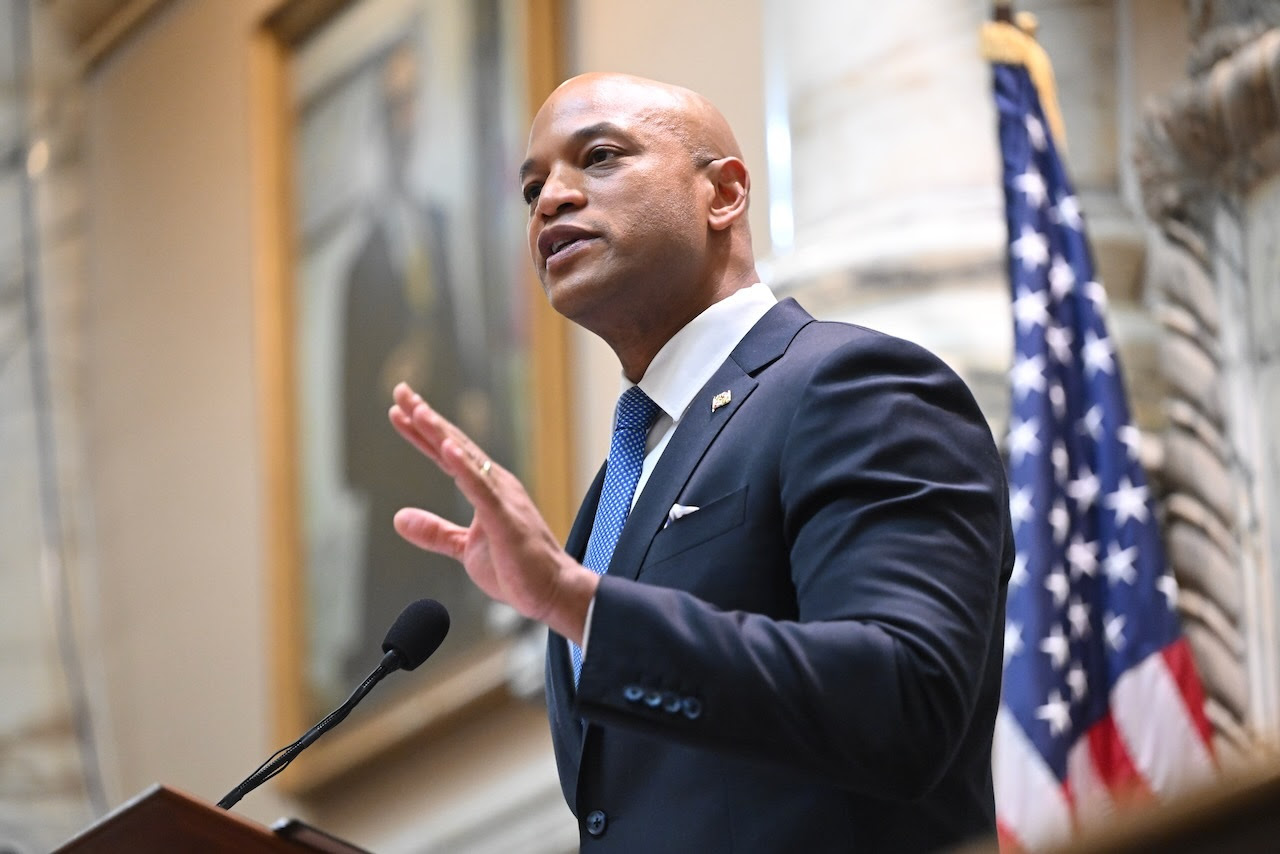
The break in protocol became glaringly public when Maryland Governor Wes Moore, the nation’s sole Black governor, highlighted the snub. Moore was reportedly uninvited from the bipartisan events, a move described in reports as “blatant disrespect”.
Moore took to social media to point out the exclusion, noting with a touch of irony that he wouldn’t be heading to 1600 Pennsylvania Avenue. “My peers, both Democrats and Republicans, selected me to serve as the Vice Chair of the NGA,” Moore wrote, adding that the decision makes it “hard not to see this as another example of blatant disrespect and a snub to the spirit of bipartisan federal-state partnership.”
For the NGA, the exclusion of Democratic governors posed an existential problem. Oklahoma Gov. Kevin Stitt, the Republican chair of the NGA, informed fellow governors that because the NGA’s mission is to represent all 55 governors, the association would no longer serve as the facilitator for the White House event.
“It is no longer included in our official program,” Stitt wrote in a letter obtained by The Associated Press.
Simultaneously, 18 Democratic governors announced they would boycott the traditional dinner at the White House. In a joint statement, the Democrats noted that if not all governors were invited to events that are historically productive and bipartisan, they would not attend.
Despite the backlash, the Trump administration has defended the decision. White House Press Secretary Karoline Leavitt stated that Trump has the “discretion to invite anyone he wants” to the President’s home.
“It’s the people’s house,” Leavitt said. “It’s also the president’s home, so he can invite whomever he wants to dinners and events here at the White House”.
In his letter to the association, Gov. Stitt encouraged the group to unite around common goals despite the friction.
“We cannot allow one divisive action to achieve its goal of dividing us,” Stitt wrote. “The solution is not to respond in kind, but to rise above and to remain focused on our shared duty to the people we serve”.
Instead of a divided gathering at the White House, the governors will continue their meeting on their own terms from Feb. 19-21, attempting to maintain one of the few remaining venues where leaders from both parties can discuss the issues facing their communities.