

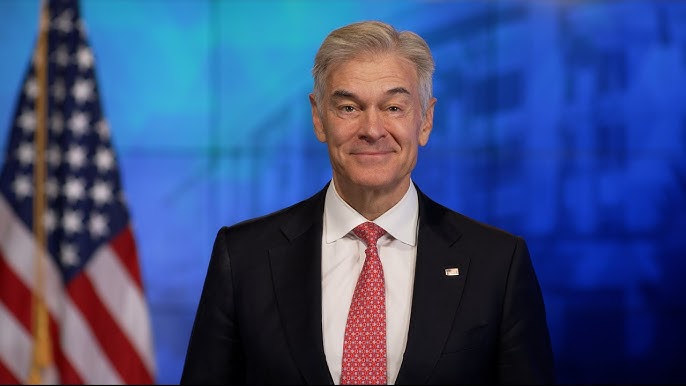
Dr. Mehmet Oz has a new idea for strengthening the U.S. economy, and it centers less on Wall Street and more on the American work clock. During the launch of the “Action for Progress” mental health initiative alongside Health Secretary Robert F. Kennedy Jr., Oz argued that improving the nation’s physical and mental health could unlock trillions of dollars in economic growth.
His premise: healthier people are more likely to enter the workforce earlier, stay productive longer, and delay retirement. Speaking at a White House press event last month and again this week, Dr. Oz framed health as an economic engine, not just a personal or medical issue.
“If we could get the average American — because they feel healthy, they’re vital, they’re strong, they have agency over their future — to start working a year earlier, right out of high school, or work a year later and not retire, or simply work better during their lifetime because they’re healthy, it would generate about $3 trillion,” Oz said.
Dr Oz: "Seniors should retire later and kids put off schooling and work right out of high school. They should do this in order to make up for federal debt." Oprah owes us an apology for this fraud. pic.twitter.com/v2QiAKjccE
— Lesley Abravanel 🪩 (@lesleyabravanel) February 4, 2026
According to Oz, that additional $3 trillion in economic activity could have sweeping downstream effects. He suggested it would be enough to significantly reduce the national debt, stabilize Medicare Part A, and strengthen Social Security’s long-term outlook through increased tax revenue.
The argument hinges on the idea that better mental and physical health leads directly to greater economic participation. Oz emphasized that people are more willing to work longer when they feel empowered, capable, and supported, not burned out or unwell.
But he also acknowledged that extending working lives isn’t something that happens automatically. “To do that,” Oz said, “you actually have to invest in making sure people want to work the extra year.”
That’s where the mental health initiative comes in. The Action for Progress program is positioned as a preventative investment, aimed at improving well-being so that Americans can remain productive and engaged over a longer span of their lives.
Critics argue that asking people to work longer glosses over structural issues like wage stagnation, rising healthcare costs, student debt, and job insecurity, all factors that already shape when and how Americans enter or exit the workforce. Others question whether starting work earlier, particularly “right out of high school,” adequately considers access to education, training, and fair labor conditions.
Supporters, however, see Oz’s comments as part of a broader reframing: treating health not just as a cost to be managed, but as an investment with measurable economic returns.