

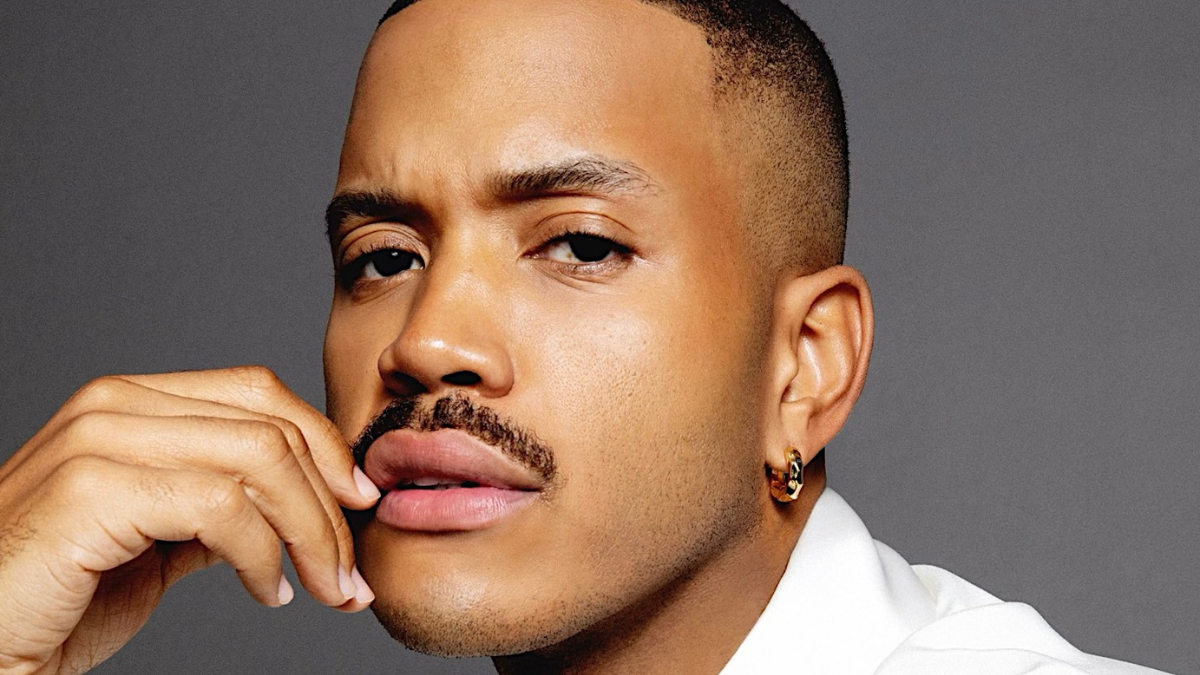
Cameron J. Ross is an award-winning multi-hyphenate and the writer and co-star of Lifetime’s newest drama, Be Happy, which is executive produced by Mary J. Blige and directed by Academy Award nominee Gabourey Sidibe.
From Broadway beginnings to film and television, Ross has built a reputation both on screen and behind the scenes. His credits include writing for Amazon’s The Summer I Turned Pretty, acting and writing on Netflix’s Peabody-nominated Gentefied, and receiving a Special Tony Award as a co-founder of the Broadway Advocacy Coalition. With an overall development deal and new series work currently in motion, Ross is part of a new generation of storytellers shaping what’s next across platforms.
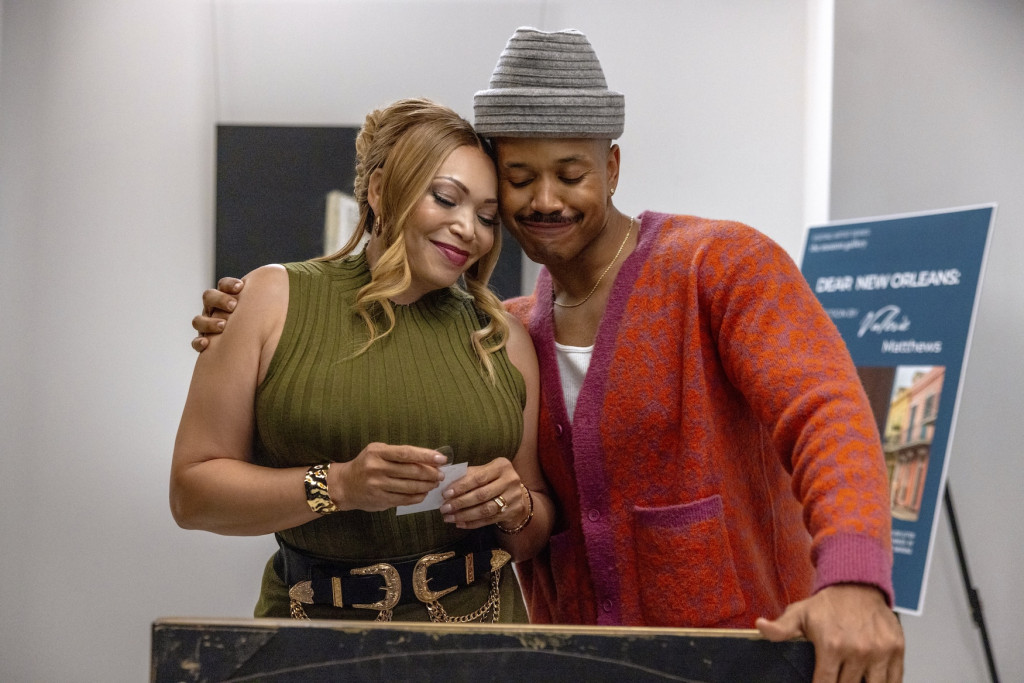
Ross’ latest project, Be Happy, follows Val (Tisha Campbell), a devoted wife and stay-at-home mom whose life shifts when her youngest child leaves for college and the spark in her marriage begins to dim. Grappling with loneliness and the emotional distance from her husband Ross (Russell Hornsby), Val embarks on a spontaneous trip to New Orleans to support her pregnant daughter Kayla (Zing Ashford).
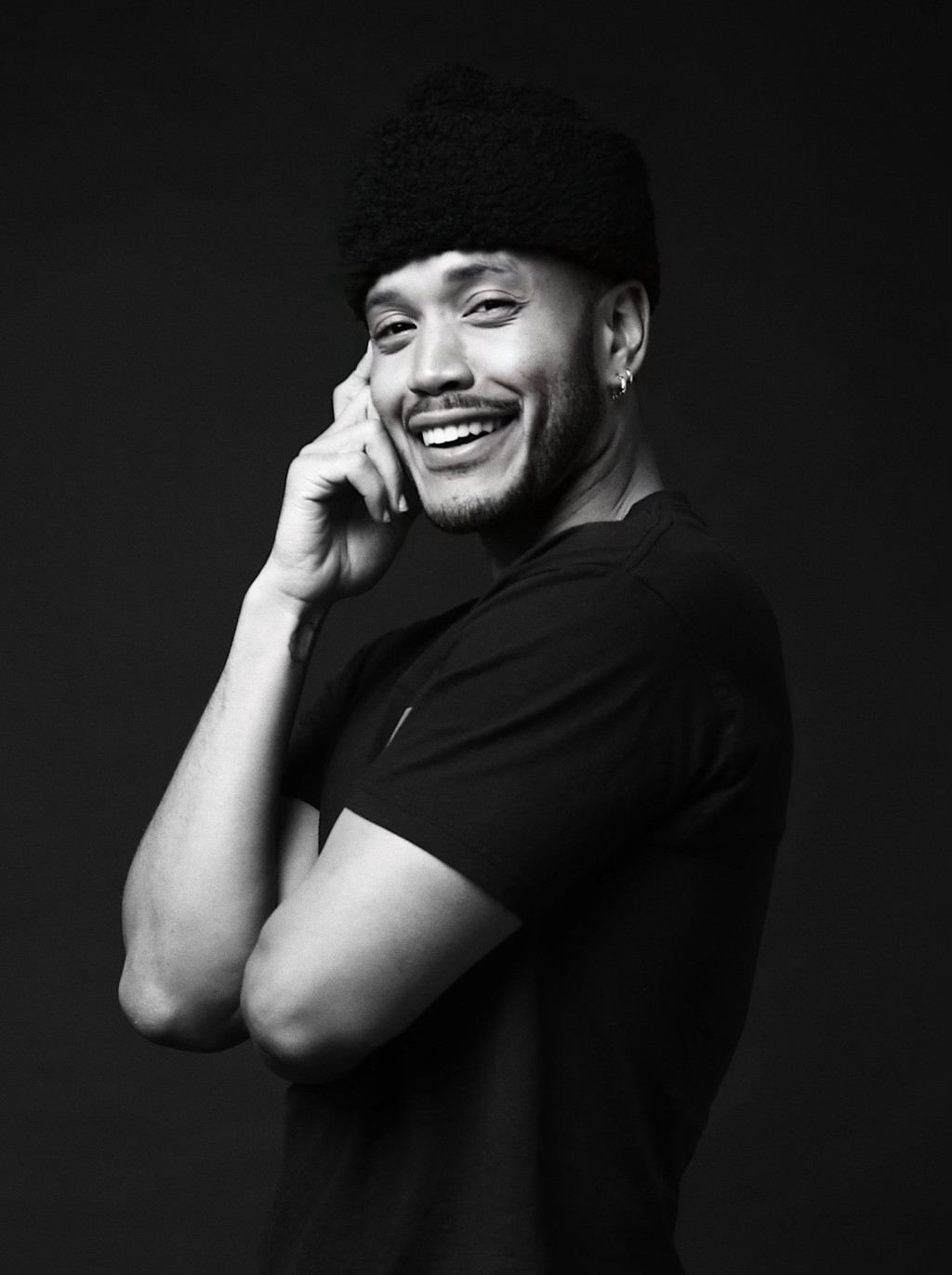
There, she reconnects with her artistic self and her sense of worth, especially through her work at an art space owned by Jacoby, played by Ross, where she meets the charismatic photographer Peter Mosley (Mekhi Phifer). Val’s journey becomes not just about love, but about rediscovering the parts of herself that she’s forgotten.
In our conversation with The Quintessential Gentleman, Ross opens up about the pivot from Broadway to writing, the real-life inspiration behind Be Happy, and why stories centered on reinvention, intimacy, and emotional evolution matter, especially for Black audiences watching themselves reflected with honesty and care.
[Interview has been edited for length and clarity]
QG: How did your Broadway journey begin?
CJR: Well, it started from a young age. Like you said, I’m from Houston, Texas. I went to the High School for the Performing Arts in Houston, also one of our incredible alumni is Beyoncé Giselle Knowles-Carter. I feel like we always have to let everybody know that.
I was a musical theater major in high school, which took me to New York City. I went to the New School, where I majored in musical theater there as well, a minor in English. My senior year of college, I actually spent it on the road with Oprah Winfrey’s Presents The Color Purple. So I played Harpo in The Color Purple, my senior year of college. That kind of started my professional musical theater journey.
And it ended up being kind of a full circle moment… when I got an opportunity to meet Oprah not too long ago… this idea of being introduced to her as a writer, but her remembering me as an actor in my early, early career in musical theater.
QG: What made you transition from acting to writing?
CJR: I was in a production of Dreamgirls that was actually supposed to go to Broadway. While I was on the tour, I was auditioning… I had to send in a self-tape for Law & Order. In New York City, what makes you a television actor or a real actor in New York is getting a guest star on Law & Order.
I remember at that point in my career, I was like, ‘I gotta be on Law & Order. I don’t care who it is.’ I don’t remember the role… it was like Thug 3. I started to complain. I was like, this is crazy that I’m putting all of my dreams and hopes into this one role. And a friend of mine was like… ‘Why don’t you be the change you want to see? Why don’t you start writing?’
QG: You’ve really built yourself into a multi-hyphenate.
My professors used to always try to get me to be a writer… but I just wasn’t interested at the time. I was so focused on a career as an actor. I ended up leaving Dreamgirls. I called my mom. I was like, ‘Yo, I’m going to live off my savings, which was $2,000…’ but I was young. And I was really adamant on figuring out a way to reintroduce myself to the industry as just a writer. So I completely left the world of acting.
CJR: I worked at Viacom as a content producer… I worked at Logo as a writer, producer, assistant… I worked my way up on the corporate production side. It wasn’t until I released a short film when I moved to Los Angeles that really moved me into… how do I become this film and television writer?
The acting kind of peeked back in, thanks to Lena Waithe and director/showrunner Dime Davis… they were the first people to give me an opportunity back in front of the camera with her show Boomerang on BET. When I was coming up… the Tina Feys, the Donald Glovers, the Lena Waithes, the Issa Raes weren’t exactly… the idea of being a multi-hyphen wasn’t the thing. But now it’s become almost essential.
QG: How did Be Happy come together with Lifetime and Mary J. Blige?
CJR: Lifetime asked me was I interested in developing a film for them. I was like, I don’t know if I can write to the Lifetime demographic… I don’t know if I’m the right person for it. My mom ended up calling me, maybe like three minutes later. She started talking about what her and her friends were kind of dealing with… and it was like manna from heaven, where I was like, ‘Oh my God, I actually do think there’s a story here.’
I called Lifetime back. I was like, ‘Give me a week. I’m going to pitch an idea.’ I pitched this coming-of-age story for a woman in her 50s. They called me maybe a couple of days later and said that they’re going to buy the film. Later, they told me Mary J. Blige and her team really, really connected with it. When Mary came on, it became this bigger thing… I knew I had access to her lexicon of music.
QG: You even created a focus group to get the story right.
CJR: I want to have conversations with women… what does it mean to feel sexy at this age? That conversation went on for five hours. It was such an incredible, emotional conversation. I wanted to add voices to these women in this film that felt real… where the Black female audience would watch it and feel seen.
QG: What do you want Black men to take away from this film?
CJR: I want Black men to give the movie a chance.” Based on the trailer, some of the male viewers see a woman who is unhappy with her husband, and she decides to cheat… and honestly, after watching the movie, it’s not essentially what this is about. It is about finding ways for partners to meet each other in every chapter of their lives.
There’s just so much that we’re up against as Black men in America… and making sure we have someone at home who creates this soft space for us… is important.
Mary J. Blige Presents: Be Happy premieres Saturday, February 7 at 8/7c on Lifetime. Check out our full interview below.