

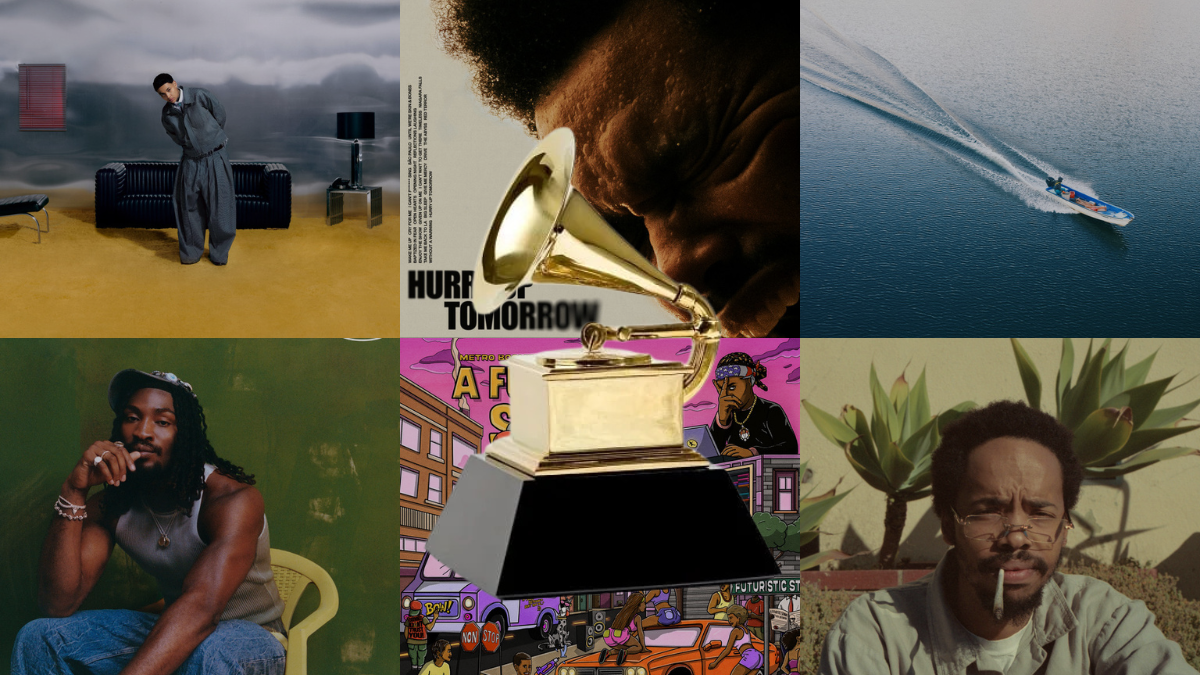
As the Grammys approach this Sunday, the conversation around who gets recognized and who gets overlooked feels as familiar as the ceremony itself. The Recording Academy has a long, complicated history with Black music. One marked by groundbreaking wins, but just as often by head-scratching omissions that leave culture-shifting projects outside the nominee list.
While recent years suggest a greater effort toward inclusion, the gap between cultural impact and institutional recognition still lingers.
So rather than wait for validation, we’re turning our attention to the albums that moved the needle, soundtracked our lives, and pushed their genres forward. Consider this a recognition of the artists who did more than enough to earn a seat at this year’s table, whether their names were called or not.
With All Due Respect — KWN
KWN experienced a defining breakout in 2025 with the release of her debut EP, With All Due Respect, a project that amassed millions of streams and powered a sold-out tour while firmly introducing her as one of R&B’s most compelling new voices.
Records like Do What I Say, the Kehlani-assisted Worst Behavior, and the standout Back of the Club highlighted her ability to balance confidence with vulnerability, while her sampling of Floetry’s Say Yes bridged generations of the genre with a fresh, sensual perspective.
Quickly becoming a soundtrack for parties, late nights, and everyday listening around the world, the EP signaled that KWN’s arrival is not on the horizon; it’s already happening, making the lack of recognition feel less like an oversight and more like a missed opportunity to honor R&B’s next wave.
The Summer That Saved Me — Odeal
Throughout 2025, Odeal steadily carved out his space in modern R&B with The Summer That Saved Me, a warm and emotionally layered album that leaned into both introspection and groove without chasing fleeting trends. Collaborations with Leon Thomas added dimension, while tracks like Miami, London Summers, and the slow-burning favorite In the Chair showcased an artist confident in crafting mood, storytelling, and musical depth.
Rather than relying on spectacle, Odeal focused on feeling and intention, qualities that often separate enduring artists from temporary ones, and although his career is still unfolding, the project demonstrated undeniable promise, making a nomination feel like a natural acknowledgment of not only where he is, but where he is clearly headed.
Hurry Up Tomorrow — The Weeknd
Few artists understand scale quite like The Weeknd, and Hurry Up Tomorrow proved that massive commercial success and artistic cohesion can exist in the same orbit, seamlessly mixing R&B, pop, and hip-hop into a listening experience that felt both immersive and widely accessible.
The undeniable single Timeless seemed to follow listeners everywhere, evolving beyond a hit into something closer to a sonic timestamp for 2025, and after publicly reconciling with the Grammy Awards and returning to the ceremony, his omission raises familiar questions about how artistry, impact, and recognition are measured. When an album so clearly helps define the sound of a year, being left out becomes more than surprising; it becomes impossible to ignore.
Larry June, 2 Chainz, The Alchemist — Life Is Beautiful
Life Is Beautiful brought together Larry June’s laid-back charisma, 2 Chainz’s larger-than-life wit, and The Alchemist’s refined production for a collaborative hip-hop project built entirely on his beats. Notable tracks include Munyon Canyon, Colossal, I Been, Bad Choices, and the flute-laced title track, Life Is Beautiful.
Sonically, the album leans into serene loops, psychedelic minimalism, and drumless atmospheres that create a breezy, luxurious listening experience. 2 Chainz often supplies the album’s momentum with humorous, energetic verses, while June keeps things grounded with relatable flexes.
For someone who has never heard it, imagine cruising down the West Coast at sunset with champagne confidence and zero urgency. Though it doesn’t try to reinvent rap, the project proves that chemistry and craftsmanship can still sound elite.
Saba, No I.D. — From the Private Collection of Saba and No I.D.
This collaboration pairs Chicago lyricist Saba with legendary producer No I.D. for a thoughtful, layered rap album that balances storytelling with musical sophistication. Standout songs include Every Painting Has a Price, Crash, Woes of the World, Reciprocity, and BIG PICTURE.
Across its runtime, the production emphasizes soulful textures and detailed arrangements that allow Saba’s introspective writing to breathe. Guest appearances from artists like Raphael Saadiq, Kelly Rowland, and BJ The Chicago Kid expand the emotional palette without distracting from the core narrative. If you have never heard the album, think of it as flipping through a carefully curated art gallery where every track feels intentional and personal. It is the kind of rap album that rewards listeners who value substance just as much as sound.
Metro Boomin — A Futuristic Summa
With Metro Boomin Presents: A Futuristic Summa, Metro steps away from the blockbuster formula and delivers a regional celebration rooted deeply in Atlanta’s hip-hop lineage. Hosted by DJ Spinz, the project feels intentionally curated, spotlighting both rising voices and hometown veterans like Waka Flocka Flame, Travis Porter, and Gucci Mane while capturing the energy that continues to shape the city’s sound.
Standout records include the viral Take Me Thru There featuring YK Niece, alongside other tracks that lean into trunk-rattling bass, chant-ready hooks, and classic Southern momentum. Musically, the album succeeds by prioritizing community over spectacle, proving Metro understands that cultural impact often begins at the local level before echoing worldwide.
For someone who has never heard it, imagine a sonic time capsule and a forward-looking blueprint for Atlanta playing at full volume from the same set of speakers. Considering how viral and authentic this album was, the Grammys definitely missed an opportunity to reward authenticity.
Chance the Rapper — Starline
Starline finds Chance leaning back into the expressive, genre-blurring approach that originally made him a standout voice in hip-hop.
The album mixes gospel influences, live instrumentation, and rhythmic experimentation, reminding listeners that Chance operates best when he sounds spiritually and creatively unrestrained. Lyrically, he balances gratitude, maturity, and social reflection with flashes of the playful delivery fans expect. Musically, the project succeeds by refusing to sit inside one lane, weaving rap, soul, and uplifting tonal shifts together.
If you have never heard it, imagine optimism turned into rhythm. It is the type of artistic statement that signals evolution rather than nostalgia.
Freddie Gibbs, The Alchemist — Alfredo 2
Serving as the sequel to their Grammy-nominated Alfredo, this 2025 release reunites Freddie Gibbs and The Alchemist for another sharply executed rap collaboration. Featuring appearances from Anderson .Paak, Larry June, and JID, the album continues their tradition of pairing razor-edged lyricism with luxurious, sample-driven production.
Gibbs sounds focused and technically elite, gliding across beats that feel both classic and cinematic. The chemistry between rapper and producer remains the project’s greatest strength, proving their partnership is far from a one-time lightning strike. For newcomers, it sounds like mob-movie narration delivered with modern precision.
Considering the first installment earned Grammy attention, the absence of this sequel feels particularly noticeable.
Earl Sweatshirt — Live Laugh Love
On Live Laugh Love, Earl Sweatshirt leans deeper into abstraction while delivering a project critics describe as emotionally resonant and stylistically playful. Songs like Infatuation, Forge, Gamma, and Tourmaline highlight warm, funk-tinged beats layered beneath fragmented storytelling.
Much of the album unfolds like an intimate stream-of-consciousness, touching on fatherhood, memory, and personal growth within unconventional song structures. The production blends hazy psychedelia with lo-fi textures, reinforcing Earl’s commitment to forging his own artistic path. For someone new to the record, it feels like stepping inside someone else’s dream and letting it guide you.
Experimental rap rarely gets its Grammy moment, but this is exactly the kind of boundary-pushing work that should.
Playboi Carti — Music
After years of anticipation, Playboi Carti delivered Music, a sprawling 30-track statement that merges the raw experimentation of his early work with the theatrical chaos of rage rap. Tracks such as Like Weezy, Opm Babi, and Walk showcase bursts of distorted energy, warped vocals, and genre-blending production.
The album thrives on sensory overload, pulling from EDM, trap, and avant-rap influences to create a maximalist soundscape. Though intentionally inconsistent at times, the project doubles down on Carti’s philosophy of mood over structure. For first-time listeners, it resembles a neon-lit sonic roller coaster that never slows down.
Love it or debate it, the ambition alone makes it Grammy-worthy.
Check out The Gentlemen’s Soundtrack below.