

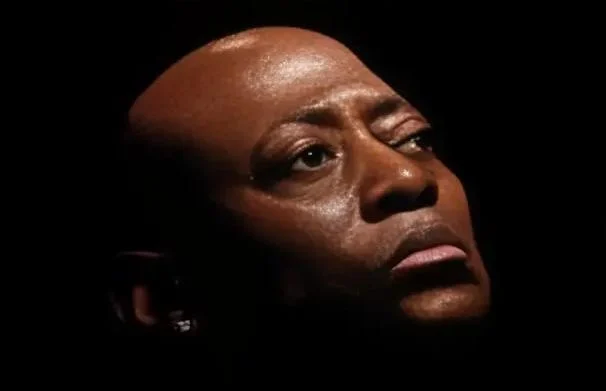
When Moses the Black hits theaters nationwide on January 30, it won’t just introduce audiences to a powerful reimagining of a fourth-century saint’s story; it will also mark a layered, introspective chapter in Omar Epps’ career.
Inspired by the real-life story of Saint Moses the Black, the film follows a Chicago gangster’s journey toward reckoning and redemption. The project blends historical resonance with contemporary urgency, exploring faith, violence, accountability, and the possibility of change.
Epps stars as Malik, a seasoned Chicago gang leader navigating loyalty, power, and consequence in a world shaped by survival instincts and moral compromise. The film also stars Chukwudi Iwuji as Moses the Black, Wiz Khalifa as volatile crew leader 2wo-3ree, Quavo as rival boss Straw, along with Corey Hendrix, Deontay Wilder, and others. The film is executive produced by Curtis “50 Cent” Jackson, Wiz Khalifa, and Omar Epps, and features original music by Wiz Khalifa with contributions from Quavo.
Ahead of the film’s release, Epps spoke with The Quintessential Gentleman about portraying Malik, grappling with faith and masculinity, and why stories of redemption still matter.
QG: What was it about the role of Malik that you wanted to explore at this stage of your career?
OE: Malik was a very intriguing character to me because he comes to an impasse. And he comes to an impasse within self and realizes he has to become the change that he’s seeking. And that’s a very arduous journey. Not only that, just the story of Moses the Saint, Moses the Black. The actual story, the fourth-century saint, really, really spoke to me. And the way that Yelena Popovich, who wrote and directed the film, the way she wove those stories together in this film, I thought it was unique and timely.
And I just felt tasked. I felt that this story was necessary.
QG: The film is rooted in redemption and spiritual transformation. How did your own beliefs or relationship with faith impact your performance?
OE: Oh, for sure it did. I mean, I don’t have the same story as Malik, but I think that… if you believe or not, if you’re just into mental and science, that’s fine, but we all, as human beings, go through growth, evolution, and I think it’s in phases. I think redemption is not an end-all, be-all, right? You don’t just… I got redemption at 21, and now I’m 35, and I don’t need it. Life throws its curveballs. You become a parent, or a husband, or a wife, or whatever. And life is lifing, right?
So you constantly… It’s a constant journey. You’re constantly finding yourself. And I think that’s just life. I was able to bring my life experiences, but the way that it spoke to me spiritually, I felt that I understood why this project was coming to me in this particular moment. Based on what I’ve been through in the last 10 years, personally, I get why this opportunity is in front of me. And let’s go.
QG: I personally feel like redemption or second chances are not afforded to Black men. What are your thoughts?
OE: I think that’s a great statement. I agree with you in the sense of, systemically, we are not necessarily offered second chances. But in terms of the film, I think that it starts internally. We really have to become the change that we seek. Changing the system doesn’t happen overnight.
In correlation to the film, it’s a community effort. Where there’s a will, there is a way. What I want younger audiences to take away from this film is for it to be more than just a cautionary tale. Because when you’re that young, nothing’s ever going to happen to me. And then you blink, and you’re 30, and you’re like, ‘I just spent the last 20 years of my life behind the wall.’
It’s to not even go down that pathway. So that in and of itself is its own version of redemption. Let’s not be in a position to have to solely rely on the system giving us second chances. Let’s be more self-sustaining in that way.
QG: The film bridges a fourth-century saint with modern-day Chicago. How did you approach that duality?
OE: That element really drew me in. Here’s this story about this fourth-century saint and there’s this gangster from Chicago who’s having these visions and wondering what he’s supposed to glean from that. Placing it in Chicago, it could be Detroit, Cleveland, Memphis, but Chicago is so right now. We use it as a microcosm for what’s happening in urban America.
We meet that saint at the precipice of life, like, ‘Wait a minute, this can’t be it. I can’t keep doing the same thing.’ Especially because he’s a leader. True leadership is when you’re selfless and you’re thinking about those that you are leading. When you realize you’re leading them to a cliff, something has to change.
I think audiences will see themselves, their cousins, their uncles. This is us. It’s a mirror and a window.
Moses the Black hits theaters January 30. Check out the full interview.